
East West Rail: Bedford-Cambridge Route Showdown
East West Rail’s Bedford-Cambridge line: Five route options are under review, balancing economic growth with environmental responsibility. Discover how the optimal route will be chosen!
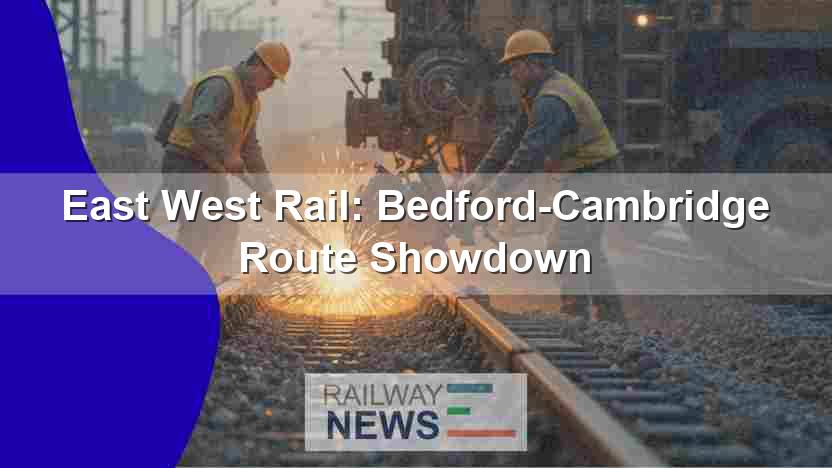
This article examines the five proposed route options for the Bedford-Cambridge section of the East West Rail (EWR) link in the UK, a crucial component of a larger project to connect Oxford and Cambridge by rail. The EWR aims to significantly improve regional connectivity, reduce travel times between major population centers, and stimulate economic growth across the affected regions. The selection of a specific route carries profound implications for land use, environmental impact, and the overall cost-effectiveness of the project. This analysis will delve into the proposed routes, comparing their advantages and disadvantages based on factors such as engineering feasibility, environmental considerations, economic impact on local communities, and passenger convenience. Ultimately, the goal is to provide a detailed overview of the complex considerations involved in selecting the optimal route for this vital infrastructure project.
Route Alignment and Comparative Analysis
The East West Railway Company (EWR Co) presented five distinct route options for the Bedford-Cambridge section. Three proposals favored a southern alignment traversing South Cambridgeshire and Bassingbourn, while the remaining two opted for a northern alignment via Cambourne. Each route presents unique challenges and opportunities. The southern routes, while potentially shorter, might encounter greater resistance due to potential disruption to established communities and environmentally sensitive areas. Northern routes, though potentially longer, may offer easier integration with existing infrastructure and less impact on established communities. A detailed cost-benefit analysis incorporating construction costs, land acquisition expenses, and long-term operational efficiencies is crucial for informed decision-making.
Station Locations and Accessibility
The proposed station locations at Cambourne, St Neots, Sandy, Tempsford, and Bassingbourn are key elements impacting the project’s viability. The inclusion of these stations directly affects the accessibility and convenience for residents in these towns and villages, potentially boosting local economies through improved commuting options and increased tourism. However, the construction and maintenance of these stations represent significant financial commitments, requiring careful consideration of projected ridership figures and the overall economic benefit they will generate. Additionally, the accessibility of the stations themselves – considering parking availability, pedestrian access, and integration with other modes of transport – will critically influence their utilization.
Environmental Impact and Mitigation Strategies
Environmental considerations are paramount. Each route has a unique ecological footprint. The southern routes might impact environmentally sensitive areas, necessitating robust environmental impact assessments (EIAs) and mitigation strategies. These strategies could include the implementation of noise barriers, habitat creation schemes, and the use of sustainable construction materials to minimize the project’s carbon footprint. The northern routes, while potentially less disruptive, still require careful assessment to avoid impacting valuable natural habitats. Public consultation and transparency regarding potential environmental impacts are vital to build public trust and ensure the project’s sustainability.
Economic Impact and Community Engagement
The EWR project promises substantial economic benefits, including increased employment opportunities during construction and operation, enhanced regional connectivity fostering business growth, and improved quality of life for residents through reduced commuting times. However, it is vital to ensure that these benefits are equitably distributed across the affected communities. Community engagement is crucial in addressing potential concerns and ensuring the project delivers positive outcomes for all stakeholders. Transparent communication, active listening to community feedback, and proactive measures to address any negative consequences are essential for the project’s long-term success.
Conclusions
The selection of the optimal route for the Bedford-Cambridge section of the East West Rail link is a complex undertaking demanding a multi-faceted approach. The five proposed routes each present unique advantages and disadvantages regarding engineering feasibility, environmental impact, economic considerations, and community engagement. The analysis presented highlights the importance of thorough cost-benefit analyses, robust EIAs, and extensive public consultation. A detailed assessment of factors such as land use, construction costs, operational efficiency, and social impact is crucial. The success of the project hinges not only on its technical aspects but also on its ability to deliver tangible benefits to the communities it serves while minimizing negative consequences. The EWR Co must prioritize transparency and inclusivity throughout the decision-making process to ensure that the chosen route reflects the needs and aspirations of all affected stakeholders, ultimately leading to a sustainable and beneficial railway infrastructure that fosters economic growth and improved connectivity in the region. Transparency throughout the process, ensuring effective communication and engagement with local communities, will be critical for gaining public support and ensuring the project’s long-term success. The final decision must be a balanced one that considers economic viability, environmental protection, and the overall well-being of the communities affected by the railway’s construction and operation.

Railway infrastructure, rolling stock and transport technologies specialist focused on global rail industry developments, high-speed rail systems, signaling technologies and freight transportation. Covering railway investments, public transport modernization, rail operations and international mobility projects across Europe, Asia and North America.
RELATED POSTS

September 6, 2026 4:12 am
Alstom delivered the first of 100 new G Class trams...

September 5, 2026 7:14 pm
HS2 Ltd signed renegotiated civils contracts with EKFB and Align...
September 5, 2026 6:17 pm
Universal Signalling won a deal to install its U-Cross system...
September 7, 2026 4:15 pm
Zimbabwe approved the EUR 3 billion Harare Light Rail project,...
September 5, 2026 10:14 pm
MTA confirmed $600M in annual savings to balance New York's...
September 6, 2026 8:12 pm
MBTA confirmed Red Line is slow zone-free for the first...