
E-J Electric: LIRR Expansion’s Electrical Advancements
E-J Electric powers the LIRR’s $1.9 billion expansion, electrifying its future with cutting-edge signaling and traction power systems. Discover how!
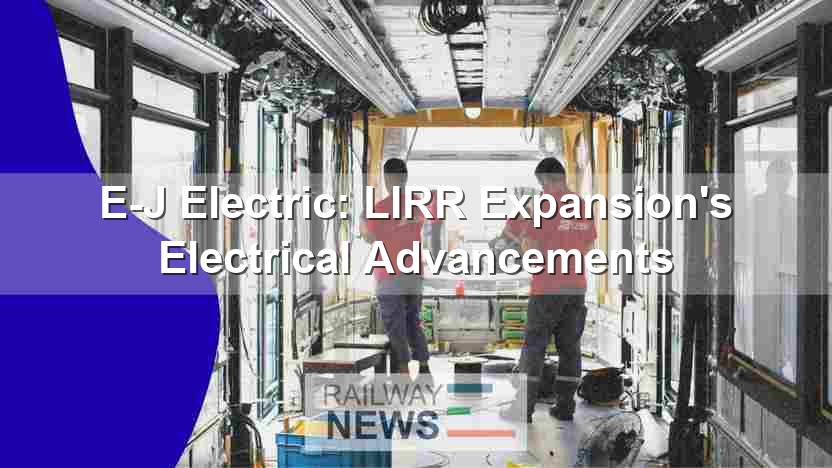
The Long Island Rail Road (LIRR), a vital artery of the New York metropolitan area, is undergoing a significant expansion project valued at $1.9 billion. This undertaking, spearheaded by the Metropolitan Transportation Authority (MTA), focuses on enhancing capacity and safety along its existing lines. This article will delve into the crucial role E-J Electric Installation Company plays in this massive infrastructure upgrade, examining the scope of their electrical work, the technological advancements involved, and the broader implications of the project for commuters and the regional economy. The expansion, primarily centered on the addition of a third track spanning 9.8 miles between Floral Park and Hicksville, is projected to significantly increase passenger capacity and alleviate congestion, currently affecting over 300,000 daily commuters. This detailed analysis will explore the technical challenges, the economic benefits, and the long-term impact of this ambitious LIRR expansion project.
Electrification of the LIRR Expansion: E-J Electric’s Contribution
E-J Electric Installation Co. has secured a substantial subcontract to provide detailed electrical and transmission line work for the LIRR expansion. Their involvement encompasses a wide range of critical systems, including the design, installation, and testing of upgraded signaling systems, traction power infrastructure, and communication networks. The addition of a third track necessitates a complete overhaul of these systems to ensure safe, efficient, and reliable operation of the expanded rail network. This includes upgrading existing substations to handle the increased power demands of more frequent and heavier train services. The complexity of the undertaking demands meticulous planning, coordination with other contractors, and adherence to stringent safety regulations common in the rail industry. The scale of this project underscores the importance of choosing a reputable and experienced contractor like E-J Electric, whose expertise in large-scale public sector projects is crucial to the project’s success.
Infrastructure Improvements Beyond Electrification
The LIRR expansion project extends far beyond the electrical upgrades provided by E-J Electric. The project includes the construction of a new 9.8-mile third track, enhancing the overall capacity of the railway. Additionally, the project encompasses the strengthening and expansion of eight existing bridges that cross local streets, a necessary step to accommodate the increased weight and frequency of trains. Six stations along the route will be renovated to improve passenger flow and accessibility, while seven street-level grade crossings will be eliminated to improve safety and reduce delays. These interconnected components are all crucial for achieving the project’s overarching goal: to create a safer, more efficient, and reliable commuter rail line for the region.
Technological Advancements and Safety Enhancements
The LIRR expansion is not simply about adding capacity; it’s about incorporating state-of-the-art technology to improve safety and efficiency. The upgraded signaling systems, a key element of E-J Electric’s contribution, will employ advanced communication and control systems to optimize train scheduling, spacing, and speed. These improvements are crucial for minimizing delays and preventing collisions. Additionally, the upgraded traction power system will ensure consistent and reliable power delivery to trains, reducing the risk of power outages and disruptions. The integration of these advanced technologies showcases a commitment to utilizing best practices and modern technology in building a superior and safer commuter rail system.
Economic Impact and Future Outlook
The $1.9 billion LIRR expansion project represents a significant investment in the infrastructure of the New York metropolitan area. Beyond the direct creation of jobs during construction, the improved rail service will positively impact the regional economy. Reduced commuting times and increased reliability will enhance productivity and contribute to economic growth. Moreover, the project’s emphasis on safety will reduce the societal costs associated with accidents and delays. The successful completion of this project by 2022, as scheduled, will significantly improve the lives of hundreds of thousands of daily commuters and solidify the LIRR’s position as a critical component of the region’s transportation infrastructure. The expertise provided by companies like E-J Electric is essential for realizing these significant economic and social benefits.
Conclusion
The LIRR expansion project is a complex undertaking requiring seamless integration of various systems and technologies. E-J Electric’s contribution, focusing on the electrical and transmission line infrastructure, is pivotal to the project’s success. Their work encompasses a wide range of activities, including the upgrade and installation of signaling systems, traction power infrastructure, and communication networks. The project goes beyond simple capacity expansion; it involves enhancing safety, efficiency, and reliability through the incorporation of advanced technologies. The successful execution of this project will significantly benefit commuters by reducing travel times, improving reliability, and enhancing safety. The broader economic impact will extend beyond the construction phase, positively influencing the productivity and economic growth of the New York metropolitan area. The collaboration between the MTA, the main contractors, and specialized subcontractors like E-J Electric exemplifies a coordinated effort to address the challenges of modernizing a critical piece of infrastructure, setting a standard for future large-scale rail projects.

Railway infrastructure, rolling stock and transport technologies specialist focused on global rail industry developments, high-speed rail systems, signaling technologies and freight transportation. Covering railway investments, public transport modernization, rail operations and international mobility projects across Europe, Asia and North America.
RELATED POSTS
September 6, 2026 5:19 am
Hitachi delivered Taiwan's first N700ST high-speed train from Japan in...

September 5, 2026 4:19 pm
CPK launched formal tender talks with four consortia to design...

September 6, 2026 4:12 am
Alstom delivered the first of 100 new G Class trams...

September 5, 2026 7:14 pm
HS2 Ltd signed renegotiated civils contracts with EKFB and Align...
September 6, 2026 6:17 am
Hungary ordered a national ban on most freight trains from...
September 6, 2026 1:17 am
Hitachi Toshiba Supreme Consortium confirmed the first of 12 N700ST...