
DB Systemtechnik & Partners Launch Automated Rail Driving Lab in
DB Systemtechnik is launching an Automated Driving Lab in Minden, Germany by 2027. This innovative rail project will advance autonomous solutions, supported by significant investment.
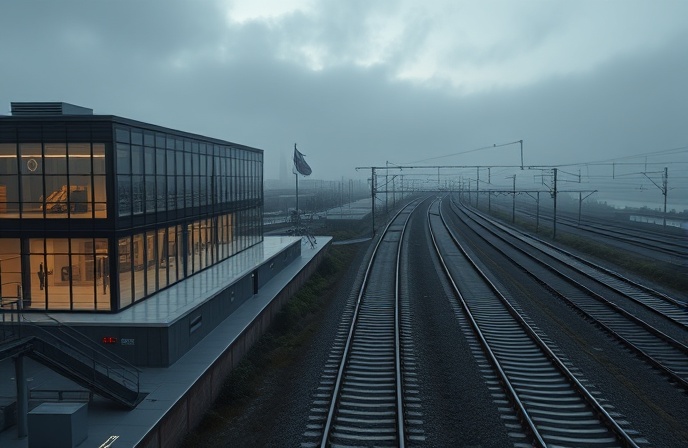
DB Systemtechnik, in partnership with leading educational institutions, is establishing a cutting-edge innovation lab for automated driving in Minden, Germany, set to commence operations in 2027. This significant development aims to accelerate the research, development, and testing of innovative solutions for fully and partially automated train operations, fostering a new era of sustainable mobility.
| Key Entity | Critical Detail |
|---|---|
| Innovation Lab Location | Minden, Germany |
| Primary Developer | DB Systemtechnik |
| Academic Partners | Ostwestfalen-Lippe University of Applied Sciences (TH OWL), Bielefeld University of Applied Sciences, Bielefeld University |
| Core Objective | Research, development, and testing of automated driving solutions for rail |
| Operational Start Date | 2027 |
| Project Funding | German Federal Ministry of Transport (BMV) with approximately EUR 11.5 million |
| Program Affiliation | “German Center for Future Mobility” (DZM) |
The new innovation lab, a collaborative venture involving DB Systemtechnik and the Ostwestfalen-Lippe University of Applied Sciences (TH OWL), Bielefeld University of Applied Sciences, and Bielefeld University, will serve as a pivotal hub for testing and validating advanced technologies essential for the future of automated rail transport. Professor Dr. Jürgen Krahl, President of TH OWL, emphasized the critical role of such cross-sector collaboration, stating, “Automated driving is an important field of the future for sustainable mobility. It can only thrive through collaboration between industry and science. The Ostwestfalen-Lippe University of Applied Sciences is contributing its entire expertise to the Minden Innovation Lab and is grateful to have strong partners on board.”
Operational Capabilities and Strategic Importance
This state-of-the-art facility is designed to conduct automated, reproducible, and realistic tests crucial for the qualification and approval of various perception systems, including advanced sensor technologies. These systems are foundational for autonomous train operations, responsible for vital functions such as monitoring track conditions and passenger flow. The academic partners bring essential expertise in control, sensor, and automation technologies, complementing DB Systemtechnik’s extensive experience in railway operations and vehicle engineering. The lab’s ability to simulate dynamic scenarios involving passengers, bicycles, and animals, alongside diverse environmental conditions like snow, fog, rain, and varying lighting, will ensure rigorous and detailed testing of all relevant systems, fostering long-term knowledge transfer and driving innovative projects.
Infrastructure and Funding
The development of the innovation lab is a key initiative within the “German Center for Future Mobility” (DZM), backed by approximately EUR 11.5 million in funding from the German Federal Ministry of Transport (BMV). DB Systemtechnik is spearheading the construction of the core infrastructure at its Minden site. In parallel, TH OWL, Bielefeld University of Applied Sciences, and Bielefeld University will each procure and implement their own specialized test facilities, creating a multi-faceted testing environment. The lab is scheduled for an operational launch by 2027, marking a significant milestone in Germany’s commitment to advancing future mobility technologies.
Last June 2025, we published an article about Renfe’s cutting-edge Aranjuez maintenance hub. Click here to read – Future of Rail: Renfe’s Railway Technology Hub, Aranjuez: Essential Guide
Industry Context
The establishment of this innovation lab underscores a global shift towards leveraging artificial intelligence and automation within the railway sector. As infrastructure operators and rolling stock manufacturers increasingly focus on enhancing efficiency, safety, and capacity, the development of robust automated driving systems becomes paramount. This collaborative effort in Minden is strategically positioned to address these industry-wide challenges, providing a much-needed platform for technological validation and regulatory compliance. The insights and solutions generated here will have far-reaching implications for the future of rail freight and passenger services worldwide, influencing operational strategies and investment decisions for railway companies and their supply chains.

Railway infrastructure, rolling stock and transport technologies specialist focused on global rail industry developments, high-speed rail systems, signaling technologies and freight transportation. Covering railway investments, public transport modernization, rail operations and international mobility projects across Europe, Asia and North America.
RELATED POSTS

August 4, 2026 1:11 pm
Hitachi Rail Canada secured a $407.7M contract to install CBTC...
August 11, 2026 11:13 am
Hungary confirmed the €2.5B Hungarian rail upgrade will not see...

August 4, 2026 11:12 am
MBTA confirmed a $150.8 million overhaul of the 85-year-old Green...

August 1, 2026 7:14 pm
€205 billion funding shortfall threatens the TEN-T rail network's completion...
August 1, 2026 7:56 am
BMZ delivered two new TEM18DM diesel shunting locos to RZD...
August 5, 2026 7:11 pm
JR Central secured Shizuoka governor approval July 7, 2026 for...