
Daejeon Line 2: Hydrogen Trams & Smart Transit
Introduction
This article delves into the significant advancement in sustainable urban transportation represented by Daejeon, South Korea’s ambitious Line 2 light rail project. This project marks a pivotal moment, not only for Daejeon’s urban development but also for the broader adoption of hydrogen-powered rail technology globally. The city’s strategic decision to utilize domestically produced hydrogen trams, manufactured by Hyundai Rotem, showcases a commitment to both technological innovation and economic growth within the South Korean rail industry. The phased construction approach, detailed below, is a noteworthy aspect of the project, balancing the participation of local contractors with the efficient execution of complex infrastructural elements. This phased approach, along with the innovative use of hydrogen fuel cell technology, is examined in detail, highlighting the economic and environmental considerations driving this groundbreaking initiative. The integration of Intelligent Transportation Systems (ITS) will also be touched upon, demonstrating the commitment to a technologically advanced and efficient transit system.
Phased Construction and Local Contractor Involvement
The Daejeon Urban Railway Line 2 project, a 38.8km circular light rail line, is being constructed in fourteen distinct sections. This phased approach is a deliberate strategy aimed at maximizing the participation of local contractors. By dividing the project into smaller, more manageable sections, the city has lowered the barrier to entry for smaller firms, allowing them to compete for contracts and contribute to the economic benefits of the project. The initial five sections were awarded in September 2024, with another set of contracts to be awarded in October. The remaining nine sections, primarily involving the installation of tracks along existing roadways, will commence construction sequentially from January 2025. This meticulous planning ensures a balance between efficient project management and fostering economic opportunities within the local community. This approach directly addresses Mayor Lee Jang-woo’s policy of promoting local business participation (approximately 49%), while also allowing larger, more experienced firms to handle the more technically challenging aspects of the construction.
Hydrogen Tram Technology and Operational Efficiency
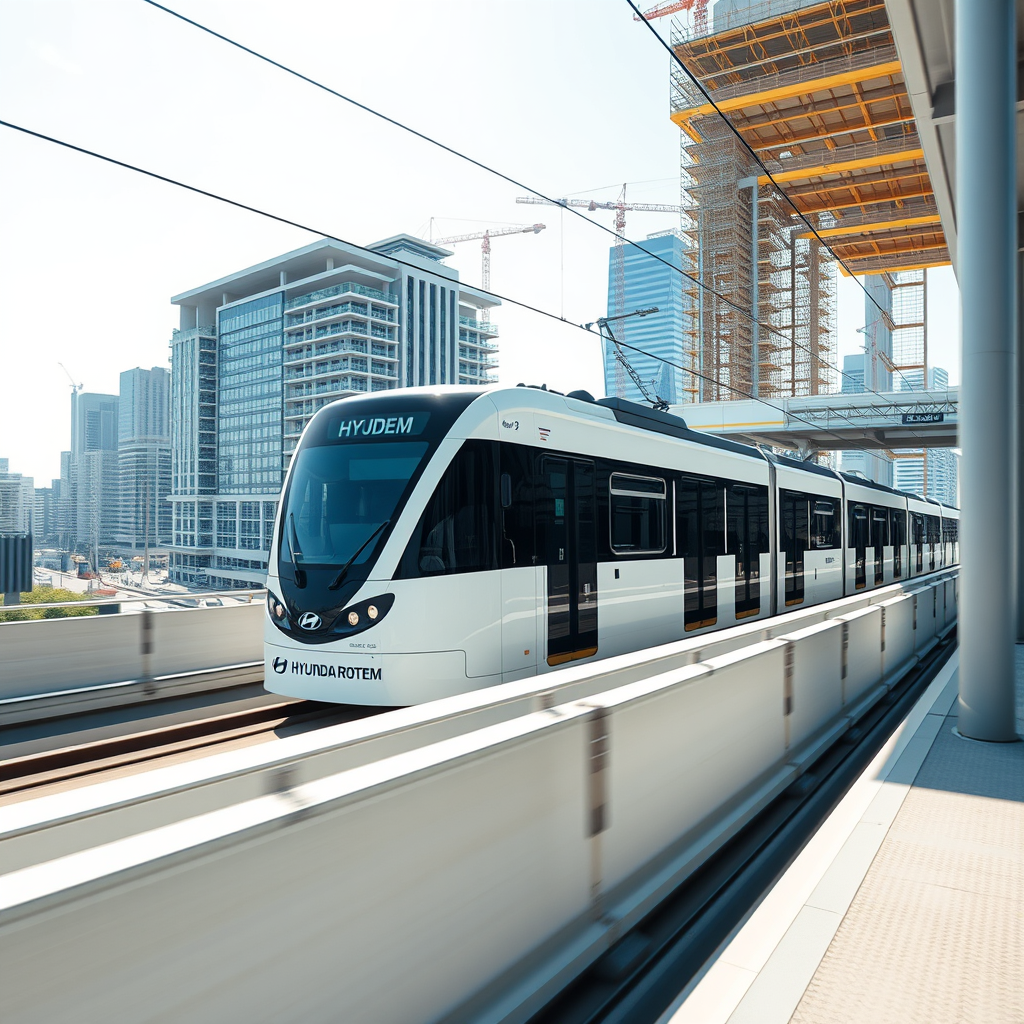
The heart of the Daejeon Line 2 project is the deployment of Hyundai Rotem’s domestically produced hydrogen trams. This represents a significant leap forward in sustainable public transportation. Hydrogen fuel cell technology offers a cleaner alternative to traditional diesel or electric trams, significantly reducing greenhouse gas emissions and improving air quality within the city. Each tram boasts a range of 150km on a single hydrogen charge, ensuring reliable operation throughout the entire 38.8km circular route. The technology’s efficiency is a key factor in the project’s sustainability and long-term viability. Furthermore, the use of domestically produced rolling stock strengthens South Korea’s position in the global rail technology market, promoting technological independence and economic competitiveness.
Infrastructure and Station Design
The project encompasses not only the tram system itself but also a comprehensive network of 45 stations. The thoughtful design includes 41 relative-type stations, featuring separate platforms for inbound and outbound services, enhancing passenger flow and safety. Three island-type stations, offering integrated platforms for both directions, further optimize passenger experience. The inclusion of an underground station at Seodaejeon station demonstrates a forward-thinking approach to integration with the existing transportation network. This carefully planned infrastructure ensures the project’s seamless integration into Daejeon’s existing urban fabric, enhancing connectivity and accessibility for residents and visitors alike. This infrastructure planning reflects a commitment to a holistic and user-friendly transit system.
Intelligent Transportation Systems (ITS) Integration
While specifics remain limited in publicly available information, the successful implementation of Daejeon Line 2 will undoubtedly incorporate Intelligent Transportation Systems (ITS). ITS encompasses a range of technologies designed to optimize the efficiency, safety, and sustainability of transportation networks. This could include advanced signaling systems, real-time passenger information displays, and predictive maintenance programs for the trams themselves. The integration of ITS is crucial for maximizing the effectiveness of the new light rail system and creating a truly modern and efficient urban transit solution. Its incorporation aligns with the project’s overall goal of providing a technologically advanced and sustainable public transportation service.
Conclusions
The Daejeon Urban Railway Line 2 project represents a significant step forward in sustainable urban transportation and domestic technological advancement. The strategic decision to utilize hydrogen fuel cell technology, coupled with a phased construction approach prioritizing local contractor involvement, showcases a comprehensive strategy for economic growth and environmental responsibility. The project’s success hinges on several key elements: the proven reliability and range of Hyundai Rotem’s hydrogen trams; the efficient and inclusive phased construction strategy; the well-planned station design optimizing passenger flow; and the anticipated integration of Intelligent Transportation Systems (ITS) to enhance operational efficiency and safety. The projected completion in 2028 promises a significant improvement to Daejeon’s public transportation infrastructure, offering a model for other cities seeking to implement clean, efficient, and economically beneficial light rail systems. The project’s multifaceted approach, encompassing technological innovation, economic empowerment, and sustainable urban planning, positions Daejeon as a leader in the global transition towards greener and more efficient urban transport solutions. The lessons learned from this initiative will be valuable for future light rail projects worldwide, demonstrating the potential for integrating hydrogen fuel cell technology and local economic development in urban transit infrastructure.
RELATED POSTS

December 17, 2016 8:20 am
GE Transportation announced today its acquisition of Iders Incorporated, an...

August 7, 2025 1:33 am
Pittsburgh Transit faces service cuts, fare hikes due to $100M...

June 29, 2025 5:33 pm
Stadler opens Atlanta office, boosts North American railway signalling. ...

July 31, 2022 4:37 am
Introduction The Indian railway system, one of the world’s largest,...
April 6, 2022 4:20 pm
VR Group’s Acquisition of Arriva Sverige: Expanding into the Swedish...

September 8, 2015 1:38 pm
Alstom Transport unveiled its signalling R&D project to be implemented...