
Crossrail Liverpool Street: 2026 Construction Update
Elizabeth line’s Liverpool Street Station upgrade dramatically boosted capacity and connectivity, improving London’s rail network. The project involved extensive engineering innovations.

Project Profile: Elizabeth Line Liverpool Street Station
The Crossrail project’s redevelopment of London’s Liverpool Street station represents a significant feat of modern railway engineering, integrating a high-capacity, deep-level line into one of the city’s oldest and busiest transport hubs. This profile details the technical specifications and strategic outcomes of constructing two new ticket halls, 250-metre platforms, and associated tunnels beneath a dense urban environment. The project successfully upgraded the station’s capacity from 123 million passengers annually, enhancing connectivity across London and setting new benchmarks in urban underground construction.
| Attribute | Details |
|---|---|
| Project Name | Crossrail Liverpool Street Station Upgrade (Elizabeth Line) |
| Location | City of London, London, UK |
| Platform Length | 250 metres |
| Estimated Cost | Component Contract (BBMV Tunnels): €275m |
| Status | Operational (Opened May 2022) |
| Key Contractors | Laing O’Rourke, BAM Nuttall Kier (BNK), Vinci Construction, BBMV Joint Venture (Balfour Beatty, ALPINE BeMo, Morgan Sindall, VINCI) |
Technical Specifications
The station’s expansion involved extensive subsurface construction and architectural innovation. Two new ticket halls were established: a western hall at Moorgate and an eastern hall at Broadgate, connected by two 250m-long tunnels housing the Elizabeth line platforms. The architectural design features distinctive grooved and angled ceilings, a departure from traditional flat profiles, to enhance spatial perception and passenger experience. Materials such as terrazzo flooring and perforated enamel steel panels were specified for durability and modern aesthetics.
Major civil engineering works included the excavation of three deep shafts at Blomfield Street (40m), Finsbury Circus Gardens (42m), and Moorgate (55m) to facilitate tunnelling and station construction. A pioneering technique was employed with the creation of a 53-metre-long sprayed concrete lining (SCL) cable tunnel, a first-of-its-kind application for a project of this scale. To mitigate ground-borne vibration in sensitive areas, a floating track slab was installed within the Barbican tunnels, demonstrating advanced geotechnical solutions required for construction in a complex urban geology.
Key Takeaways
- Capacity and Decongestion: The project fundamentally resolved the severe passenger congestion at the historic 1874 station, significantly increasing capacity to accommodate future growth on London’s transport network.
- Enhanced Connectivity: By integrating with the Elizabeth line, the station provides direct, high-speed connections to major hubs like Heathrow Airport, Paddington, and Canary Wharf, reducing journey times by up to 18 minutes.
- Engineering Innovation: The project served as a benchmark for complex urban underground construction, pioneering the use of SCL for cable tunnels and deploying advanced techniques like floating track slabs to overcome significant geotechnical and logistical challenges.
Frequently Asked Questions (FAQ)
When did the Elizabeth line open at Liverpool Street?
The central operating section of the Elizabeth line, including the new deep-level platforms at Liverpool Street station, opened to the public in May 2022. This launch marked a major milestone in improving travel across London.
Who was responsible for building the new Liverpool Street Crossrail station?
The construction was a collaborative effort involving several leading engineering and construction firms. Laing O’Rourke managed the main station contract, while the BBMV Joint Venture, consisting of Balfour Beatty, ALPINE BeMo Tunnelling, Morgan Sindall, and VINCI Construction, was responsible for constructing the station tunnels.
RELATED POSTS
September 5, 2019 1:26 pm
The Ongoing Dispute Over Train Guarding on South Western Railway...
March 15, 2018 5:13 pm
Australia's investing big in faster rail! Three ambitious projects—Sydney-Newcastle,...
January 17, 2017 12:08 am
"Guangzhou Metro successfully accepted new trains for the MTR South...
July 11, 2016 5:11 am
London Waterloo station's £800m upgrade boosted capacity and passenger flow,...
July 15, 2014 8:20 am
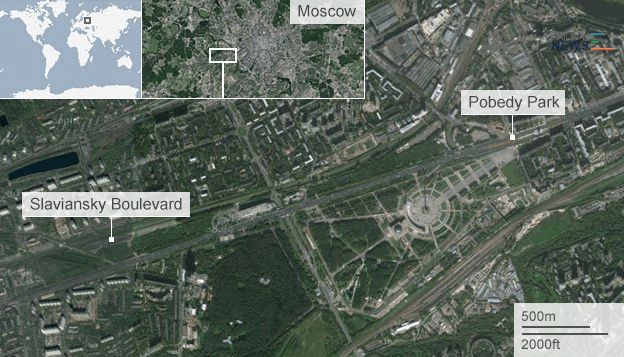
The death toll in Tuesday’s derailment on the Moscow metro...

July 27, 2010 10:01 am
Bombardier Transportation has received a contract to provide 24 low-floor...