
Coradia iLint: Hydrogen Trains Revolutionizing Rail

This article explores the significant advancements in hydrogen-powered rail technology, focusing on Alstom’s Coradia iLint train and its implications for the future of sustainable rail transport. The introduction of the Coradia iLint, the world’s first hydrogen-powered passenger train, marks a pivotal moment in the railway industry’s transition towards greener practices. This technological breakthrough offers a compelling alternative to traditional diesel-powered trains on non-electrified lines, addressing the environmental concerns associated with conventional rail transport. The successful deployment of the Coradia iLint in various European countries, coupled with its impressive performance characteristics, underscores its potential to revolutionize regional rail operations worldwide. This article will delve into the technological aspects of the Coradia iLint, examine its operational performance and economic viability, discuss its broader environmental impact, and analyze the potential for wider adoption across the global railway network. Finally, we will consider the future prospects and challenges facing the broader adoption of hydrogen-powered trains.
The Coradia iLint: A Technological Overview
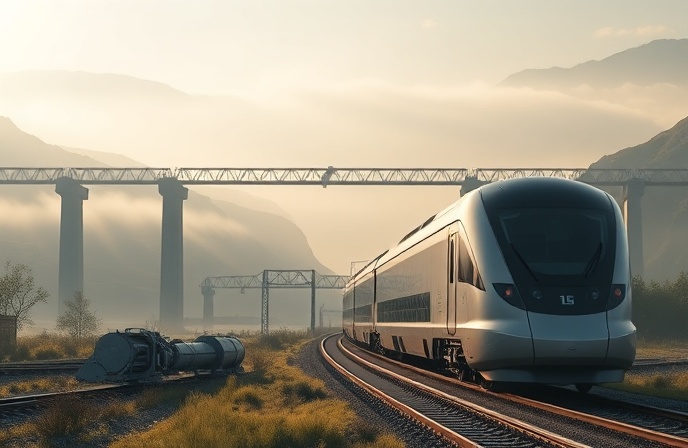
Alstom’s Coradia iLint represents a groundbreaking leap forward in railway technology. Unlike traditional electric trains relying on overhead lines or diesel trains using fossil fuels, the Coradia iLint utilizes hydrogen fuel cells (H2) to generate electricity for traction. This process produces only water vapor and heat as byproducts, effectively eliminating greenhouse gas emissions (CO2) during operation. The train’s propulsion system consists of hydrogen fuel cells, converting hydrogen into electricity to power the train’s motors. This system ensures quiet operation, a key advantage compared to noisy diesel engines. The Coradia iLint boasts a top speed of 140 km/h and offers comparable acceleration and braking performance to conventional regional trains. Its substantial 1000 km range and capacity for up to 300 passengers further enhance its practical appeal for regional transportation networks. The train’s design allows it to seamlessly integrate into existing rail infrastructure, eliminating the need for costly electrification upgrades.
Operational Performance and Economic Viability
The operational success of the Coradia iLint in Germany, Austria, and the Netherlands demonstrates its reliability and practicality. The deployment of 41 trainsets in Germany alone signifies a significant commitment to hydrogen-powered rail technology. The train’s long range and passenger capacity render it a viable alternative to diesel-powered trains, particularly on lines where electrification is economically unfeasible or impractical. While the initial investment in hydrogen-powered trains might be higher than for diesel counterparts, the long-term operational and maintenance costs are often more favorable due to lower fuel costs and reduced environmental impact. Furthermore, the avoidance of extensive electrification infrastructure upgrades can generate significant cost savings for railway operators. A comprehensive life-cycle cost analysis is essential to fully assess the economic viability of the Coradia iLint in comparison to other train types.
Environmental Impact and Sustainability
The Coradia iLint’s most significant contribution lies in its environmental benefits. By completely eliminating greenhouse gas emissions during operation, it drastically reduces the railway industry’s carbon footprint. This aligns perfectly with global sustainability goals and the growing demand for environmentally friendly transportation solutions. The only byproduct of its hydrogen fuel cell operation is water vapor, making it a truly clean mode of transport. This contrasts sharply with diesel trains, which release substantial quantities of harmful pollutants into the atmosphere. The reduced noise pollution associated with hydrogen-powered trains also offers considerable benefits for communities located near rail lines. The overall positive environmental impact of the Coradia iLint makes it a strong candidate for adoption in regions seeking to decarbonize their transportation sectors.
Future Prospects and Challenges
The successful debut of the Coradia iLint in Sweden, alongside its existing deployments in other European countries, points towards a promising future for hydrogen-powered rail technology. However, widespread adoption will depend on several factors. The availability of affordable and sustainably produced hydrogen remains a crucial challenge. The development of efficient hydrogen refueling infrastructure is also paramount for supporting widespread deployment. Government policies and incentives will play a vital role in fostering the transition to hydrogen-powered rail by encouraging investment in hydrogen production and refueling facilities. Research and development efforts should focus on improving the efficiency and cost-effectiveness of hydrogen fuel cells to further enhance the competitiveness of hydrogen-powered trains. Despite these challenges, the long-term potential for hydrogen-powered rail transport is considerable, promising a cleaner, quieter, and more sustainable future for the railway industry.
Conclusions
Alstom’s Coradia iLint represents a major step towards sustainable rail transportation. Its hydrogen fuel cell technology eliminates greenhouse gas emissions during operation, significantly reducing the environmental impact of rail travel. The train’s successful deployment in Germany, Austria, the Netherlands, and now Sweden demonstrates its operational viability and reliability. The Coradia iLint’s performance characteristics – including its high speed, long range, and passenger capacity – make it a competitive alternative to both diesel and electric trains, particularly for non-electrified lines. While initial investment costs may be higher, the long-term economic benefits, encompassing lower fuel costs and reduced maintenance, need to be considered within a comprehensive life-cycle cost analysis. However, the widespread adoption of hydrogen-powered trains relies on several key factors. Addressing the challenges of sustainable hydrogen production, the development of a robust refueling infrastructure, and supportive governmental policies are essential for accelerating the transition to this environmentally-friendly technology. In conclusion, the Coradia iLint showcases the potential for a cleaner and more sustainable future for regional rail transport. By overcoming the challenges associated with hydrogen production and infrastructure, the railway industry can pave the way for a significant reduction in its environmental footprint and contribute towards a greener global transportation system. Continued research and development, along with supportive policy frameworks, are crucial to unlock the full potential of this transformative technology and usher in a new era of environmentally responsible rail travel.
RELATED POSTS
December 9, 2019 9:26 am
This article explores the significant milestone achieved by Qatar Rail...
August 8, 2019 4:59 am
Modernizing Cardiff Central Station: A Case Study in Railway Infrastructure...
December 9, 2025 8:42 pm
Alstom suspends French **hydrogen projects** due to funding cuts. The...
March 11, 2025 12:51 pm
Introduction This article examines the critical situation facing Alstom’s Litchurch...
June 3, 2022 5:01 pm
Introduction This article analyzes the fluctuating landscape of business optimism...

August 24, 2017 3:21 am
Bombardier Transportation has announced two contracts for its BOMBARDIER INNOVIA...