
Cliff Strengthening Teignmouth: UK Rail Infrastructure Resilience
Teignmouth railway cliffs are being strengthened, a crucial investment for the UK rail network’s resilience.
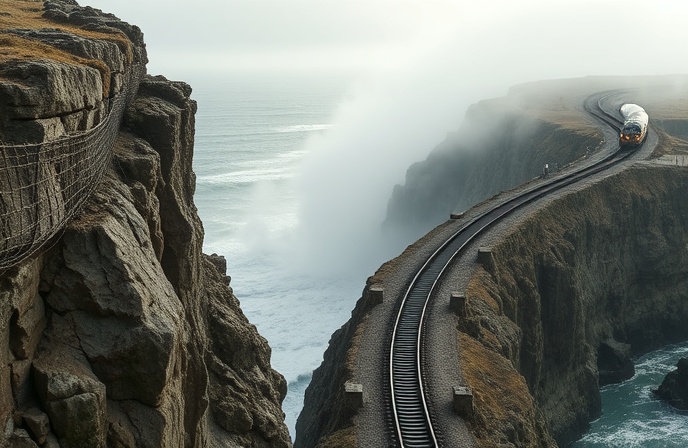
Facing the Elements: Critical Cliff Strengthening at Teignmouth Railway
The iconic railway line between Dawlish and Teignmouth in Devon, England, a vital artery of the UK rail network, is facing persistent challenges posed by its coastal location. This line, renowned for its stunning sea views, is simultaneously vulnerable to the ravages of extreme weather, including storms and coastal erosion. This article delves into the crucial work of cliff strengthening Teignmouth railway is undertaking to safeguard this critical infrastructure and ensure its continued operation for years to come. We will explore the methodologies, challenges, and long-term implications of these vital protection measures, examining why this work is essential, how it is being done, and what the future holds for this crucial transport link.
Protecting the Line: The Urgent Need for Cliff Stabilization
The vulnerability of the Teignmouth railway to coastal erosion is well-documented. The steep cliffs along the line are prone to landslides and rockfalls, posing significant risks to the safety of passengers and the integrity of the railway infrastructure. The severity of these events has been exacerbated by climate change, leading to more frequent and intense storms. Failure to implement robust protective measures could result in lengthy service disruptions, costly repairs, and potentially, even more catastrophic outcomes. Therefore, cliff strengthening Teignmouth is not merely a matter of maintenance; it is a critical investment in the long-term viability and resilience of the rail network.
Engineering Solutions: Techniques Employed in Cliff Strengthening
The cliff strengthening Teignmouth project employs a variety of advanced engineering techniques to mitigate the risks. These include:
- Rock bolting and netting: Anchoring unstable rock faces with bolts and securing them with high-strength netting to prevent rockfalls.
- Soil nailing: Installing steel bars into the soil to reinforce and stabilize the earth, preventing landslides.
- Drainage improvements: Implementing drainage systems to divert water away from the cliffs, reducing the risk of erosion and landslides.
- Construction of protective structures: Building sea walls and other protective barriers to absorb the impact of waves and prevent coastal erosion.
These techniques are often used in combination, tailored to the specific geology and challenges of each section of the cliff face. The project requires significant expertise in geotechnical engineering and a thorough understanding of coastal processes. The complexity necessitates detailed site investigations, including geological surveys and risk assessments.
Operational Challenges and Mitigation Strategies
Working on a live railway line, particularly in a coastal environment, presents unique operational challenges. Construction activities must be carefully coordinated to minimize disruption to train services. This involves careful scheduling of works, implementing temporary speed restrictions, and potentially closing sections of the line during periods of high-risk. The coastal location also presents logistical difficulties, including limited access, challenging weather conditions, and the need to protect the sensitive marine environment. Overcoming these challenges requires meticulous planning, close collaboration between engineers, contractors, and Network Rail (NR), and a strong focus on safety. For example, NR and its contractors are utilizing innovative surveying techniques to monitor cliff movement and assess the effectiveness of the cliff strengthening Teignmouth project.
The Future of the Dawlish to Teignmouth Line
The Dawlish to Teignmouth line is a vital part of the South West’s rail infrastructure, connecting communities and facilitating tourism. The ongoing cliff strengthening Teignmouth project represents a proactive investment in the line’s long-term security and resilience. By embracing innovative engineering solutions and carefully managing operational challenges, Network Rail is working diligently to safeguard the future of this crucial transport link. This ongoing work is vital, not only for maintaining the line’s operational integrity but also for preserving the economic vitality of the region. Further advancements in coastal engineering and the application of predictive analytics will likely play a significant role in ensuring the line’s resilience in the face of future climate change impacts.
Conclusion
The cliff strengthening Teignmouth project is a critical undertaking, demonstrating the railway industry’s commitment to maintaining vital infrastructure in the face of environmental challenges. The work involves a combination of advanced engineering techniques, careful planning, and close collaboration. The successful completion of these stabilization projects will not only protect the railway line from the impacts of coastal erosion and extreme weather but also safeguard the safety of passengers and the operational continuity of the line. As climate change continues to impact coastal regions, these types of proactive infrastructure investments will become increasingly important. The lessons learned from this project can be applied to similar coastal railway lines worldwide, showcasing the significance and relevance of the cliff strengthening Teignmouth initiatives.
RELATED POSTS

March 6, 2026 12:10 pm
Consortium Announces Digital Services Platform for UK Rail Sector A...

March 5, 2026 7:57 pm
Banedanmark launched battery train operations on Denmark's 67 km Skjern–Holstebro...

March 4, 2026 10:12 am
Amtrak and Siemens deploy 8 Airo trains for the U.S....

March 5, 2026 4:23 am
Renfe suspends Spain rail services on Madrid-Andalusia corridor until February...
March 6, 2026 4:07 pm
Digital Subscription Market Analysis Q1 2026 Analytics firm Antenna confirmed...
March 7, 2026 7:50 am
North American Rail Freight Volumes for Early February 2026 U.S....