
CHSRA Launches $3.5B RFP for High-Speed Rail Track & Systems
California’s high-speed rail project accelerates with a $3.5 billion RFP for track and systems. This major rail infrastructure investment aims to expedite the Central Valley segment.
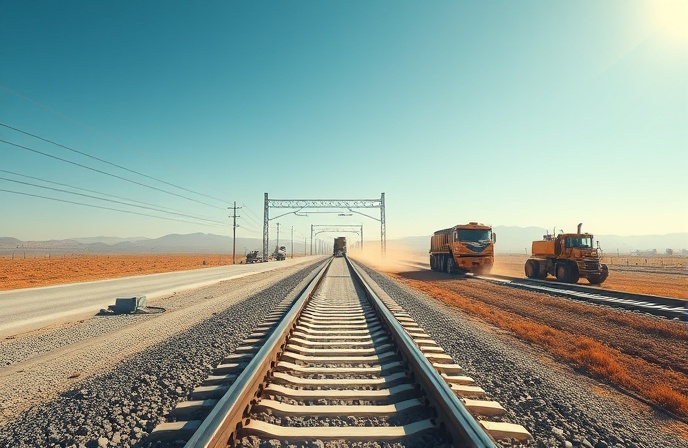
The California High-Speed Rail Authority (CHSRA) has unveiled a USD 3.5 billion Request for Proposals (RFP) for track and systems construction, marking one of the largest rail infrastructure procurements in the United States. This significant move is a cornerstone of CHSRA’s revised strategy to expedite the delivery of the nation’s first true high-speed rail line, specifically targeting the 119-mile Central Valley segment.
| Key Entity | Critical Detail |
|---|---|
| California High-Speed Rail Authority (CHSRA) | Launched USD 3.5 billion RFP for track and systems construction. |
| Project Scope | 119-mile (191 km) Central Valley segment, Madera to future extensions toward Merced and Bakersfield. |
| Procurement Value | USD 3.5 billion. |
| Key Timeline Indicator | Aiming to lay first high-speed rail track in Western Hemisphere next year (2025). |
| Federal Funding Status | USD 4 billion in unspent federal funding terminated by FRA in summer 2025 due to delays and cost concerns. |
The Authority’s Board approved the substantial contract last week, signaling a critical milestone in accelerating installation works. CHSRA leadership emphasizes that this procurement is integral to a new delivery strategy focused on building faster, smarter, and more economically. The aim is to significantly reduce construction timelines and costs, bringing the ambitious high-speed rail system closer to operational readiness.
Strategic Impact of Procurement
Ian Choudri, CEO of the California High-Speed Rail Authority, highlighted the strategic importance of this contract. “Bringing this contract to market today is a major milestone of our new delivery strategy: building faster, smarter, and more economically,” Choudri stated. “Together with our innovative direct purchases of track and systems materials, this action puts us on an accelerated path to laying the first true high-speed rail track in the Western Hemisphere next year.” This forward momentum aims to revitalize investor confidence and demonstrate tangible progress on a project long scrutinized for its pace and expenditure.
Operational Details and Phased Approach
The Track and Systems Construction Contract encompasses a detailed scope of work, including trackwork installation, overhead contact system deployment, train control systems, communications, and crucial safety certification and testing. This contract covers the entire Central Valley section, stretching from Madera to projected future extensions toward Merced and Bakersfield. To ensure rapid progression as civil works are completed, the contract has been strategically divided into nine distinct packages, with phased Notices to Proceed designed to facilitate swift execution.
Further bolstering the project’s readiness, CHSRA recently completed track installation at its extensive 150-acre (61 hectares) railhead facility in Kern County. This facility will serve as the central logistical hub for the efficient transportation of construction materials along the 119-mile alignment. With freight deliveries anticipated imminently, CHSRA is positioning itself to commence large-scale systems installation immediately following the award of the Track and Systems contract.
Broader Project Progress and Federal Scrutiny
Work is actively continuing across the broader 171-mile Merced–Bakersfield segment, which is currently in both the design and construction phases. Statewide, a significant 463 miles (745 km) of the planned 494-mile (795 km) San Francisco–Los Angeles/Anaheim Phase 1 system have now achieved full environmental clearance, indicating progress in planning and regulatory approvals. Since the project’s inception, more than 16,100 jobs have been created, with a substantial majority of these opportunities filled by residents of the Central Valley. However, the project has faced considerable federal headwinds. In the summer of 2025, US Transportation Secretary Sean Duffy announced the Federal Railroad Administration’s (FRA) termination of approximately USD 4 billion in unspent federal funding, citing persistent concerns over project delays, escalating cost estimates, and the absence of completed trackwork.
Last June 2025, we published an article about Renfe’s Aranjuez maintenance hub. Click here to read – Future of Rail: Renfe’s Railway Technology Hub, Aranjuez: Essential Guide
According to the Department of Transportation, after 16 years and an expenditure of approximately USD 15 billion, significant concerns remained unaddressed. Secretary Duffy sharply criticized the project’s management, stating, “Federal dollars are not a blank check – they come with a promise to deliver results. After over a decade of failures, CHSRA’s mismanagement and incompetence has proven it cannot build its train to nowhere on time or on budget.” In addition to canceling unspent funds, the FRA initiated reviews into other grants associated with the project. The Department of Transportation indicated it would consult with the US Department of Justice regarding compliance findings, including the potential recovery of federal funds. CHSRA was provided two opportunities to address the FRA’s concerns under the grant agreement terms, but the FRA reported that these responses did not resolve its findings. A February oversight report further underscored challenges, including projections that the Merced–Bakersfield line would not be completed by 2033, despite the broader Phase 1’s eventual aim to connect San Francisco to Los Angeles/Anaheim in under three hours.

Railway infrastructure, rolling stock and transport technologies specialist focused on global rail industry developments, high-speed rail systems, signaling technologies and freight transportation. Covering railway investments, public transport modernization, rail operations and international mobility projects across Europe, Asia and North America.
RELATED POSTS

October 1, 2026 7:09 am
United States regulators confirmed a September 30 deadline for the...

October 8, 2026 1:15 pm
Alstom secured a €1bn contract to build 13 automated trains,...

October 4, 2026 5:14 pm
Alstom secured a CA$4.7 billion order from VIA Rail Canada...

October 1, 2026 12:13 am
Illinois approved $1.5 billion annually for the Northern Illinois Transit...

October 6, 2026 2:14 am
Union Pacific launched export rail shipments with Ferromex to deliver...

October 1, 2026 6:10 am
Amtrak approved a System Expansion Committee on July 30 to...