
China’s Fuxing: High-Speed Rail Revolution

This article explores the advancements in high-speed rail technology exemplified by China’s new Fuxing bullet train, specifically focusing on its features, technological innovations, and implications for the future of railway systems. The introduction of this cutting-edge train, deployed in time for the 2022 Beijing Winter Olympics, showcases China’s commitment to pushing the boundaries of rail travel. We will delve into the train’s technological capabilities, including its autonomous driving features, its integrated 5G broadcasting studio, and its enhanced passenger amenities. Furthermore, we will examine the broader context of this development, considering its implications for environmental sustainability and the increasing integration of advanced technologies within the railway industry. The analysis will highlight the role of such innovations in improving operational efficiency, passenger experience, and the overall sustainability of railway transport. The advancements presented offer valuable insights into the future direction of high-speed rail globally.
The Fuxing Bullet Train: A Technological Marvel
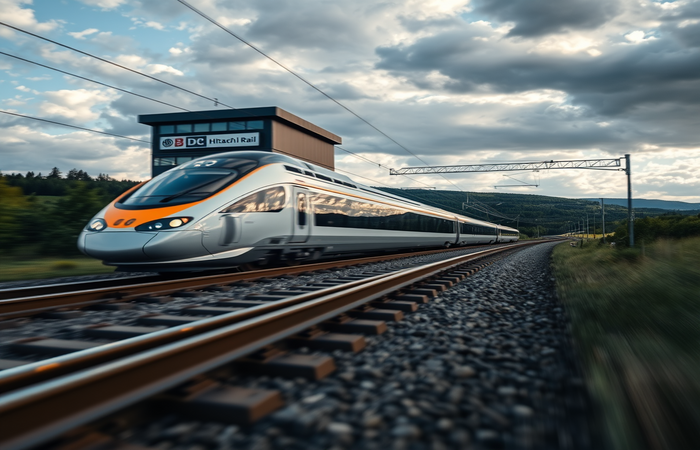
China’s newly unveiled Fuxing (復興, meaning “revival”) bullet train boasts a top speed of 350 km/h (217 mph), significantly enhancing travel between Beijing and Zhangjiakou. This eight-car Electric Multiple Unit (EMU) train accommodates over 560 passengers, featuring a dedicated media workspace equipped with a state-of-the-art 5G live broadcast studio—a global first for high-speed rail. The integration of 5G technology allows for seamless high-definition live broadcasts and data transmission during transit. Beyond its broadcasting capabilities, the train incorporates various passenger-centric features such as ski gear lockers, wheelchair-accessible spaces, and advanced air-cleaning systems for enhanced comfort and convenience.
Autonomous Operation and Energy Efficiency
A remarkable feature of the Beijing-Zhangjiakou high-speed railway is its implementation of autonomous driving technology at speeds of up to 350 km/h. This represents a significant leap forward in railway automation, potentially reducing energy consumption by up to 7% compared to human-operated trains. The system relies on over 2,700 automatic inspection sensors that collect real-time data, providing valuable insights for predictive maintenance and operational optimization. This sophisticated monitoring system allows for targeted maintenance, such as replacing only the most clogged air conditioning filters, maximizing efficiency and minimizing waste.
Integration of Advanced Technologies and Systems
The Fuxing train’s capabilities extend beyond its autonomous driving system. It seamlessly integrates with the BeiDou Navigation Satellite System (BDS), China’s global navigation satellite system, providing precise positioning and navigation data crucial for optimal train operation and safety. The advanced sensor network facilitates real-time condition monitoring, enabling predictive maintenance and minimizing disruptions. This integration of multiple technological systems showcases the growing trend of interconnected and intelligent infrastructure in modern railway systems.
Environmental Sustainability and Future Implications
The emphasis on energy efficiency through autonomous operation aligns with broader global efforts to reduce the environmental impact of transportation. While specific details regarding the train’s hybrid locomotive technology are not fully detailed in available information, the inherent efficiency gains from autonomous driving, coupled with intelligent maintenance practices, contribute towards a more sustainable rail operation. The success of this project highlights the potential for future high-speed rail systems to integrate similar technologies, further minimizing environmental impact and maximizing operational efficiency.
Conclusions
The launch of China’s new Fuxing bullet train marks a significant advancement in high-speed rail technology. The integration of a 5G live broadcast studio, autonomous driving capabilities, and a comprehensive sensor network for predictive maintenance showcases a commitment to innovation and technological integration within the railway sector. The train’s features, designed to enhance passenger experience and optimize operational efficiency, point towards a future where high-speed rail is not only faster but also more sustainable and intelligent. The 7% projected reduction in energy consumption through autonomous driving signifies a substantial step toward environmental sustainability in rail transport. The successful implementation of autonomous driving technology on the Beijing-Zhangjiakou high-speed railway sets a precedent for future projects, potentially inspiring similar advancements globally. The integration of the BeiDou Navigation Satellite System ensures precise navigation and positioning, further enhancing safety and operational efficiency. The real-time data collected by the extensive sensor network allows for predictive maintenance, minimizing downtime and maximizing the lifespan of the train’s components. The focus on passenger comfort with features like wheelchair-accessible spaces and ski gear lockers reflects a commitment to inclusive and user-friendly design. In conclusion, the Fuxing bullet train represents a paradigm shift in high-speed rail technology, offering a glimpse into a future characterized by speed, efficiency, sustainability, and enhanced passenger experience. This development underscores the potential for continued innovation within the railway industry, ultimately driving progress in global transportation networks.
RELATED POSTS
September 18, 2023 4:23 pm
Introduction The introduction of new rolling stock on any railway...
March 12, 2025 7:39 pm
The Vinci Contract and the Grand Paris Express: A Case...

October 22, 2025 3:54 pm
Railway plans adapt! Collaboration between EWR Co and Historic England...
February 13, 2021 6:08 am
The North American railcar leasing market is a dynamic sector...
June 4, 2025 4:00 pm
Hitachi Rail is modernizing the Hamburg-Berlin rail line with cutting-edge...
November 3, 2016 4:03 am
DB Cargo UK is restructuring, announcing 183 job cuts in...