
China’s 6,800km Rail Expansion: A Bold Investment
China’s investing 6,800km in new railway lines—a massive undertaking impacting global high-speed rail. Discover how this ambitious project shapes the future!
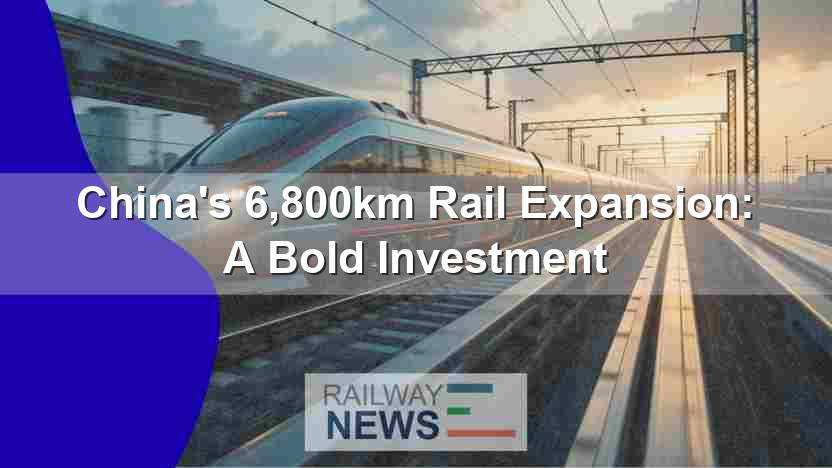
China’s ongoing commitment to expanding its railway network is a significant undertaking with far-reaching implications for its economy and society. This article explores the recently announced plan by China Railway Corporation (CRC) to invest in 6,800 kilometers (km) of new railway lines in a single year. This substantial investment, part of a broader governmental strategy to boost infrastructure development, represents a continuation of China’s long-term commitment to high-speed rail (HSR) and overall railway modernization. We will examine the details of this plan, analyzing its impact on various sectors, considering the financial aspects, and evaluating its potential consequences for the country’s economic growth and regional development. The analysis will also consider the broader context of China’s economic strategy and the challenges associated with such a large-scale infrastructure project. This includes a review of previous years’ investments, the implications for sustainable development, and the potential integration with other modes of transportation. The overall goal is to provide a detailed overview of this significant undertaking and its potential effects on China’s future.
The Scale and Scope of the Investment
The planned investment of 6,800 km of new railway lines, including at least 3,200 km of high-speed rail, is a considerable undertaking. This represents a substantial increase compared to the 4,683 km (including 4,100 km of HSR) invested in the previous year. This expansion underscores China’s continued prioritization of railway infrastructure development as a crucial driver of economic growth and national connectivity. The sheer scale of the project necessitates efficient planning, resource management, and meticulous execution to ensure timely completion and optimal operational efficiency upon completion. The geographical distribution of these new lines will play a key role in regional economic development, potentially bridging gaps in connectivity and fostering regional integration.
Financial Implications and Government Strategy
The financial commitment behind this ambitious project is substantial. While the specific investment target for this year remains undisclosed, the previous year saw an investment of CNY 802.9 billion ($117.12 billion USD), exceeding the initial target of CNY 732 billion ($106.75 billion USD). This signifies a significant financial commitment from the Chinese government, reflecting its unwavering dedication to infrastructure development despite efforts to curb local government debt. The National Development and Reform Commission (NDRC), China’s top economic planning agency, has approved numerous projects, including eight inter-city railway projects in Jiangsu and Anhui provinces, involving a combined investment of $33.82 billion USD, and $43.28 billion USD worth of urban railway projects in Shanghai, illustrating the government’s commitment to decentralized infrastructure development across various regions.
Regional Development and Economic Impact
The strategic placement of new railway lines is intended to stimulate regional development and enhance national connectivity. Projects like the approved lines in Jiangsu and Anhui provinces, and the extensive Shanghai urban railway expansion, showcase the targeted approach towards promoting balanced economic growth across different regions. Improved transportation infrastructure not only facilitates the movement of goods and people but also encourages foreign direct investment (FDI), stimulates tourism, and contributes to the creation of new jobs. This targeted investment aims to address regional disparities by enhancing access to markets and resources, thus contributing to more equitable economic distribution across the country. The strategic integration of these new lines with existing networks will be crucial in maximizing their overall economic benefit.
Challenges and Future Outlook
While the expansion is ambitious, challenges remain. These include efficient land acquisition, environmental considerations, managing potential disruptions during construction, and the long-term sustainability of these projects. Careful consideration of environmental impact assessments (EIAs) and mitigation strategies will be essential for minimizing the ecological footprint. Additionally, ensuring the long-term financial viability of these projects through optimized operational efficiency and effective fare strategies is paramount. Despite these challenges, China’s sustained commitment to railway infrastructure development suggests a continued focus on high-speed rail and broader railway modernization as essential drivers for economic growth and societal progress in the coming years.
Conclusions
China’s plan to invest in 6,800 km of new railway lines, including a significant portion dedicated to high-speed rail, represents a bold continuation of its long-term infrastructure strategy. This substantial investment, exceeding previous years’ figures despite efforts to control local government debt, underscores the government’s unwavering commitment to railway development as a catalyst for economic growth and national integration. The project’s scale demands meticulous planning, efficient resource allocation, and careful consideration of environmental and social implications. The strategic placement of these new lines, targeting regional development and connectivity enhancements, is expected to stimulate economic activity, attract foreign investment, and improve living standards across diverse regions. While challenges like land acquisition, environmental impact mitigation, and long-term financial sustainability remain, the ambitious nature of this plan signals continued investment in railway infrastructure as a cornerstone of China’s economic and social development strategy. The success of this initiative will depend on effective project management, robust financial planning, and a keen focus on ensuring environmental sustainability and social equity. The outcome holds significant implications not only for China’s economic future but also for its role as a global leader in high-speed rail technology and sustainable infrastructure development. The ongoing expansion of China’s railway network showcases a commitment to connectivity and economic progress, positioning the country as a model for large-scale infrastructure projects globally.

Railway infrastructure, rolling stock and transport technologies specialist focused on global rail industry developments, high-speed rail systems, signaling technologies and freight transportation. Covering railway investments, public transport modernization, rail operations and international mobility projects across Europe, Asia and North America.
RELATED POSTS

September 5, 2026 4:19 pm
CPK launched formal tender talks with four consortia to design...

September 6, 2026 4:12 am
Alstom delivered the first of 100 new G Class trams...
September 7, 2026 8:16 am
Midea, Gree and TCL shipped air conditioners via China Railway...

September 5, 2026 7:14 pm
HS2 Ltd signed renegotiated civils contracts with EKFB and Align...

September 19, 2026 11:19 am
China launched an experimental 1.11-tonne maglev test sled to 800...
September 7, 2026 4:15 pm
Zimbabwe approved the EUR 3 billion Harare Light Rail project,...