
China’s $12B High-Speed Rail: Chengdu-Chongqing Line & Geopolitics

This article examines the significant investment in China’s high-speed rail infrastructure, focusing on the recently approved Chengdu-Chongqing high-speed railway and its broader implications within the context of China’s national development strategy. The approval of the CNY 85.1 billion ($12.86 billion USD) project, encompassing 432.4 kilometers (270 miles) of new high-speed rail line connecting Chengdu and Chongqing, highlights the ongoing commitment to expanding and modernizing China’s transportation network. We will analyze the economic, strategic, and geopolitical implications of this project, considering its impact on regional development, national unity, and relations with neighboring countries, particularly India. Furthermore, we will explore the engineering challenges associated with such large-scale infrastructure projects in diverse geographical terrains and the advancements in railway technology that enable their successful completion. Finally, the article will discuss the broader context of China’s high-speed rail expansion and its role in national economic planning.
Economic and Regional Development
The Chengdu-Chongqing high-speed railway is a crucial component of China’s broader strategy to stimulate economic growth in its western regions. The enhanced connectivity between these two major southwestern cities will significantly reduce travel times, facilitating trade, tourism, and the movement of goods and people. This improved accessibility will boost economic activity within the Sichuan and Chongqing regions, creating jobs and promoting investment in various sectors. The faster transit times offered by high-speed rail are expected to unlock significant economic benefits for businesses and individuals, leading to a ripple effect across multiple industries. This project aligns with China’s long-term economic development goals, prioritizing infrastructure investment to drive regional prosperity and reduce disparities between its more developed eastern and less developed western regions.
Geopolitical Significance and National Unity
The project’s location and timing also carry considerable geopolitical significance. Its proximity to the border with India adds a layer of strategic importance, potentially aiding in the movement of troops and supplies. While officially framed as supporting economic development and national unity, this infrastructure investment also implicitly strengthens China’s presence in a strategically sensitive region. The high-speed rail line contributes to improved internal connectivity and the strengthening of national unity, connecting distant provinces and facilitating the movement of people and resources across the country. This is in line with the Chinese government’s emphasis on national integration and regional development.
Engineering Challenges and Technological Advancements
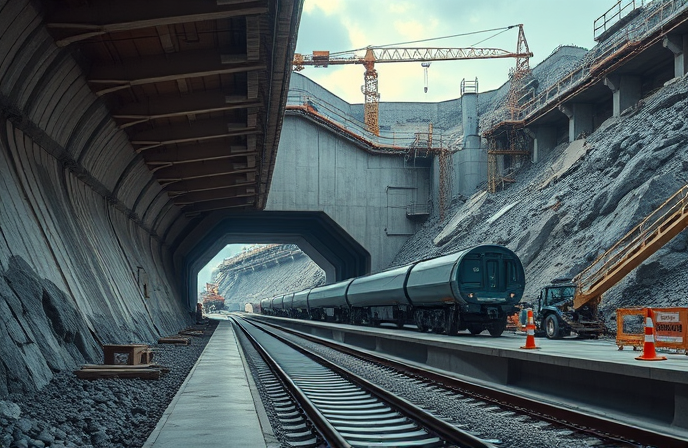
Constructing high-speed rail lines, especially across challenging terrain, presents complex engineering challenges. The Sichuan-Tibet Railway, a related project connecting Sichuan Province with Nyingchi in Tibet, exemplifies these hurdles, requiring specialized engineering solutions to navigate the region’s rugged mountains and unpredictable weather conditions. The Chengdu-Chongqing project, while less geographically challenging, still requires sophisticated engineering and construction techniques to ensure both safety and efficiency. This project showcases China’s growing expertise in overcoming such challenges, employing advanced technologies and construction methods.
China’s High-Speed Rail Expansion: A Broader Perspective
The Chengdu-Chongqing high-speed railway is just one example of China’s ambitious high-speed rail expansion program. This program involves massive investment in infrastructure, leading to a vast network that connects major cities across the country. This expansive network is a testament to China’s commitment to modernizing its transportation system and facilitating economic development. The technological advancements associated with this program, including the development of trains capable of operating on different track gauges, further highlight China’s technological progress and international ambitions in the rail sector. The advancements in rolling stock manufacturing, as seen with CRRC’s development of cross-border compatible high-speed trains, underscores China’s aim to become a global leader in rail technology and infrastructure development.
Conclusions
The approval of the CNY 85.1 billion ($12.86 billion USD) high-speed rail project connecting Chengdu and Chongqing represents a significant investment in China’s transportation infrastructure and underscores the country’s commitment to regional economic development and national unity. The project’s strategic location near the border with India adds a layer of geopolitical significance, though the primary focus remains on economic growth and improved connectivity within the southwest region. The construction of such a large-scale project necessitates advanced engineering and technological solutions to overcome the challenges posed by the terrain and climate. This project, along with the ongoing expansion of China’s high-speed rail network, demonstrates China’s commitment to becoming a global leader in rail technology and infrastructure, impacting both its domestic economy and its international relations.
The economic benefits of the Chengdu-Chongqing high-speed rail line are projected to be substantial, reducing travel times, boosting tourism, and facilitating trade between these two major cities. The project’s impact on national unity should not be underestimated, as enhanced connectivity promotes closer ties between different regions and strengthens national integration. From an engineering perspective, the success of the project highlights China’s advancing capabilities in overcoming complex geographical and climatic challenges. This accomplishment further reinforces China’s position as a key player in the global high-speed rail market. In conclusion, the Chengdu-Chongqing high-speed rail project is not simply a transportation initiative; it is a strategic investment with profound economic, geopolitical, and technological implications for China and its future development.
RELATED POSTS
June 29, 2025 4:33 pm
Barcelona Airport rail link Phase 2 nears completion, boosting connectivity.

New bipartisan bill S.3665 aims to make assaulting passenger rail...

November 6, 2015 6:54 am
German transport technology company Vossloh has signed a contract to...
November 19, 2019 11:18 pm
This article explores the significant railway infrastructure upgrade underway in...

January 20, 2010 9:00 am
Siemens will supply 13 Hermelijn type low-floor light rail vehicles...
July 20, 2020 6:04 pm
This article examines the arrival of the first two Waratah...