
Cherbourg ROLA: French Rail-Sea Innovation & Sustainable Freight
New Cherbourg ROLA terminal opens, boosting French rail freight. Multimodal transport links Spain, Ireland, and UK. Reduces road transport reliance.
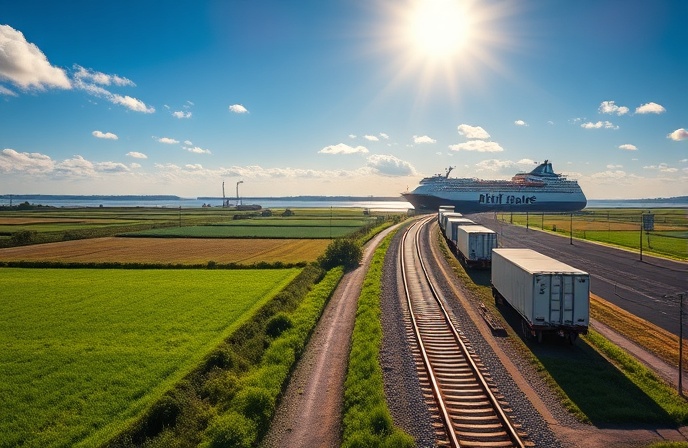
Cherbourg ROLA Terminal Inaugurated, Ushering in a New Era for French Freight Transport
The Port of Cherbourg witnessed a significant milestone on July 17, 2025, with the inauguration of its new Rollende Landstraße (ROLA) terminal. This initiative, spearheaded by Hervé Morin, President of Ports de Normandie, and Philippe Tabarot, French Minister for Transport, marks a pivotal moment in France’s freight transport landscape. The new terminal, connecting Cherbourg and Mouguerre in the Pyrénées-Atlantiques region, opens a multimodal “rail motorway,” strategically linking Spain with Ireland and the United Kingdom. This “ferroutage” project, the French term for combined transport, aims to significantly reduce reliance on road transport by shifting freight to rail and sea. This article will examine the key features of the Cherbourg ROLA terminal, its operational capabilities, and its anticipated impact on the French and European freight sectors.
Construction and Operational Capabilities
Following 17 months of construction, the Cherbourg ROLA terminal was completed at the end of 2024, with the first freight train arriving on May 20, 2025. The terminal is equipped with cutting-edge Lohr technology, and is conveniently located just a short distance from ferry departure ramps. This strategic placement minimizes transfer times, promoting efficient operations. The facility can accommodate trains up to 750 meters in length and simultaneously load or unload 12 trailers. This efficient loading/unloading process is crucial for minimizing dwell times and maximizing the effectiveness of the ROLA service.
Environmental Benefits and Service Launch
The Brittany Ferries ferroutage project, operating from the Cherbourg ROLA terminal, is designed with a strong emphasis on environmental sustainability. The initiative seeks to reduce CO₂ emissions by transferring up to 25,000 trailers annually from road to rail and sea, effectively avoiding thousands of long-distance road journeys. The service is scheduled to ramp up gradually, with six return trips per week planned by September 2025. Brittany Ferries has ambitious goals, aiming to offer a regular daily return rail service utilizing two trains, which would translate to 320 return trips per year by 2030.
Infrastructure Investment and Partners
The project has received substantial investment, totaling EUR 11.2 million for the Cherbourg ROLA terminal itself. This investment is jointly financed. Furthermore, SPL Cherbourg Port, a company owned by Ports de Normandie (90%) and Cotentin (10%), has invested an additional EUR 4 million in essential equipment and infrastructure. The rehabilitation of the rail line also received significant financial support, with the French State contributing EUR 1.5 million and Ports de Normandie and the Normandie Region providing EUR 2.4 million. These investments demonstrate the strong commitment from public and private stakeholders to support this vital project.
Operational Management and Rolling Stock
The crucial line linking Mouguerre to Cherbourg is managed by BAI Rail. BAI Rail has invested in 47 specially-designed Lohr-type wagons, to facilitate operations on this rail motorway. The selection of Lohr wagons highlights the focus on advanced technology to ensure the efficient and reliable transfer of trailers. The coordination of this investment and rolling stock ensures seamless integration with the rest of the operation.
Conclusion
The inauguration of the Cherbourg ROLA terminal represents a significant advancement in France’s commitment to sustainable freight transport. The project’s focus on modal shift, supported by substantial investments in infrastructure, technology, and operational expertise, positions it as a model for future rail-sea transport initiatives across Europe. The success of the Brittany Ferries service is a strong indicator of the long-term viability of ferroutage as a cost-effective and environmentally friendly transport option. The anticipated increase in rail freight capacity will contribute to reducing road congestion, emissions, and reliance on fossil fuels. Looking ahead, the expansion of the Cherbourg ROLA service, combined with the potential for similar initiatives in other strategic port locations, is expected to significantly enhance the efficiency and sustainability of the French and European freight networks, paving the way for a more integrated and environmentally responsible future for the railway industry.
Company Summary
Brittany Ferries is a key player in maritime transport, known for its passenger and freight ferry services connecting France with the UK, Ireland, and Spain. Their investment in the Cherbourg ROLA terminal showcases a commitment to expanding its rail-sea transport capabilities. BAI Rail is a rail freight operator providing services on the rail motorway line linking Mouguerre to Cherbourg. Their investment in Lohr wagons is critical to support the efficiency of the rail motorway.
RELATED POSTS
Union Pacific earned an 80% top Class I railroad intermodal...

March 6, 2026 12:10 pm
Consortium Announces Digital Services Platform for UK Rail Sector A...
March 5, 2026 7:57 pm
Banedanmark launched battery train operations on Denmark's 67 km Skjern–Holstebro...

March 5, 2026 4:23 am
Renfe suspends Spain rail services on Madrid-Andalusia corridor until February...

March 4, 2026 10:12 am
Amtrak and Siemens deploy 8 Airo trains for the U.S....
March 6, 2026 4:07 pm
Digital Subscription Market Analysis Q1 2026 Analytics firm Antenna confirmed...