
Chennai Metro Blue Line Complete: A City Transformed
Chennai’s Metro Blue Line is complete! This incredible engineering feat, showcasing seamless multi-line integration, significantly improves urban mobility and sets a new standard for metro projects.
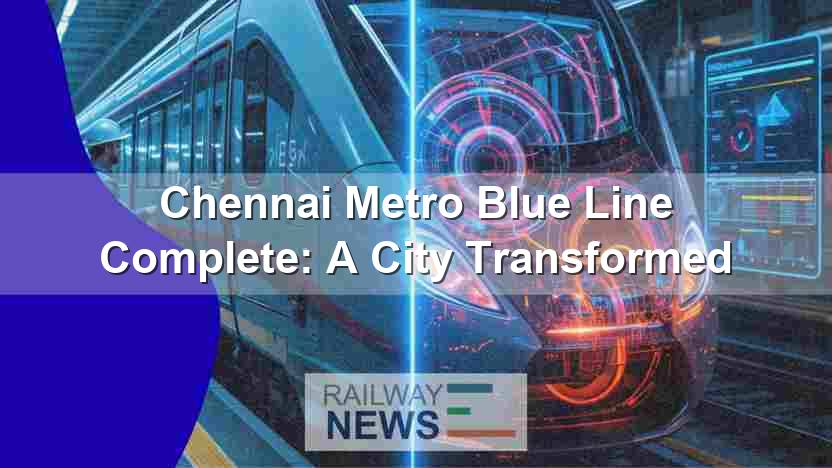
This article examines the significant completion of the Chennai Metro Blue Line’s final section, marking a pivotal moment in Chennai’s (India) public transportation infrastructure development. The opening of this 10km stretch, connecting AG-DMS and Washermanpet, completes Phase I of the project, totaling 45km of operational track. This expansion significantly enhances connectivity within the city, reducing commute times and providing access to key areas like the Chennai International Airport. We will delve into the engineering aspects of this final section, discuss the broader implications for the city’s urban planning and economic growth, analyze the funding and partnerships involved in the project, and finally, consider the future expansion plans for Chennai’s metro system and its challenges.
The Engineering Feat of the Final 10km Stretch
The newly opened 10km section presents a notable engineering achievement. Its entirely underground construction, incorporating eight new stations, showcases the complexity and precision required in urban metro development. This underground infrastructure necessitates meticulous planning and execution, including advanced tunneling techniques, robust ventilation systems, and meticulous station construction to minimize disruption to existing infrastructure and daily city life. The integration with the existing Green Line (Line 2) at Chennai Central station further highlights the sophisticated planning and coordination needed for a seamless multi-line network. The successful completion of this section underscores the expertise of the Chennai Metro Rail Limited (CMRL) and its partners in navigating the challenges of underground construction in a densely populated urban environment.
Impact on Urban Mobility and Economic Growth
The completed Blue Line dramatically improves Chennai’s urban mobility landscape. The reduced travel time between Washermanpet and the Chennai International Airport, approximately halved to 45 minutes, exemplifies the positive impact on commuters. This improved accessibility facilitates greater economic activity by reducing commute times for employees, boosting tourism, and streamlining the movement of goods. The enhanced connectivity also contributes to a more efficient and sustainable transportation system, reducing traffic congestion and associated environmental pollution, thus contributing to a more livable and productive city. The strategic location of stations also promotes economic development around transit-oriented developments (TODs).
Funding and Partnerships: A Collaborative Effort
The successful implementation of the Chennai Metro project highlights the importance of collaborative funding and partnerships. The CMRL, a joint venture between the state and union governments, played a central role. Securing funding from organizations like the Japan International Cooperation Agency (JICA) further demonstrates the commitment to international cooperation in infrastructure development. The allocation of Rs26.81bn ($378m) in the 2019-20 budget underscores the government’s significant investment in enhancing Chennai’s transportation infrastructure. This multifaceted funding approach demonstrates the complex financial engineering required for large-scale public transit projects. Successful partnerships also extend to the technology and engineering firms involved in the project’s implementation.
Phase II and Future Expansion: Challenges and Opportunities
With Phase I now complete, the focus shifts to Phase II, an ambitious 119km expansion across three corridors. This phase presents significant challenges, including securing further funding, managing land acquisition, and navigating the complexities of expanding the network while minimizing disruptions to the city. However, the success of Phase I provides a strong foundation for the future expansion. The lessons learned from the challenges faced in constructing Phase I, especially regarding underground construction, will be invaluable in mitigating risks in future projects. Phase II’s successful implementation will further enhance Chennai’s position as a leading city in India, boosting economic growth and improving the quality of life for its citizens. Soil testing for Phase II is underway, indicating continued progress in this monumental endeavor.
Conclusion
The completion of the Chennai Metro Blue Line’s final section represents a remarkable achievement in urban transportation infrastructure development. The project’s successful execution demonstrates the importance of meticulous planning, advanced engineering, strategic funding, and effective partnerships. The 10km underground stretch, integrating seamlessly with the existing network, significantly enhances connectivity and reduces commute times, boosting economic growth and improving the quality of life for Chennai’s residents. While Phase II presents substantial challenges, the lessons learned from the successful completion of Phase I provide a strong foundation for future expansion. The continuing investment in Chennai’s metro system underscores the city’s commitment to sustainable and efficient urban transport, ultimately paving the way for a more connected, prosperous, and livable urban environment. The strategic use of underground construction in high-density urban areas, coupled with successful integration of multiple lines, sets a benchmark for future metro projects in similar environments. The project showcases the collaborative effort of government bodies, international funding agencies, and private sector companies involved, highlighting a successful model for large scale infrastructure development. The long-term vision of the Chennai Metro project, demonstrated by the progression to Phase II and beyond, secures Chennai’s future as a modern and efficiently connected city.

Railway infrastructure, rolling stock and transport technologies specialist focused on global rail industry developments, high-speed rail systems, signaling technologies and freight transportation. Covering railway investments, public transport modernization, rail operations and international mobility projects across Europe, Asia and North America.
RELATED POSTS

October 1, 2026 7:09 am
United States regulators confirmed a September 30 deadline for the...

October 1, 2026 12:13 am
Illinois approved $1.5 billion annually for the Northern Illinois Transit...

October 4, 2026 5:14 pm
Alstom secured a CA$4.7 billion order from VIA Rail Canada...

October 1, 2026 6:10 am
Amtrak approved a System Expansion Committee on July 30 to...
October 1, 2026 3:12 am
Greenbrier confirmed Brian Comstock as new president and CEO effective...

October 6, 2026 2:14 am
Union Pacific launched export rail shipments with Ferromex to deliver...