
CER’s European Port Rail Push: Climate Goals & 30% Modal Share
CER urges EU to boost rail use in European ports, aiming for 30% modal share, for climate and economic gains.
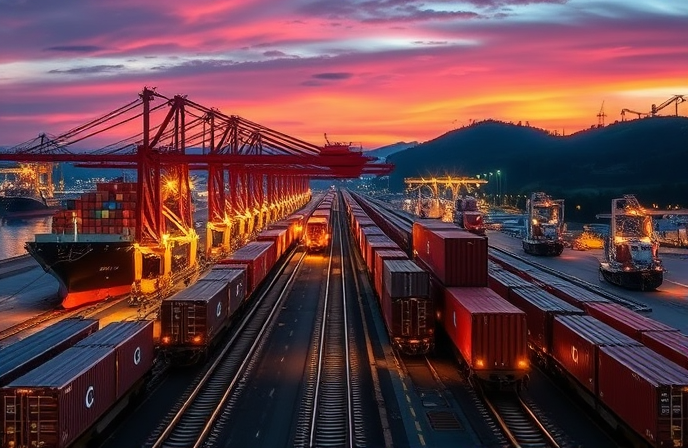
CER Calls for Rail Revolution in European Ports to Boost Competitiveness and Climate Goals
The Community of European Railway and Infrastructure Companies (CER) is advocating for a dramatic shift in European port operations, urging the European Commission to prioritize rail integration in the upcoming European Port Strategy. Released on June 27, 2025, CER’s sector position paper emphasizes that the strategic inclusion of rail is crucial for enhancing connectivity, strengthening economic competitiveness, and achieving the European Union’s ambitious climate goals. CER, an organization representing railway undertakings, infrastructure managers, and other railway-related companies, argues that the current low rail modal share at many European ports is a significant barrier to achieving these objectives. This article will delve into CER’s recommendations, the rationale behind them, and the potential impacts on the European railway and port industries.
The Call for a 30% Rail Modal Share Benchmark
The core of CER’s proposition centers on establishing a minimum 30% rail modal share at all major European ports. This ambitious benchmark is driven by the stark reality that rail’s current presence is often underwhelming. While ports like Hamburg and Bremerhaven demonstrate successful rail integration, with shares exceeding 30% and 50% respectively, other major hubs lag. For example, ports such as Rotterdam, Antwerp-Bruges, and Valencia currently register rail shares below 10%. This underutilization of rail represents a missed opportunity to capitalize on rail’s inherent advantages in terms of emissions reduction, efficiency, and economic return. The CER’s initiative aligns with the EU’s broader goal of transitioning to a more sustainable and efficient transport system, as detailed in the Green Deal.
The Economic and Environmental Case for Rail-Port Connectivity
CER underscores the compelling economic and environmental advantages of prioritizing rail. Citing recent EU-funded studies, the organization highlights that rail consistently outperforms road transport in emissions reduction, even under scenarios where trucking becomes significantly cleaner through electrification and other innovations. Moreover, the economic return on investment in efficient logistics infrastructure is substantial. According to CER, every €1 invested in improving rail-port connectivity yields €5 in societal value. This impressive return on investment (ROI) stems from factors such as reduced congestion, lower external costs related to pollution, and enhanced supply chain resilience. This strong ROI makes the investment in rail a highly attractive proposition for both public and private stakeholders.
Recommendations for Implementation and Funding
To facilitate this transition, CER offers several concrete recommendations for the European Commission. These include ensuring streamlined processes, improved infrastructure, and adequate funding. Specifically, CER advocates for robust funding through the next Multiannual Financial Framework (MFF) for the period 2028-2034. They propose a EUR 100 billion allocation through the Connecting Europe Facility (CEF) specifically to finance port rail integration projects and infrastructure upgrades. This funding is crucial to modernize railway lines, construct dedicated rail terminals within ports, and invest in intermodal logistics solutions. CER also stresses the importance of regulatory frameworks and streamlined processes to facilitate the seamless movement of freight between rail and port facilities. Such measures will enable faster turnaround times and better overall efficiency.
Strategic Autonomy and the Geopolitical Dimension
Beyond economic and environmental considerations, CER emphasizes the strategic importance of rail-port connectivity in the context of geopolitical uncertainties. In an era of increasing trade pressures and potential disruptions to supply chains, maintaining EU control over critical port assets is paramount. Diversified supply routes, reliable rail infrastructure, and the dual-use capability of infrastructure (for both civilian and military logistics) are essential elements of European sovereignty. By strengthening rail’s role in ports, the EU can build more robust and resilient supply chains that are less susceptible to external shocks.
Conclusion
CER’s call for increased rail integration in European ports represents a pivotal moment for the future of European logistics. The organization’s recommendations, if implemented, would significantly enhance the efficiency, sustainability, and resilience of the EU’s transportation network. The emphasis on achieving a 30% rail modal share is an ambitious but achievable goal that aligns with the EU’s broader climate and economic objectives. The industry implications are far-reaching, potentially reshaping investment priorities for railway infrastructure, intermodal terminals, and port operations. For the railway sector, this will require investment in new infrastructure and technology, increasing the demand for skilled workers and innovative freight solutions. The EU’s commitment to the Green Deal, coupled with the growing focus on strategic autonomy, provides a strong impetus for the adoption of CER’s proposals. The future outlook is promising: a greener, more competitive, and more secure European Union, powered by a strong and well-integrated rail network at its ports.
RELATED POSTS
Union Pacific earned an 80% top Class I railroad intermodal...

March 6, 2026 12:10 pm
Consortium Announces Digital Services Platform for UK Rail Sector A...
March 5, 2026 7:57 pm
Banedanmark launched battery train operations on Denmark's 67 km Skjern–Holstebro...
March 5, 2026 4:23 am
Renfe suspends Spain rail services on Madrid-Andalusia corridor until February...
March 6, 2026 4:07 pm
Digital Subscription Market Analysis Q1 2026 Analytics firm Antenna confirmed...
March 4, 2026 10:12 am
Amtrak and Siemens deploy 8 Airo trains for the U.S....