
Canada’s Rail Safety: RSIP’s 105 Projects
Canada’s investing $20.7 million in 105 Rail Safety Improvement Program projects! Modernizing crossings, boosting tech, and raising awareness – discover how safer railways benefit everyone.
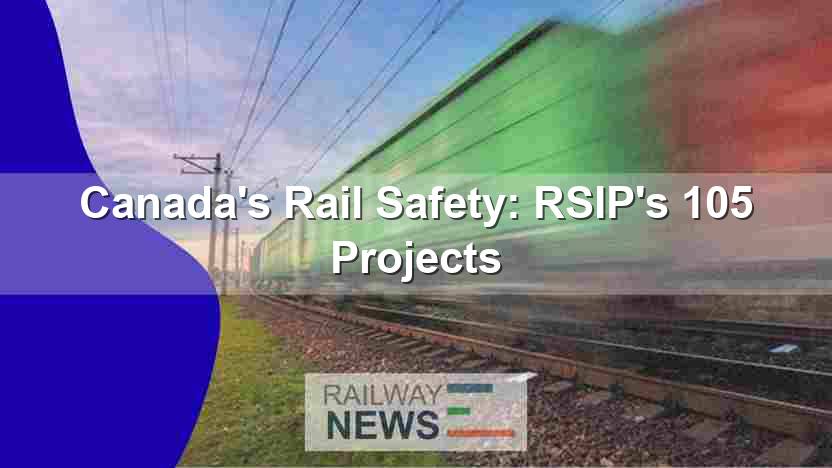
This article examines the Canadian government’s significant investment in rail safety, focusing on the 105 projects announced under the Rail Safety Improvement Program (RSIP). The initiative, totaling C$20.7 million (approximately $15.9 million USD), addresses a critical need to enhance safety at railway crossings and along rail lines. The program’s scope extends beyond infrastructure upgrades, encompassing technological advancements, research, and public awareness campaigns. By analyzing the program’s structure and objectives, we can understand its potential impact on reducing railway-related accidents and fatalities, bolstering public confidence in Canada’s rail transportation system, and contributing to the country’s economic well-being. The following sections delve deeper into the program’s key components and their strategic importance.
Addressing the Critical Issue of Grade Crossing Safety
A significant portion of railway-related accidents and fatalities in Canada occur at grade crossings (locations where roads and rail lines intersect at the same level). The RSIP directly addresses this critical issue. The 105 projects include infrastructure improvements at high-risk crossings, such as installing advanced warning systems (like flashing lights and gates), improving signage and pavement markings, and upgrading crossing surfaces to improve vehicle traction. The strategic focus on grade crossings reflects a data-driven approach, prioritizing areas with the highest accident rates. This targeted approach ensures efficient allocation of resources to maximize the impact of safety improvements. Additionally, collaborations between railway companies and road authorities are crucial in identifying and addressing the most dangerous crossings.
Technological Advancements and Research Initiatives
Beyond infrastructure upgrades, the RSIP invests in technological innovation and research. A portion of the funding is allocated to the deployment of new technologies aimed at enhancing safety. This could involve implementing advanced signaling systems, improving train control mechanisms, or deploying track monitoring systems to detect and prevent potential hazards. Equally important are the research and study initiatives funded under the program. These efforts are crucial for identifying emerging safety concerns, evaluating the effectiveness of current safety measures, and informing future investments in rail safety technologies. Investing in research demonstrates a commitment to ongoing improvements and adaptation to evolving challenges within the rail transportation sector.
Public Awareness and Education Programs
The RSIP recognizes the importance of public awareness in improving rail safety. The program includes dedicated funding for educational and awareness campaigns targeting both drivers and pedestrians. These initiatives aim to increase public understanding of safe practices around railways, such as obeying crossing signals and exercising caution near tracks. By educating the public, the program fosters a safer environment around railways, complementing the infrastructure and technological improvements implemented at crossings and along rail lines. This multi-faceted approach addresses both the physical and human elements contributing to railway accidents.
Collaboration and Program Sustainability
The success of the RSIP hinges on effective collaboration among stakeholders. The program emphasizes partnership between the government, railway companies, and road authorities to identify, prioritize, and implement safety improvements. This collaborative approach ensures efficient resource allocation and a coordinated effort towards achieving common safety goals. The RSIP builds upon three previous rail safety initiatives, indicating a long-term commitment to continuous improvement and investment in rail safety. The increased funding and expanded scope of this program signal a sustained and detailed approach to enhancing rail safety across Canada. This collaborative model creates a sustainable framework for ongoing safety enhancements in the rail industry.
Conclusion
Canada’s Rail Safety Improvement Program represents a significant step towards enhancing the safety of its national rail network. By investing C$20.7 million in 105 projects, the government is demonstrating a clear commitment to reducing railway-related accidents and improving public confidence. The program’s multi-pronged approach, encompassing infrastructure upgrades at grade crossings, advancements in rail technology, and crucial public awareness campaigns, addresses the multifaceted nature of rail safety challenges. The collaborative model involving government, railway companies, and road authorities underscores a shared responsibility for ensuring a safe and efficient rail transportation system. The long-term success of the RSIP will depend on continued collaboration, ongoing evaluation of implemented measures, and adaptation to evolving safety concerns. Through sustained investment and a commitment to innovation, Canada is striving to build a safer and more reliable rail system for the benefit of its citizens and its economy.

Railway infrastructure, rolling stock and transport technologies specialist focused on global rail industry developments, high-speed rail systems, signaling technologies and freight transportation. Covering railway investments, public transport modernization, rail operations and international mobility projects across Europe, Asia and North America.
RELATED POSTS

September 6, 2026 5:19 am
Hitachi delivered Taiwan's first N700ST high-speed train from Japan in...

September 5, 2026 4:19 pm
CPK launched formal tender talks with four consortia to design...

September 5, 2026 7:14 pm
HS2 Ltd signed renegotiated civils contracts with EKFB and Align...
September 6, 2026 6:17 am
Hungary ordered a national ban on most freight trains from...
September 6, 2026 8:17 am
DB InfraGO reopened the Nuremberg-Regensburg line in Bavaria on 31...

September 6, 2026 1:17 am
Hitachi Toshiba Supreme Consortium confirmed the first of 12 N700ST...