
Calgary Green Line MSF: KLS Earthworks & Transit Infrastructure
Calgary’s Green Line LRT MSF gets crucial earthworks contract from KLS. Project aims for late 2025 completion.
“`html
KLS Awarded Contract for Crucial Earthworks at Calgary Green Line LRT MSF
The expansion of Calgary’s light rail transit (LRT) network takes a significant step forward as KLS Earthworks & Environmental secures the contract for site grading and servicing at the future Maintenance and Storage Facility (MSF) for the Green Line Southeast Project. The announcement, which details the “who, what, when, where, why, and how” of this critical infrastructure undertaking, underscores the commitment to advancing Calgary’s public transportation. KLS will be responsible for preparing the site, located north of 126 Avenue SE between 40 Street and 52 Street SE, for the construction of the MSF, a crucial element of the city’s expanded transit capabilities. With a completion target of late 2025, this project represents not only a significant investment in infrastructure but also a testament to the local expertise driving Calgary’s growth. This article will examine the scope of KLS’s work, the importance of the MSF, and the broader implications for Calgary’s burgeoning transit network.
Preparing the Ground: Scope of Work and Technical Specifications
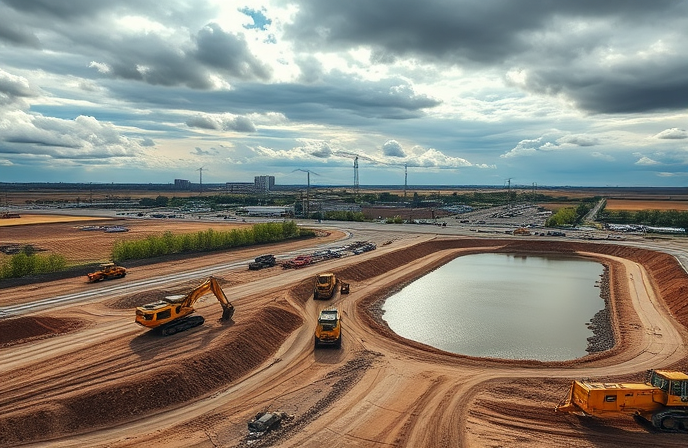
KLS Earthworks & Environmental’s contract encompasses a comprehensive suite of site preparation activities. The primary tasks involve the removal of topsoil and the execution of rough grading across the entire site, ensuring a stable foundation for the MSF’s future structures. Crucially, the project also includes the construction of three retention ponds: two dry ponds and one wet pond, strategically positioned at the western boundary of the project area. These ponds are essential components of the stormwater management system, designed to mitigate environmental impact and ensure compliance with stringent regulations. Furthermore, KLS will install critical deep utilities, including water mains, sanitary sewer lines, and robust stormwater infrastructure. This phase of the project is critical to the MSF’s functionality, providing essential services to support the operational demands of the LRT vehicle maintenance and storage.
The Maintenance and Storage Facility: A Hub of Operations
The MSF, once constructed, will serve as the operational heart of the Green Line Southeast Project. Its primary function will be to house the vital operations necessary for the storage, maintenance, cleaning, and servicing of the light rail vehicles. This will include a comprehensive maintenance facility, equipped with the latest technologies for diagnostic and repair work, as well as storage bays designed to accommodate a growing fleet of LRT vehicles. The MSF is not merely a building; it is a strategic asset for managing the operational efficiency, reliability, and longevity of the entire Green Line system. Efficient maintenance practices are fundamental to reducing downtime, enhancing passenger experience, and ensuring adherence to safety protocols. The design and operation of the MSF reflect a commitment to long-term operational sustainability and the effective management of Calgary’s expanding public transit infrastructure.
Integration with the Broader Transit Network: A Key Transit Node
The MSF is intrinsically linked to a larger, integrated public transit hub centered around Shepard Station. This pivotal transit node will accommodate a comprehensive range of transportation options, improving connectivity. Adjacent to the MSF, the site will include Shepard Station, equipped with a 920-stall Park and Ride facility, designed to accommodate an influx of commuters. Furthermore, the site will incorporate bus terminals, providing seamless integration with the city’s bus rapid transit network. A public plaza will also enhance the space, fostering a vibrant community hub. This strategic convergence of various transit modes underscores the project’s goal of promoting a holistic approach to urban mobility, encouraging transit ridership, and fostering an integrated and interconnected public transport system.
Conclusion
The awarding of the contract to KLS Earthworks & Environmental marks a significant milestone in the Calgary Green Line LRT project, demonstrating a concerted push toward a more robust and efficient public transportation system. The preparation work by KLS is critical for the timely completion of the MSF, which will serve as a pivotal hub for the operational functions necessary to manage the fleet. By incorporating modern infrastructure, including well-planned stormwater management and integrated transit connectivity, the Green Line project is poised to transform the landscape of urban mobility in Calgary. As the project progresses, it will be vital to monitor the project for any logistical delays and challenges. The industry will be watching to ensure a successful implementation of the MSF, and to see how it will serve as an example for large-scale transit expansions in urban environments, which highlights the importance of collaboration, meticulous planning, and the seamless integration of various components to ensure efficient and reliable transit services. Further updates and insights will be essential to inform the public and stakeholders about the project’s progression.
Company Summary: KLS Earthworks & Environmental
With over 25 years of operational experience in Calgary, KLS Earthworks & Environmental has established itself as a prominent player in the earthworks and environmental construction sector. The company’s local expertise and proven track record in undertaking large-scale infrastructure projects have solidified its reputation as a leader in the region. Their expertise is well-suited to the unique challenges of site preparation and utility installation for complex projects such as the Calgary Green Line MSF, positioning them as a key contributor to the city’s ongoing infrastructure development. Their involvement in this project underscores their ability to manage intricate projects and ensure successful delivery.
“`
RELATED POSTS
February 10, 2026 4:00 pm
Union Pacific launches Big Boy No. 4014's western tour March...

July 9, 2023 10:07 am
Deutsche Bahn’s Anti-Competitive Practices: A Case Study in Rail Market...
October 29, 2022 4:35 am
Strategic Rail Maintenance and Technological Advancement: A Partnership Between Wabtec...

February 21, 2025 7:43 am
Revolutionizing Railway Training: Siemens Mobility and Sogeclair Simulation Partner on...
November 12, 2025 5:54 am
Alstom and Avanti West Coast honored veterans. A travelling poppy...
November 23, 2021 9:25 am
CAF secures a 15-year contract with Transport for Wales, providing...