
Calder Park Bridge: Melbourne Rail Safety & Efficiency Boost
Melbourne’s Calder Park level crossing removed, boosting commuter rail.
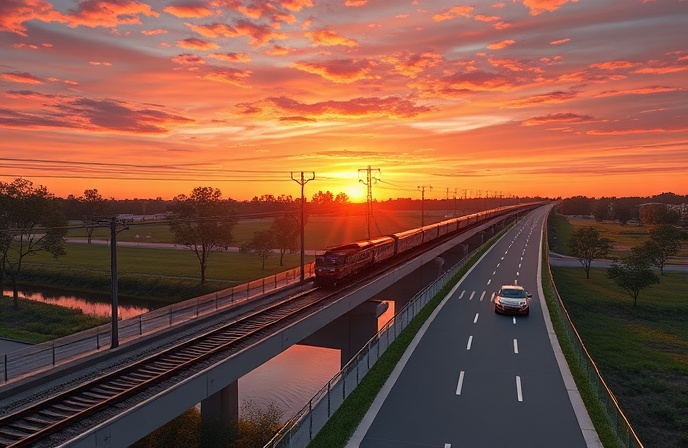
Calder Park Level Crossing Removal Completed: A Boost for Melbourne Commuters
Melbourne commuters and the railway industry are celebrating the completion of the Calder Park Drive bridge, eliminating another dangerous level crossing and improving traffic flow. The new overpass in the Victorian suburb of Calder Park, officially opened to motorists, represents a significant milestone in the state government’s Level Crossing Removal Project (LCRP). This project, which began with the aim of improving safety and efficiency on Melbourne’s rail network, has now eliminated 87 level crossings. This article will explore the project’s impact on traffic management, safety enhancements, and the ongoing efforts to modernize Melbourne’s rail infrastructure. The opening of the Calder Park Drive bridge demonstrates the continued commitment to enhancing the efficiency and safety of rail transport in the face of increasing demand.
Reducing Bottlenecks and Enhancing Safety
The primary driver behind the Calder Park Drive bridge construction was to address the congestion and safety risks associated with the crossing of railway lines and road traffic. The project has directly tackled this issue by providing a grade-separated crossing, allowing road traffic to pass over the rail line. Before the overpass’s completion, more than 10,000 vehicles per day utilized the two level crossings at Calder Park Drive and Holden Road, enduring potential delays of up to 26 minutes during peak periods when 25 trains crossed the road in the morning rush hour. This resulted in considerable downtime and reduced efficiency for commuters. The elimination of these level crossings significantly reduces the likelihood of accidents and ensures continuous rail operations, thus improving overall safety and operational efficiency for both road users and train services.
Project Implementation and Environmental Considerations
The successful completion of the Calder Park Drive bridge involves not only engineering feats but also environmental considerations. Over the coming months, finishing work on the bridge will include a shared-use path for pedestrians and cyclists. This addition not only increases the accessibility of the area, but also promotes sustainable transportation options. Extensive landscaping works are also planned, including the planting of over 200 trees and 100,000 plants, shrubs, and grasses throughout the area. This highlights a commitment to improving the local environment in addition to enhancing transportation infrastructure. The landscaping efforts aim to mitigate the impact of construction and create an aesthetically pleasing and functional space that benefits both the community and local wildlife.
Celebration and Community Engagement
The opening of the Calder Park Drive bridge was marked with community excitement and a unique celebration of local history. To commemorate the occasion, two former race cars – a 1990 Chevrolet Lumina NASCAR and a 1990 Holden VN Commodore AUSCAR – were among the first vehicles to traverse the new bridge. Both vehicles raced at the nearby Calder Park Raceway’s Thunderdome in the 1990s, adding a layer of community involvement to the opening event. Richard White, a driver of one of the inaugural vehicles, noted the smooth ride provided by the new overpass. This event not only highlights the bridge’s successful construction but also underscores the project’s positive impact on the local community.
Conclusion
The Calder Park Drive bridge is a successful addition to the Level Crossing Removal Project, representing a considerable advancement in reducing traffic delays, improving safety, and streamlining rail operations in Melbourne. The removal of the 87th level crossing illustrates the state’s continuing commitment to modernizing rail infrastructure. The project’s broader implications include enhanced public safety, reductions in train delays, and improved transport efficiency, all contributing to a more reliable and efficient network for commuters and freight services. The inclusion of shared-use paths and environmental considerations ensures the project delivers not only transport benefits but also strengthens community ties and promotes sustainability. Future phases of the LCRP promise further upgrades to the network, incorporating technological innovations to further improve its operational efficiency.
RELATED POSTS

November 9, 2022 12:03 pm
This article examines the significant €368 million contract awarded to...
February 15, 2026 4:59 pm
Vitoria-Gasteiz expands its tram network with nine new 44-meter CAF...
September 28, 2023 6:56 pm
This article explores the strategic restructuring undertaken by Alstom in...

February 14, 2026 8:40 am
České dráhy establishes its World of Railways Foundation, transferring over...

December 10, 2025 8:00 pm
FirstGroup's First Rail London wins the London Overground contract! Expect...
February 23, 2020 10:42 am
Accelerated Rail Infrastructure Improvements: The MBTA’s 2020 Plan and its...