
Budapest-Belgrade Railway: China’s BRI Impact
Modernizing the Budapest-Belgrade railway: a $2.1 billion Sino-Hungarian collaboration boosting Central European trade and connectivity via the Belt and Road Initiative. Discover how!
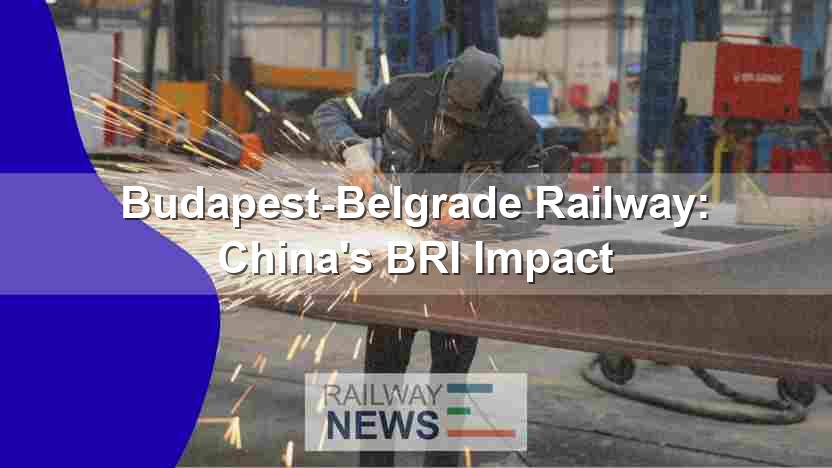
This article explores the significant undertaking of modernizing the Budapest-Belgrade railway line, a project spearheaded by a joint venture between Hungarian and Chinese companies. The endeavor, representing a substantial investment of approximately $2.1 billion, is not merely a construction project; it’s a strategic initiative with far-reaching implications for regional trade, transportation efficiency, and the broader integration of Central Europe into global supply chains. The project’s scope encompasses the construction of a new 150km high-speed rail section within Hungary, alongside significant upgrades to the existing infrastructure. This initiative falls under China’s Belt and Road Initiative (BRI), a global infrastructure development strategy aiming to enhance connectivity across Eurasia. The implications of this project extend beyond the immediate benefits of reduced travel times and increased freight capacity, impacting economic development, geopolitical relations, and the future of rail infrastructure development in the region. The following sections will explore the technical aspects of the project, its economic benefits, the geopolitical context, and the potential challenges involved in its successful completion.
Project Scope and Technical Details
The core of the project involves the construction of a 150-kilometer high-speed rail line within Hungary, connecting Budapest and Belgrade. This new line, alongside substantial upgrades to the existing track, promises to significantly reduce travel time between the two capitals, from the current eight hours to under four. The upgrade will involve improvements to signaling systems, track geometry, and potentially gauge conversion (depending on the chosen track gauge) to allow for higher speeds and increased freight capacity. The consortium, CRE Consortium, composed of RM International (a subsidiary of Hungary’s Opus Global) and Chinese state-owned enterprises China Tiejiuju Engineering & Construction and China Railway Electrification Engineering Group (CREC), brings together expertise in both construction and electrification. The use of advanced technologies in signaling, track laying, and electrification is expected to improve operational efficiency and reduce maintenance costs. The success of this venture depends heavily on the meticulous implementation of these technical specifications, guaranteeing high-speed, safe, and reliable railway operations.
Economic Implications and Regional Connectivity
The economic benefits extend beyond the improved transportation links between Budapest and Belgrade. The modernized railway is a key component of the Belt and Road Initiative (BRI), acting as a crucial freight corridor. This will facilitate the seamless flow of goods from China, via the Greek port of Piraeus, into Central Europe. This enhanced connectivity will stimulate trade, attracting foreign investment and creating economic opportunities along the rail corridor. Additionally, reduced transportation costs and time will make Hungarian and Serbian goods more competitive in both regional and international markets. The project also stimulates regional economic growth through job creation during construction and operation phases, as well as the development of related industries.
Geopolitical Significance and International Collaboration
This project represents a significant step in strengthening the relationship between China and Central Europe, showcasing the growing influence of the BRI. The involvement of China’s Eximbank in providing 85% of the financing underscores the importance of the initiative in China’s foreign policy strategy. The project also signals a deepening of cooperation between Hungary and China, a model for collaboration between European and Asian nations in infrastructure development. The successful completion of this project will demonstrate the potential for such international partnerships in promoting economic growth and connectivity across continents. However, this collaboration also raises questions about potential long-term economic dependencies and the strategic implications of increased Chinese influence in Central Europe.
Challenges and Future Prospects
Despite the considerable potential, the project faces several challenges. Securing the necessary funding from China’s Eximbank is crucial, as is the timely execution of the construction phase, which is slated to take approximately five years. Coordination between the Hungarian and Chinese partners, along with adhering to strict environmental regulations, are also essential. Potential risks include unforeseen geological challenges, bureaucratic hurdles, and fluctuating global economic conditions. The long-term success depends not only on technical proficiency but also on effective management, transparency, and a sustainable financial model. Careful consideration of environmental impact and social responsibility throughout the project lifecycle will determine its long-term sustainability.
Conclusions
The Budapest-Belgrade railway modernization project is a large-scale infrastructure endeavor with significant implications for the region and beyond. The collaboration between Hungary and China, facilitated by the Belt and Road Initiative, represents a major investment in regional connectivity and economic growth. The project’s success hinges on effective management of technical, financial, and geopolitical challenges. While the reduced travel time between Budapest and Belgrade offers immediate benefits, the long-term impact will be determined by its ability to facilitate increased trade, attract investment, and foster sustainable economic development along the corridor. The successful completion of this project will serve as a model for future international collaborations in infrastructure development, highlighting the potential for mutually beneficial partnerships between Europe and Asia. However, ongoing monitoring of the project’s progress, transparency in financial management, and careful consideration of environmental and social impact are essential to ensure long-term sustainability and mitigate potential risks associated with this ambitious venture. The project’s ultimate success will be judged not only by its timely completion and adherence to technical specifications but also by its contribution to the sustainable economic and social development of the region.

Railway infrastructure, rolling stock and transport technologies specialist focused on global rail industry developments, high-speed rail systems, signaling technologies and freight transportation. Covering railway investments, public transport modernization, rail operations and international mobility projects across Europe, Asia and North America.
RELATED POSTS

October 8, 2026 1:15 pm
Alstom secured a €1bn contract to build 13 automated trains,...

October 1, 2026 7:09 am
United States regulators confirmed a September 30 deadline for the...

October 4, 2026 5:14 pm
Alstom secured a CA$4.7 billion order from VIA Rail Canada...

October 1, 2026 12:13 am
Illinois approved $1.5 billion annually for the Northern Illinois Transit...

October 1, 2026 6:10 am
Amtrak approved a System Expansion Committee on July 30 to...

October 5, 2026 1:13 pm
New York MTA confirmed a late 2026 DEIS release for...