
Bordeaux-London High-Speed Rail: Feasibility Study
High-speed rail is connecting London St Pancras and Bordeaux Saint-Jean! This feasibility study reveals the infrastructure upgrades needed for seamless international train service.
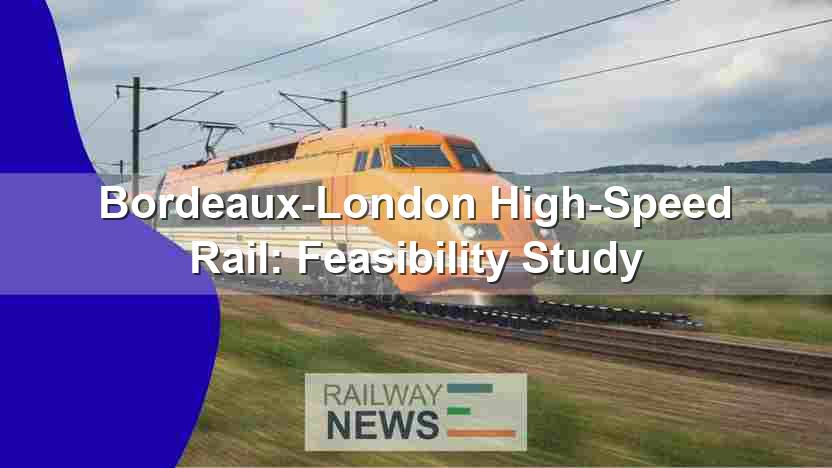
This article examines the feasibility study undertaken by SNCF Réseau, Eurotunnel, Lisea, and HS1 to assess the necessary infrastructure upgrades at Bordeaux Saint-Jean station to accommodate international train services. The study aims to pave the way for a direct high-speed rail link between London St. Pancras and Bordeaux Saint-Jean, offering a compelling alternative to air travel. The project’s potential impact on regional economic development and its implications for cross-border rail passenger transport are significant, requiring a detailed assessment of operational, logistical, and security aspects. The success of similar initiatives, such as the London-Amsterdam route, underscores the potential market demand for such direct high-speed rail connections. The study meticulously explores the technical requirements for integrating Bordeaux Saint-Jean into the existing high-speed rail network and analyzes the projected passenger volume and economic viability of the proposed service. The subsequent sections will delve into the key elements examined in this feasibility study.
Assessing the Bordeaux Saint-Jean Station Infrastructure
The current infrastructure at Bordeaux Saint-Jean station is a critical factor in determining the feasibility of international services. This includes a detailed review of platform capacity, signaling systems, track layout, and overall station design. The study needs to ascertain whether the existing infrastructure is sufficient to handle the increased passenger flow and the technical requirements of high-speed international trains. This assessment involves comparing the existing infrastructure with the standards and requirements for seamless international operations, considering aspects like passenger processing, baggage handling, and customs and immigration facilities. Potential upgrades might involve expanding platform lengths to accommodate longer train sets, improvements to signaling systems for efficient train movements, and enhanced passenger flow management systems.
Cross-Border Operational Considerations
Establishing a seamless cross-border rail service necessitates addressing numerous operational challenges. This includes the harmonization of train scheduling and signaling systems across different national networks. The study must consider the compatibility of the rolling stock used on the proposed route and the operational protocols for border control and security checks. Efficient passenger processing at the border is paramount, requiring the integration of customs and immigration facilities within the station or near it. Coordination between different national railway operators, border agencies, and security personnel is crucial for smooth operations. The study should analyze different operational models and propose the most efficient and secure procedures for handling international passengers.
Security and Border Control Integration
A crucial aspect of the feasibility study is the integration of robust security and border control measures. This involves evaluating the existing security infrastructure at Bordeaux Saint-Jean and identifying the necessary upgrades to meet international security standards. This could involve advanced screening technologies, enhanced surveillance systems, and improved security personnel deployment. Collaboration with relevant border agencies is essential to design a system that balances security needs with efficient passenger flow. The study must also consider the implications of post-Brexit regulations on border control procedures and ensure compliance with all relevant security protocols for both UK and French authorities.
Economic Viability and Market Analysis
The economic viability of the proposed high-speed rail link is a critical element of the study. This includes a detailed market analysis to determine the potential demand for this service. The projected passenger numbers need to be sufficient to justify the investments in infrastructure upgrades and ongoing operational costs. The study must consider factors such as travel time savings compared to air travel, ticket pricing strategies, and the potential to attract both business and leisure travelers. The analysis should also include an assessment of the wider economic benefits, such as increased tourism, regional development, and job creation.
Conclusion
The feasibility study on establishing a direct high-speed rail link between London St. Pancras and Bordeaux Saint-Jean represents a significant undertaking with substantial implications for cross-border rail transport and regional development. The success of this initiative hinges on meticulous planning and effective collaboration between various stakeholders. The study’s findings will determine the necessary infrastructure upgrades at Bordeaux Saint-Jean station, encompassing platform capacity, signaling systems, and security enhancements. Effective integration of border control procedures and operational coordination between national rail operators are also crucial for the successful implementation of the service. A detailed market analysis will establish the projected passenger volume and the economic viability of the project. The success of similar direct high-speed rail links, like the London-Amsterdam route, demonstrates a substantial market demand for convenient and efficient international rail travel. If the study proves positive, the resulting high-speed rail service will not only offer travelers a faster and more comfortable alternative to air travel but also stimulate economic growth in the Bordeaux region and strengthen cross-border connectivity. The detailed analysis of operational, logistical, and security aspects presented in this study is essential for guiding the decision-making process and ensuring the long-term success of this ambitious project. The project, if realized, signifies a major step forward in the evolution of European high-speed rail travel, emphasizing the potential of rail to compete effectively with air travel and promote sustainable transportation solutions.

Railway infrastructure, rolling stock and transport technologies specialist focused on global rail industry developments, high-speed rail systems, signaling technologies and freight transportation. Covering railway investments, public transport modernization, rail operations and international mobility projects across Europe, Asia and North America.
RELATED POSTS

September 6, 2026 5:19 am
Hitachi delivered Taiwan's first N700ST high-speed train from Japan in...

September 5, 2026 4:19 pm
CPK launched formal tender talks with four consortia to design...

September 5, 2026 7:14 pm
HS2 Ltd signed renegotiated civils contracts with EKFB and Align...

September 6, 2026 4:12 am
Alstom delivered the first of 100 new G Class trams...

September 6, 2026 6:17 am
Hungary ordered a national ban on most freight trains from...

September 6, 2026 1:17 am
Hitachi Toshiba Supreme Consortium confirmed the first of 12 N700ST...