
BNSF’s Clean Rail Tech: California Pilot
BNSF’s groundbreaking $22.6M clean technology pilot program is revolutionizing rail emissions. Discover how battery-electric locomotives and other innovative solutions are shaping the future of sustainable freight rail!
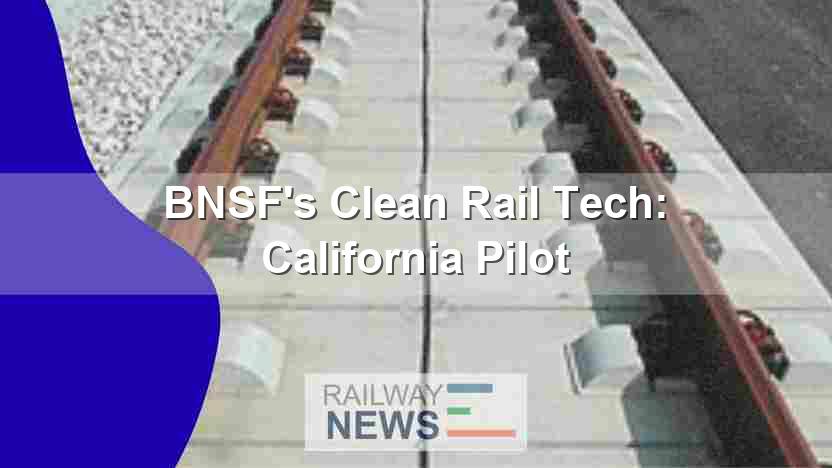
This article examines the significant $22.6 million grant awarded by the California Air Resources Board (CARB) to Burlington Northern Santa Fe (BNSF) Railway Company. The grant, under CARB’s Zero and Near Zero Emission Freight Facilities initiative, funds a pilot program aimed at drastically reducing emissions within BNSF’s rail yards and operations. This initiative is crucial in addressing the environmental impact of freight transportation, a sector significantly contributing to greenhouse gas emissions. The program’s success will have far-reaching implications for the entire rail industry, potentially shaping future investments in clean technologies and influencing national and international environmental policies concerning freight rail. The program focuses on several key technologies, demonstrating a multi-pronged approach to tackling emissions reduction across various aspects of rail yard operations. This analysis will detail the specific technologies employed, their anticipated impact, and the potential for scalability and wider industry adoption.
Implementing Emission-Reducing Technologies in Rail Yards
BNSF’s initiative leverages existing sustainable practices while incorporating cutting-edge technologies. The company will build upon its existing investments in idle control systems for locomotives, electric wide-span cranes, electric hostlers (small locomotives used for switching), and automated gates at intermodal facilities. These existing measures form a solid foundation for further emission reductions. This phased approach, combining existing and new technologies, showcases a practical strategy for environmentally conscious infrastructure development. The program’s success depends on the integration of these diverse technologies into a cohesive system optimized for minimal emissions. The project’s scope demonstrates a commitment to a holistic approach to environmental responsibility, addressing not just locomotives, but also yard equipment and supporting trucking operations.
Battery-Electric Locomotive Technology and its Potential
A key component of the project involves the development of a battery-electric locomotive in collaboration with GE Transportation. This locomotive, designed to deliver 2,400 kWh of power, will be paired with diesel locomotives to operate on a freight line connecting Stockton and Barstow, California. The project aims to demonstrate a minimum 10-15% reduction in fuel consumption for the freight train. This is a critical step towards demonstrating the viability of battery-electric technology for mainline freight operations. The success of this pilot will significantly influence future investment in similar technologies and could potentially accelerate the shift towards electrification in the freight rail sector. Data gathered will be vital in assessing the operational efficiencies, cost-effectiveness, and overall feasibility of battery-electric locomotives in heavy haul applications.
Hybrid and Electric Yard Equipment: A Focus on Efficiency
Beyond locomotives, the program focuses on modernizing yard equipment. Two hybrid rubber-tire gantry cranes (developed by Mi-Jack), offering a 70% emission reduction compared to diesel counterparts, will be deployed at BNSF’s Stockton and San Bernardino Intermodal Facilities. Additionally, an all-electric Taylor side loader will be piloted at the San Bernardino facility. This multifaceted approach highlights the importance of addressing emissions from all aspects of rail yard operations, demonstrating a commitment to a holistic solution. The introduction of these advanced technologies provides a direct reduction in local air pollution, benefiting communities near rail yards. This detailed approach demonstrates a commitment to sustainability beyond simply replacing aging diesel equipment.
Sustainable Drayage and the Integration of Electric Trucks
The pilot program extends beyond rail operations to include drayage (short-distance trucking) operations. BNSF is partnering with SH&H to deploy a BYD all-electric drayage truck in San Bernardino. This collaboration underscores the interconnectedness of transportation systems and the need for a holistic approach to emission reduction. The integration of electric drayage trucks reduces emissions associated with the movement of goods to and from the rail yard, completing the circle of sustainable practices. The success of integrating electric trucks into the overall logistics system will be a key indicator of the feasibility of broader implementation across other rail facilities. This element highlights the importance of considering the entire supply chain when designing environmentally responsible logistics networks.
Conclusion
BNSF’s participation in CARB’s Zero and Near Zero Emission Freight Facilities initiative represents a significant step towards a more sustainable future for the freight rail industry. The $22.6 million grant allows BNSF, in collaboration with several industry partners including GE Transportation, Mi-Jack, Taylor, and SH&H, to pilot and demonstrate the feasibility of several innovative clean technologies. The project’s multi-faceted approach, addressing locomotives, yard equipment, and drayage operations, provides a detailed strategy for emission reduction within rail yards. The success of the battery-electric locomotive pilot will be particularly crucial, potentially influencing widespread adoption of this technology. Similarly, the deployment of hybrid and electric yard equipment and drayage trucks will demonstrate the effectiveness of cleaner alternatives in reducing local air pollution. The data collected from this pilot program will be invaluable in shaping future investments in clean technologies throughout the rail industry. The successful implementation and scalability of these technologies hold the potential to drastically reduce the environmental impact of freight rail transportation, setting a precedent for other railway companies and transportation sectors globally to follow suit. The initiative highlights a successful model of public-private partnership, demonstrating how collaborative efforts can lead to meaningful progress in achieving environmental sustainability goals. This detailed and forward-thinking approach offers a pathway to a cleaner, more efficient, and environmentally responsible freight rail sector.

Railway infrastructure, rolling stock and transport technologies specialist focused on global rail industry developments, high-speed rail systems, signaling technologies and freight transportation. Covering railway investments, public transport modernization, rail operations and international mobility projects across Europe, Asia and North America.
RELATED POSTS
September 6, 2026 5:19 am
Hitachi delivered Taiwan's first N700ST high-speed train from Japan in...

September 5, 2026 4:19 pm
CPK launched formal tender talks with four consortia to design...
September 6, 2026 6:17 am
Hungary ordered a national ban on most freight trains from...
September 6, 2026 1:17 am
Hitachi Toshiba Supreme Consortium confirmed the first of 12 N700ST...
September 6, 2026 8:17 am
DB InfraGO reopened the Nuremberg-Regensburg line in Bavaria on 31...
September 7, 2026 8:16 am
Midea, Gree and TCL shipped air conditioners via China Railway...