
BNSF Derailment: Hazmat Risks, Rail Safety & NTSB Report Analysis
BNSF train derailment near Manuelito, NM, highlighted hazardous materials risks, prompting NTSB investigation and evacuation.
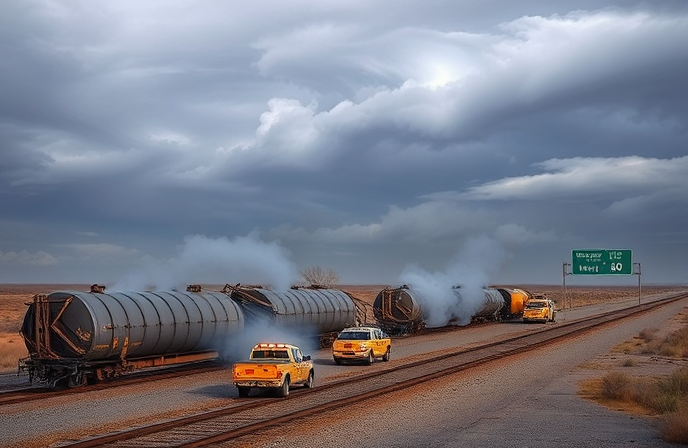
NTSB Report: BNSF Train Derailment Highlights Hazardous Materials Risks
The air hung thick with potential disaster on April 26, 2024, when a BNSF Railway Co. freight train derailed near Manuelito, New Mexico. The incident, investigated by the National Transportation Safety Board (NTSB), resulted in a hazardous materials (hazmat) release, forcing evacuations and disrupting critical transportation infrastructure. This article delves into the details of the derailment, analyzes the NTSB’s findings, and examines the implications for rail safety and hazmat regulations. The incident, which occurred when a westbound BNSF train derailed, underscored the need for enhanced safety protocols across the industry, particularly concerning the transportation of hazardous materials.
The Incident: A Cascade of Hazards
The derailment involved 35 rail cars, with the most significant consequence stemming from the breach of tank cars containing liquefied petroleum gas (LPG). Six U.S. Department of Transportation (USDOT) specification 112A340W tank cars were involved. Four of these tanks were breached during or after the derailment. The resulting LPG release posed a significant explosion risk, necessitating the immediate evacuation of a 2-mile radius, encompassing approximately 52 residents, as a safety precaution. Interstate 40 (I-40), a critical east-west thoroughfare, was closed in both directions, severely impacting regional travel. The highway closure, which lasted approximately 48 hours, and the evacuation, were lifted on April 28. Fortunately, no injuries were reported.
Regulatory Context and the Definition of High-Hazard Trains
The NTSB report highlighted the potential for cascading hazmat releases, a scenario where the failure of one component triggers failures in adjacent components, amplifying the severity of an incident. The incident also raised crucial questions regarding the definition of “high-hazard flammable trains” (HHFTs). Currently, HHFTs are defined based on the volume and type of flammable liquids transported. The NTSB reiterated its previous recommendation to the Pipeline and Hazardous Materials Safety Administration (PHMSA) to expand the definition of HHFTs. PHMSA, responsible for regulating the transportation of hazardous materials by all modes of transportation, needs to broaden the scope of HHFT definitions. This could include trains carrying various hazardous materials that, while not meeting existing HHFT criteria, still pose significant risks in the event of a derailment. Doing so would allow for a comprehensive approach to risk mitigation by requiring more robust safety measures such as electronically controlled pneumatic (ECP) brakes.
Safety Measures and Future Mitigation Strategies
The BNSF derailment emphasizes the importance of proactive safety measures. These measures should focus on enhancing track inspections and maintenance programs. Railroads, including BNSF, employ advanced technologies to detect potential track defects, like rail wear and flaws, using ultrasonic testing. Upgrading track infrastructure, including the use of heavier rail, and improving signaling systems, is critical. Additionally, investment in crash-worthy tank cars, designed to better withstand derailment forces, can significantly reduce the likelihood of a hazardous material release. Improved emergency response training and enhanced communication protocols between railroads, first responders, and local communities are also vital.
Conclusion
The BNSF derailment near Manuelito, New Mexico, serves as a stark reminder of the inherent risks associated with transporting hazardous materials by rail. The NTSB’s findings underscore the critical need for proactive safety measures, updated regulations, and a robust response framework to mitigate such incidents. Expanding the definition of HHFTs, as recommended by the NTSB, will be key to enhancing rail safety across the board. The industry must invest in advanced technologies, strengthen track maintenance programs, and modernize the design of tank cars to minimize the potential for hazardous material releases. While there were no fatalities in the Manuelito incident, the potential for widespread devastation, including environmental damage and loss of life, is a sobering reality. This incident highlights the importance of a collaborative effort between railway operators, regulators, and emergency responders to ensure the safe and efficient transportation of hazardous materials. It demands a continued focus on risk assessment, prevention, and rapid response to safeguard communities and protect critical infrastructure.
Company Summary: BNSF Railway Co.
BNSF Railway Co. is one of North America’s largest freight railroad networks, operating approximately 32,500 route miles across 28 states and three Canadian provinces. BNSF transports a wide range of commodities, including agricultural products, consumer goods, and industrial materials, contributing significantly to the U.S. economy. The railway’s operations are extensive and require constant attention to safety and infrastructure maintenance. The company’s commitment to safety is a key element of its long-term operating strategy, and it continually invests in technological innovations and workforce training to enhance its safety record. BNSF is a subsidiary of Berkshire Hathaway Inc.
RELATED POSTS
October 14, 2025 5:54 pm
Europe's Rail launches a €148.2 million funding call to boost...
July 31, 2025 3:33 am
Union Pacific and Norfolk Southern merge, creating a transcontinental US...
January 30, 2026 11:39 pm
Parsons wins $60M contract for the Metro A Line extension...

Future Projects, High Speed Railways, Light Railway Systems, Metro Projects, News, Projects, Tenders, USA
September 12, 2024 11:45 am
Alstom has been awarded an $84 million contract to upgrade...

June 1, 2019 7:20 am
Uzbekistan's railway network is getting a $170 million upgrade! ...

July 11, 2025 10:34 am
Railway sector leaders honored, Maryland DOT secretary departs. Tirschwell...