
Berlin’s U-Bahn: Stadler Trains Revolutionize Public Transport
Berlin’s U-Bahn gets new trains, entering testing. Modernized trains promise enhanced passenger experience, entering service in 2026.
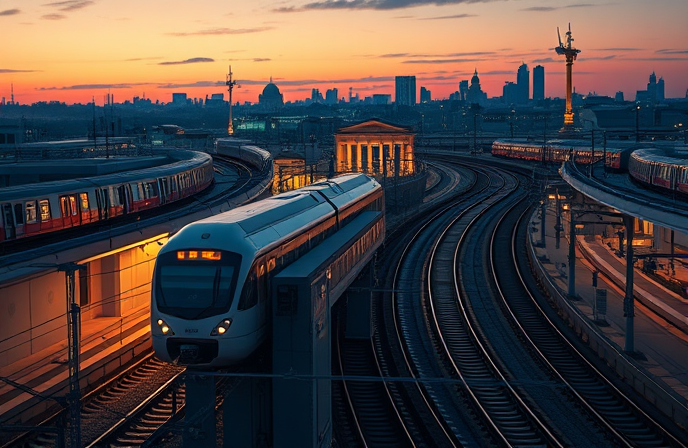
Berlin’s U-Bahn Revolution: New Trains Enter Testing Phase, Promising Modernization and Enhanced Passenger Experience
Berlin is on the cusp of a significant transformation of its U-Bahn network, as the first of a new generation of trains built by Stadler are undergoing rigorous testing. Ten Type J trains are currently circulating across the city’s network, paving the way for their scheduled entry into passenger service on lines U5 to U9 in 2026. This monumental fleet renewal, spearheaded by Berliner Verkehrsbetriebe (BVG), represents a multi-billion Euro investment aimed at boosting service reliability, operational efficiency, and passenger comfort. This article delves into the comprehensive testing program, the innovative features of the new trains, and the broader implications of this massive modernization project for the future of Berlin’s public transport. With the arrival of the new trains, the city is readying itself for a new chapter in its public transport infrastructure, promising better performance, greater accessibility, and a more enjoyable commuting experience for its passengers.
Rigorous Testing Regime Underway
The ongoing trials are a crucial step in BVG’s long-term strategy to modernize its fleet and optimize service delivery. The Type J trains, constructed by Stadler, are being put through their paces in a detailed testing program. One complete six-car train, stripped of passenger seating to reveal its inner workings, is stationed at the Friedrichsfelde depot, facilitating thorough assessments. These evaluations encompass all safety-critical and operational systems, including braking performance, the interaction between individual modules (each train measuring approximately 100 meters in length), and crucially, environmental impact considerations such as noise levels. Acoustic measurements are being conducted to ensure compliance with stringent noise standards. BVG emphasizes the importance of meticulous testing, given that these new trains are designed to operate for several decades, delivering improved performance and a significantly enhanced passenger experience.
Advanced Features and Passenger-Centric Design
Beyond the focus on mechanical and operational efficiencies, the new Type J trains boast a range of passenger-oriented innovations designed to enhance the overall travel experience. These include more spacious interiors, an advanced passenger information system, an improved lighting concept, larger door areas, and enhanced accessibility features catering to individuals using wheelchairs or travelling with prams and luggage. The passenger areas prioritize comfort, with a modern design that offers a sense of spaciousness. Moreover, redesigned driver’s cabs and more ergonomic controls are also included to improve conditions for BVG personnel, reflecting a holistic approach to improvements. The wider design also benefits from lessons learned on the narrower JK series, contributing to a superior overall product.
Training and Rollout Strategy
The rollout of the new trains is carefully planned and executed. Before passenger service begins in summer 2026 for the Type J trains, extensive training sessions for drivers, maintenance staff, and station managers are scheduled to commence in early 2026. Simultaneously, progress on the narrower JK series trains, designed for lines U1 to U4, is well underway, with training already in progress and passenger service planned to begin after the summer holidays. Full-scale series delivery of the JK cars will begin at the same time, with up to 140 vehicles expected to be in service by the end of the year. The design process for the JK series prioritized fitting necessary systems into smaller vehicles, and lessons learned informed the design of the wider J trains.
Industry and Financial Implications
The procurement of the J and JK series represents the largest rolling stock contract in BVG’s history. The framework agreement signed with Stadler allows for the delivery of up to 1,500 cars by 2035. The full contract value is an impressive EUR 3 billion, including the supply of spare parts over a 32-year period. Currently confirmed orders comprise 484 cars, which are scheduled for delivery by 2027. This project, which signifies a significant investment in the modernization of Berlin’s public transport system, and showcases the potential of sustainable collaboration between Berlin and Stadler, paving the way for further investment in infrastructure.
Conclusion
The introduction of Berlin’s new U-Bahn trains represents a landmark event, promising a technological leap forward for both passengers and operational staff. The rigorous testing phase is ensuring the trains meet the highest standards of safety, reliability, and passenger comfort. The strategic rollout, coupled with comprehensive training programs, demonstrates BVG’s commitment to a smooth transition. Furthermore, the design incorporates innovations such as advanced passenger information systems, improved lighting, and enhanced accessibility features, reflecting a deep understanding of passenger needs. The financial commitment, evidenced by the multi-billion Euro contract with Stadler, underscores the significance of this undertaking. The new trains are expected to operate for decades. The success of this project holds broader implications for urban transport systems worldwide, demonstrating the value of investing in modern, efficient, and passenger-centric rolling stock. As the new trains enter service, Berlin is poised to showcase a cutting-edge public transport system that meets the evolving needs of a dynamic and modern city.
Company Summary: Stadler
Stadler Rail AG is a leading manufacturer of railway rolling stock, with a global presence and a strong reputation for producing high-quality, innovative, and reliable trains. Headquartered in Bussnang, Switzerland, Stadler designs, manufactures, and services a wide range of railway vehicles, including high-speed trains, regional trains, trams, and metro cars. The company is known for its commitment to sustainable practices and technological advancements. Stadler is a major player in the rolling stock market, delivering projects of high value and complexity all over the world.
RELATED POSTS

July 15, 2012 8:46 am
Alstom has won a €61m contract from Danish railway infrastructure...
July 21, 2025 2:33 pm
Yellow Rail wins London Trams overhaul contract, boosting UK railway...
September 7, 2025 6:00 pm
£5 million in rail funding supports 26 safety-focused projects, starting...

May 3, 2019 4:55 pm
Belgium's railway network is undergoing a major GSM-R upgrade, boosting...
May 17, 2017 3:49 pm
"Transnet invests ZAR105 million in 56 new traction transformers from...
February 3, 2018 10:47 am
Revolutionize railway infrastructure! Discover how advanced signaling, sustainable maintenance,...