
Belgian Rail Freight: Lineas Secures EUR 61M Loan for Growth
Belgium loans €61M to Lineas, boosting rail freight. Government backs key rail operator amid economic downturn.
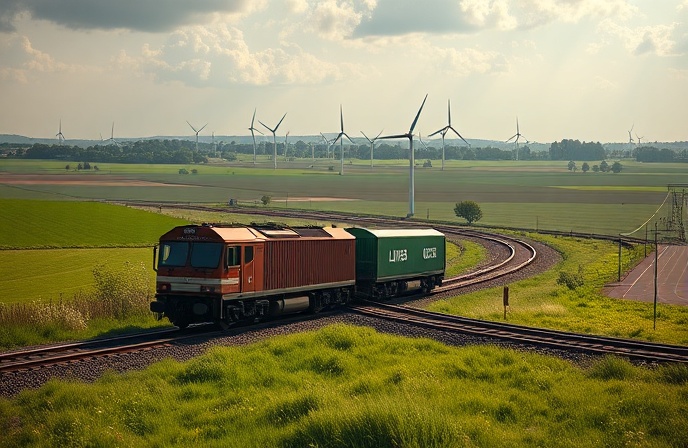
Belgian Government Backs Lineas with EUR 61 Million Loan to Bolster Rail Freight Operations
In a move designed to strengthen both its rail freight capabilities and its commitment to sustainable transport, the Belgian federal government has approved a EUR 61 million loan to Lineas, Europe’s largest private rail freight operator. The decision, made on July 21st by the federal cabinet (Kern), underscores the government’s commitment to rail freight as a core element of the nation’s industrial and environmental strategy. This financial injection, channeled through the Belgian Sovereign Wealth Fund (SFPIM), a long-term shareholder in Lineas, aims to provide the company with crucial financial stability amid challenging economic conditions characterized by declining freight volumes in key sectors. This article will explore the specifics of the loan, its strategic implications for Lineas, and the broader context of the Belgian government’s support for rail freight as a cornerstone of its sustainability goals.
Strategic Investment in a Challenging Economic Climate
The government’s decision to provide a EUR 61 million loan to Lineas comes at a critical juncture. The rail freight sector is facing headwinds, with reduced demand across critical industries such as steel, chemicals, and automotive. This economic pressure has forced Lineas, like many other rail freight operators, to adapt and transform its business model. The government’s financial support, therefore, serves not only to provide immediate financial relief but also to signal confidence in Lineas’ long-term prospects and its ability to navigate the current economic difficulties. This loan reflects a wider strategy to support strategically important rail infrastructure and ensure the continued operation of services essential for the national and European economy.
Government Commitment and Industry Significance
The government’s rationale for the investment is rooted in a strong commitment to rail freight. Jean-Luc Crucke, Federal Minister of Mobility, Climate and Environmental Transition, emphasized that “the Belgian State has always considered rail freight to be a pillar of ecological and industrial transition.” Jan Jambon, Federal Deputy Prime Minister and Minister of Finance and Pensions, further highlighted the strategic importance of the SFPIM’s investment in Lineas, emphasizing the company’s alignment with Belgium’s economic and environmental objectives. This public backing highlights the central role Lineas plays in reducing carbon emissions from freight transport and strengthening Belgium’s industrial competitiveness. The investment reflects a long-term vision for a more sustainable and efficient freight transport system.
Lineas’ Transformation Roadmap and Financial Progress
The loan will directly support Lineas’ ongoing transformation agenda. Under the leadership of CEO Erik van Ockenburg, the company has launched a renewed strategic roadmap aimed at achieving Earnings Before Interest and Taxes (EBIT) breakeven by 2026. The plan focuses on several key areas, including winning new commercial contracts, particularly in the intermodal and chemical freight sectors, and strengthening the company’s capital structure through private investment. This transformation journey has already yielded positive results. Lineas has significantly reduced EBIT losses, going from EUR 82 million in 2022 to EUR 13.6 million in 2024. These improvements suggest that the company is on the right track toward sustainable profitability.
CEO’s Perspective and Future Outlook
CEO Erik van Ockenburg has welcomed the government’s support, stating that the loan “is a strong recognition of Lineas’ role in building the logistics of tomorrow.” He conveyed a message of continuity to the company’s customers, partners, and employees, emphasizing Lineas’ commitment to quality, high-value customer service, sustainable profitability, and being an attractive employer. The government’s investment provides a stable foundation upon which Lineas can build its future and enhance its ability to attract private investment. The strategy is based on winning new commercial contracts, specifically in the intermodal and chemical freight sectors.
Conclusion
The Belgian government’s strategic EUR 61 million loan to Lineas is a decisive move that underscores the importance of rail freight in the nation’s industrial and environmental strategy. By supporting Lineas, the government is signaling its dedication to sustainable transportation and its commitment to reducing carbon emissions within the transport sector. This investment not only offers financial stability to Lineas but also acts as a catalyst for ongoing transformation within the company. The proactive approach of the government is particularly significant considering current economic challenges within the freight market and is likely to inspire confidence among other rail freight operators. Furthermore, the loan will enable Lineas to continue its efforts to win new contracts, improve its financial performance, and to attract further private investment in the future. This is a strong indicator that Belgium is focused on a sustainable and profitable future within the rail freight industry.
RELATED POSTS
July 15, 2025 4:33 pm
Railway initiative "Never Mind the Gap" trains women for rail...
September 7, 2025 9:12 am
PKP Intercity seeks 18 new shunting locomotives to meet growing...
September 7, 2025 2:36 pm
PJ Monitoring expands its Austrian operations, boosting WaggonTracker system development...

June 12, 2025 5:00 am
Alstom's Coradia Stream train arrives in Norway for rigorous testing,...

September 9, 2021 2:55 am
Introduction This article delves into the significant $4.5 billion contract...
September 23, 2017 4:21 am
Optimize your railway infrastructure! Data-driven maintenance and enhanced communication...