
Basque Country Commits €582M for Rail & Mobility Upgrades
Basque Country invests nearly €582 million in its rail infrastructure, launching a 2026 Sustainable Mobility Plan. Modernization, fare integration, and enhanced **rail** services are key.
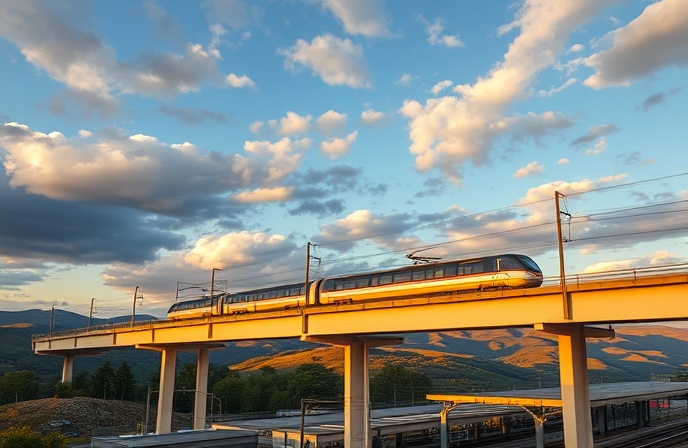
The Basque Country is set to significantly bolster its rail network and sustainable mobility infrastructure with a substantial budget allocated under its new Sustainable Mobility Plan. The plan earmarks nearly EUR 582 million for rail services, infrastructure construction, and modernization, representing the largest portion of the overall investment. The comprehensive decade-long strategy, set to commence in 2026, outlines over a hundred actions aimed at transforming public transport and encouraging modal shift.
| Key Entity | Critical Detail |
|---|---|
| Basque Country | Sustainable Mobility Plan |
| Total Rail & Infrastructure Budget | Nearly EUR 582 million |
| 2026 Strategy Directorate Budget | EUR 250.4 million |
| Fare Integration Initiative Budget | EUR 300,000 (for discounts) |
| Card Interoperability Deadline | End of 2025 |
| Euskotren Service Promotion Budget (2026) | EUR 130 million |
| Renfe Suburban Rail Budget (2026) | EUR 92.8 million |
| Llanada Alavesa Service Allocation | EUR 3.4 million |
| Rolling Stock Renewal Budget (Euskotren) | EUR 44.4 million |
| ERTMS Implementation | Starting 2026 in Gipuzkoa |
| Transport Planning & Subsidies Budget | EUR 19.5 million (EUR 9.1 million for subsidies) |
| Infrastructure Investment (ETS) | EUR 259.5 million |
The Basque Country’s ambitious Sustainable Mobility Plan, commencing in 2026, is designed to usher in a new era of public transportation, with a significant portion of its budgetary focus directed towards enhancing and modernizing its rail network. The plan’s strategic objectives are multifaceted, aiming to promote the use of trains and trams, digitize operations for increased safety, and improve overall accessibility to encourage greater passenger uptake.
Strategic Impact and Key Objectives
Central to the plan’s vision is the promotion of train and tram transport as primary public transit modes. Euskotren, the regional government’s public transport operator, is slated to receive EUR 130 million in 2026 to support its services. Furthermore, the recently devolved suburban rail service, operated by Renfe, has been allocated EUR 92.8 million, with EUR 3.4 million specifically designated for the development of the Llanada Alavesa service. This dedicated funding underscores a commitment to expanding and improving regional connectivity, recognizing rail’s pivotal role in sustainable urban and inter-urban mobility.
The plan also prioritizes fare integration into a unified model designed to offer greater discounts to frequent public transport users, with a particular emphasis on young people. This initiative is supported by a EUR 300,000 budget. A critical preparatory step for this fare integration is the completion by the end of 2025 of interoperability for all Bat, Barik, and Mugi cards across all public transport services within the Basque Country. This move is expected to streamline passenger journeys and enhance the attractiveness of public transportation.
Operational Enhancements and Future-Proofing
Investing in the modernization of its fleet is another cornerstone of the strategy. Euskotren has been allocated EUR 44.4 million for the purchase and upgrading of trams and trains. This investment is strategically aligned with future network expansions, including the development of Line 5 of the Bilbao metro and the tram extension to the Zabalgana district in Vitoria-Gasteiz, signaling a forward-looking approach to capacity planning and service enhancement.
Digitization and enhanced transport safety are also paramount. In 2026, work will commence on the installation of the European Rail Traffic Management System (ERTMS) in Gipuzkoa, starting with lines managed by ETS (Euskal Trenbide Sarea) and trains operated by Euskotren. This standardization of signaling and traffic control is a crucial step towards seamless European rail operations and improved safety across the entire Basque Country network.
Recognizing the importance of accessibility in attracting passengers, the plan dedicates EUR 19.5 million to transport planning, with EUR 9.1 million earmarked for subsidies. A significant aspect of this is the permanent implementation from 2026 of free public transport for children under 12, a measure already introduced this year. The plan also allocates EUR 259.5 million for infrastructure development and maintenance through ETS, ensuring the creation of a developed, safe, and high-capacity rail network for the future.
Last June 2025, we published an article about Renfe’s cutting-edge Aranjuez maintenance hub. Click here to read – Future of Rail: Renfe’s Railway Technology Hub, Aranjuez: Essential Guide
Industry Context
This comprehensive investment by the Basque Country in its rail infrastructure and sustainable mobility signals a strong regional commitment to decarbonization targets and the advancement of efficient, passenger-centric public transport. For the global railway industry, this plan represents significant opportunities for rolling stock manufacturers, signaling and technology providers, and construction firms. The focus on ERTMS, fleet modernization, and integrated ticketing demonstrates an alignment with European Union directives and a proactive approach to future mobility challenges, setting a benchmark for other regions seeking to enhance their public transport offerings.
RELATED POSTS

June 10, 2025 10:00 pm
Norfolk Southern sets record for Chesapeake Bay restoration, using a...

October 1, 2023 3:36 pm
This article delves into the significant €5 billion contract between...
April 19, 2025 10:49 am
Modernizing Airport Transit: Alstom’s DFW Skylink Replacement This article examines...
March 31, 2021 6:21 pm
Egypt’s aging railway network, while historically significant in the Middle...
May 29, 2018 11:01 pm
Perth's METRONET project hits a major milestone! Tunnel Boring...
April 7, 2020 8:31 pm
This article examines the unprecedented decision by Hull Trains, a...