
Barcelona Tram’s APS Revolution: Alstom’s Ground-Level Power
Alstom’s Ground-Based Dynamic Feeding System (APS) on the Barcelona tram network represents a groundbreaking advancement in urban light rail systems, offering cleaner, more efficient, and visually appealing power delivery compared to traditional overhead catenary systems.
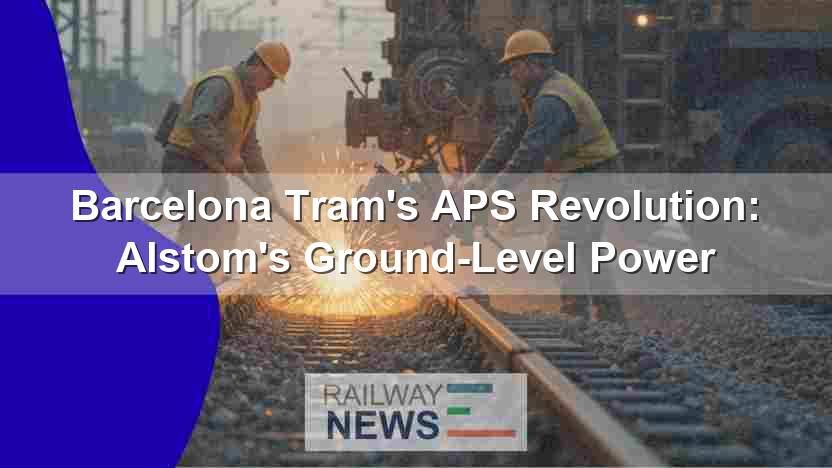
This article explores the significant advancements in railway electrification technology, focusing on the implementation of Alstom’s Ground-Based Dynamic Feeding System (APS) on the Barcelona tram network. The adoption of APS represents a paradigm shift in urban light rail systems, offering a compelling alternative to traditional overhead catenary systems. We will delve into the technical specifications of APS, its advantages over conventional systems, the implications of its deployment in Barcelona, and the broader context of its global adoption and future potential within the railway industry. This analysis will consider the engineering challenges, economic factors, and operational benefits associated with this innovative technology. The growing need for cleaner, more efficient, and aesthetically pleasing urban transport solutions underscores the importance of examining this case study in detail. The Barcelona project serves as a compelling example of the evolving landscape of urban rail transport and highlights the potential for significant advancements in the efficiency and sustainability of public transportation systems globally.
The Alstom APS System: A Technological Overview
Alstom’s APS (Alimentation par le Sol – Ground-Level Power Supply) system represents a substantial departure from traditional overhead catenary systems for tramway electrification. Instead of relying on overhead wires, APS uses embedded conductive segments in the roadway to supply power to trams. These segments are activated and deactivated dynamically as the tram moves, ensuring efficient power delivery while minimizing energy losses. The system employs sophisticated control electronics to manage the power transfer, precisely activating segments only when a tram is directly over them. This prevents continuous power draw and maximizes energy efficiency. This technology allows for a cleaner, more aesthetically pleasing urban environment, eliminating the visual clutter and maintenance challenges associated with overhead lines.
Barcelona Tram Network Enhancement: Connecting Trambaix and Trambesos
The implementation of APS in Barcelona will significantly enhance the city’s tram network by connecting the existing Trambaix and Trambesos lines. This 3.9km connection, encompassing six new stops, will greatly improve intramodality by integrating the tram system with existing suburban and metro networks. This improved connectivity aims to enhance the efficiency and attractiveness of public transportation within Barcelona, encouraging ridership and reducing reliance on private vehicles. The project includes not only infrastructure upgrades but also the retrofitting of 18 existing trams to utilize the APS system, demonstrating the adaptability of this technology to existing fleets.
Advantages and Challenges of APS Technology
The APS system offers several advantages over traditional overhead lines. These include:
- Improved Aesthetics: Elimination of overhead wires leads to a cleaner, more visually appealing urban environment.
- Reduced Maintenance: Lower maintenance costs due to fewer components and reduced exposure to the elements.
- Increased Flexibility: Easier integration into existing urban infrastructure, allowing for greater route flexibility.
- Enhanced Safety: Removal of overhead wires improves safety for both pedestrians and maintenance personnel.
However, challenges also exist:
- Initial Investment Costs: Higher initial investment compared to traditional systems.
- Roadway Infrastructure: Requires careful integration into existing roadway infrastructure.
- System Complexity: More complex system requiring specialized expertise for installation and maintenance.
Global Adoption and Future Potential
Alstom’s APS technology has gained significant traction globally, with installations in 11 cities across four continents, including notable deployments in Bordeaux, Tours, Rio de Janeiro, Istanbul, Dubai, Lusail, and Sydney. This widespread adoption underscores the system’s effectiveness and viability in diverse urban settings. The technology is proven, with over 362 trams operating daily across more than 145km of track, accumulating 58 million kilometers of commercial service, showcasing its reliability and performance. This widespread adoption suggests a significant trend towards replacing overhead catenary systems with cleaner, more integrated ground-level power solutions in urban light rail transit.
Conclusion
The deployment of Alstom’s APS system on the Barcelona tram network marks a significant milestone in urban light rail technology. The project’s success in connecting the Trambaix and Trambesos lines will improve intramodality, enhancing the efficiency and attractiveness of Barcelona’s public transport system. While the initial investment costs may be higher than traditional overhead line systems, the long-term benefits in terms of reduced maintenance, improved aesthetics, enhanced safety, and increased flexibility are substantial. The global adoption of APS technology, as evidenced by its successful implementations in numerous cities worldwide, further strengthens its position as a viable and increasingly preferred alternative to traditional catenary systems. The Barcelona project serves as a compelling case study demonstrating the potential for sustainable and efficient advancements in urban rail transport. This technology offers a clear path towards creating cleaner, more efficient, and aesthetically pleasing urban environments, ultimately contributing to the sustainability and attractiveness of public transportation systems globally. The success of the Barcelona project will undoubtedly influence future urban light rail projects worldwide, furthering the adoption of this innovative and transformative technology.

Railway infrastructure, rolling stock and transport technologies specialist focused on global rail industry developments, high-speed rail systems, signaling technologies and freight transportation. Covering railway investments, public transport modernization, rail operations and international mobility projects across Europe, Asia and North America.
BENZER KONULAR
July 1, 2026 1:37 pm
NRHS awarded $187K to 34 U.S. rail heritage projects in...
July 4, 2026 11:41 pm
Eurostar cancelled all direct London–Amsterdam trains through July 2 after...

July 4, 2026 11:02 pm
Eurostar suspends all direct London–Dutch trains through 2 July after...
July 1, 2026 4:22 pm
Správa železnic opened a €60M multimodal hub at Jihlava město...

July 7, 2026 12:01 am
Hitachi Rail completed the acquisition of Clever Devices, a U.S....

July 16, 2026 7:04 am
Network Rail will deliver only 83% of planned renewals in...