
Bangkok Green Line: Siemens Rail Advancements
Bangkok’s Green Line expansion is underway! The first of 22 Siemens-Bozankaya metro trains is shipped, boosting capacity and efficiency. Discover how!
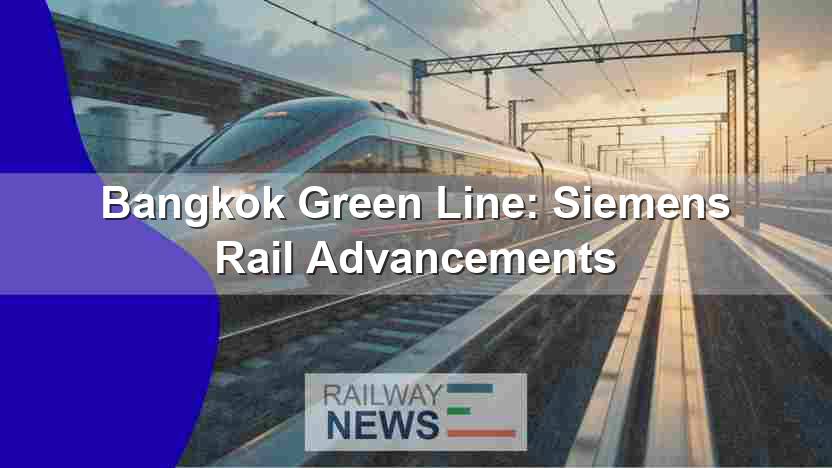
This article focuses to the significant expansion of Bangkok’s Green Line (BTS) mass transit system, focusing on the delivery of new metro trains manufactured by a consortium of Siemens and Bozankaya. The project represents a substantial investment in improving Bangkok’s public transportation infrastructure, aiming to alleviate congestion and enhance the passenger experience. We will examine the technical specifications of these new trains, the logistical challenges of transporting such large and complex equipment across continents, the importance of system integration and maintenance, and the broader implications for Bangkok’s urban development and its commitment to sustainable transportation solutions. This analysis will consider the strategic partnership between Siemens and Bozankaya, highlighting the technological advancements incorporated into the train design and their impact on passenger capacity, energy efficiency, and operational efficiency. Ultimately, we will assess the long-term benefits of this project and its potential to serve as a model for other rapidly growing metropolitan areas facing similar transportation challenges.
Train Manufacturing and Specifications
In May 2016, the Bangkok Mass Transit System Public Company (BTSC) commissioned a consortium of Siemens and Bozankaya, a Turkish manufacturer, to produce 22 four-car metro trains for the Green Line extension. Manufactured at Bozankaya’s Ankara facility, each 140-tonne train features four doors per car, maximizing passenger flow and minimizing dwell times at stations. The design prioritizes passenger comfort with a high-performance air-conditioning system and an optimized interior layout increasing passenger capacity to 1,460 standing passengers at crush load, in addition to 112 seated passengers. A top speed of 80 km/h allows for efficient transit along the Green Line route. This design emphasizes both passenger capacity and comfort, addressing the needs of a high-density urban environment.
Logistics and Delivery
The transportation of these massive trains from Ankara, Turkey, to Bangkok, Thailand, presents a complex logistical undertaking. The first train, after completion at the factory, was transported to the Turkish port of Borusan-Gemlik. Sea transport to Laem Chabang, Thailand, was projected to take approximately six weeks. This phase highlights the intricate planning and coordination required for the successful delivery of such a significant project. The seamless transition from manufacturing to international shipping underscores the collaborative efforts between the manufacturer, shipping companies, and the BTSC. This process is critical to ensuring the timely completion of the Green Line extension project.
System Integration and Commissioning
Upon arrival in Bangkok, each train will undergo static and dynamic commissioning. This rigorous testing process involves verifying the functionality of all train systems, including the traction and braking systems, auxiliary power systems, and integration with the existing Green Line infrastructure. Test runs on the Green Line tracks are crucial to ensure the smooth operation of the new trains within the existing network. This meticulous process is essential for ensuring the safety and reliability of the upgraded transit system. Siemens’ role extends beyond manufacturing; their 16-year maintenance contract underlines their commitment to the long-term success of this project.
Siemens’ Role and Technological Advancements
Siemens’ involvement extends beyond simply providing trains. Their scope includes providing the bogies, traction and braking systems, auxiliary systems, and also managing the project, design/engineering, and commissioning. Additionally, Siemens will supply the rail electrification system for the Green Line extension, demonstrating a commitment to a fully integrated solution. The innovative car body construction aims to reduce energy consumption, further emphasizing the project’s commitment to sustainability. This detailed approach highlights the value of a collaborative partnership between a global technology provider and a local manufacturing entity.
Conclusion
The delivery of the first of 22 new metro trains for Bangkok’s Green Line extension marks a significant milestone in the city’s ongoing efforts to enhance its public transportation infrastructure. The project, a collaborative effort between the BTSC, Siemens, and Bozankaya, demonstrates a commitment to modernizing urban transit through the implementation of high-capacity, energy-efficient rolling stock. The logistical challenges associated with the transportation of these trains from Turkey to Thailand have been successfully navigated, highlighting the meticulous planning and coordination inherent in such large-scale endeavors. The detailed scope of Siemens’ involvement, encompassing not only train manufacturing but also the provision of critical systems and long-term maintenance, underscores the importance of integrated solutions in large-scale transit projects. The focus on passenger experience, coupled with technological advancements aimed at reducing energy consumption and increasing operational efficiency, positions this project as a model for other cities facing similar transportation challenges. The increased capacity and improved service provided by these trains will have a significant positive impact on Bangkok’s commuters, contributing to improved urban mobility and sustainable urban development. This project represents a successful example of international collaboration in the rail industry, resulting in a substantial upgrade to Bangkok’s public transportation system.

Railway infrastructure, rolling stock and transport technologies specialist focused on global rail industry developments, high-speed rail systems, signaling technologies and freight transportation. Covering railway investments, public transport modernization, rail operations and international mobility projects across Europe, Asia and North America.
RELATED POSTS

October 1, 2026 12:13 am
Illinois approved $1.5 billion annually for the Northern Illinois Transit...
October 1, 2026 1:10 am
Georgia Ports Authority confirmed a $181 billion economic impact for...