
Balfour Beatty’s UK Rail Innovation Centre: Advancements
Balfour Beatty’s Rail Innovation Centre in Derby is revolutionizing UK rail with AI, robotics, and predictive maintenance. Discover how cutting-edge technology is boosting efficiency and safety!
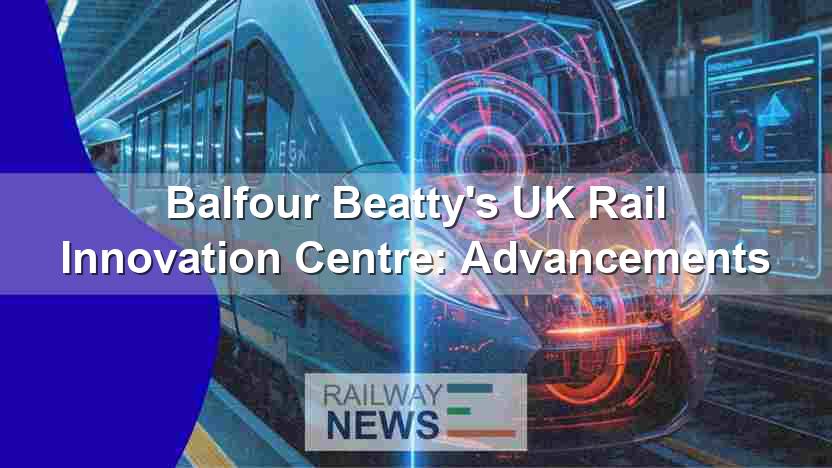
The UK rail industry is undergoing a significant transformation, driven by the need for increased efficiency, enhanced safety, and improved operational performance. This evolution necessitates the adoption of cutting-edge technologies and innovative approaches to infrastructure management and maintenance. This article explores the establishment of Balfour Beatty’s Rail Innovation Centre in Derby, UK, and its profound impact on the advancement of railway technology. The centre, a 450 square meter purpose-built facility, represents a significant investment in research, development, and testing of new technologies designed to revolutionize railway operations. We will examine the centre’s capabilities, the technologies it houses, and its broader implications for the future of rail in the UK and beyond. This analysis will delve into the specific technologies employed, the potential for improved safety and efficiency, and the role of collaboration and knowledge sharing in driving innovation within the rail sector.
State-of-the-Art Infrastructure and Expertise
The Rail Innovation Centre consolidates Balfour Beatty’s expertise across various engineering disciplines, including systems engineering, computer science, robotics, data analytics, and electronics and electrical & mechanical engineering. More than 150 technicians, engineers, data scientists, and developers work within the centre, focusing on the design, operation, and maintenance of railway systems. This concentration of talent provides a fertile ground for innovation and collaborative problem-solving. The facility’s design facilitates seamless integration of different skill sets, fostering a dynamic and productive research environment.
Cutting-Edge Technologies and Software Solutions
The centre is equipped with and actively develops a range of advanced technologies and software solutions. Balfour Beatty’s proprietary technologies, such as TrueTrak (a predictive maintenance system), OmniVision (a visual inspection system), OmniSurveyor3D and OmniCapture3D (3D scanning and modeling software), DataMap (a data management platform), and AssetView (an asset management system), are utilized and enhanced within the facility. The integration of these tools allows for detailed data acquisition, analysis, and visualization, leading to improved decision-making and optimized asset management strategies. The centre’s focus on Artificial Intelligence (AI), including machine learning and machine vision, enables the development of automated inspection and maintenance systems, further enhancing efficiency and safety.
Driving Efficiency and Safety Through Innovation
The primary objective of the Rail Innovation Centre is to drive efficiencies and enhance safety across the rail network. By leveraging advanced technologies such as AI, robotics, and data analytics, the centre contributes to the development of innovative solutions for predictive maintenance, remote inspection, and high-speed testing. This minimizes downtime, reduces operational costs, and improves the overall safety of railway operations. The application of machine learning algorithms allows for the prediction of potential failures, enabling proactive maintenance and preventing costly disruptions. The use of robotics in inspection tasks enhances safety by reducing the need for manual interventions in hazardous environments.
Collaboration and Knowledge Sharing: A Foundation for Growth
The Rail Innovation Centre fosters a collaborative environment, facilitating knowledge sharing among Balfour Beatty’s engineers, data scientists, and external stakeholders. The centre actively engages with universities and the wider data science community, strengthening relationships and fostering mutual growth. This collaboration accelerates technological development, providing access to a diverse range of perspectives and expertise. The sharing of best practices and knowledge ensures that the latest advancements are integrated into the rail industry, driving continuous improvement and innovation. This approach also supports the growth and development of Balfour Beatty’s technical talent pool, ensuring a steady supply of skilled professionals for the future needs of the railway sector.
Conclusion
Balfour Beatty’s Rail Innovation Centre represents a significant leap forward in the advancement of railway technology in the UK. The centre’s strategic focus on integrating cutting-edge technologies, such as AI, robotics, and advanced data analytics, has resulted in the development and implementation of innovative solutions that enhance both efficiency and safety within the rail network. The facility’s emphasis on collaboration, knowledge sharing, and the cultivation of a skilled workforce further solidifies its position as a pivotal driver of progress within the industry. The centre’s success hinges on its ability to seamlessly integrate various engineering disciplines, leverage proprietary and emerging technologies, and foster strong collaborative relationships with universities and industry partners. By investing in research, development, and testing within a controlled environment, Balfour Beatty demonstrates a clear commitment to shaping the future of rail transportation. The implications extend beyond the UK, providing a model for other nations looking to modernize their rail infrastructure and enhance operational performance. The long-term benefits include not only increased efficiency and cost savings for operators, but also improved safety and reliability for passengers, ensuring a more sustainable and efficient future for the UK railway system and beyond.

Railway infrastructure, rolling stock and transport technologies specialist focused on global rail industry developments, high-speed rail systems, signaling technologies and freight transportation. Covering railway investments, public transport modernization, rail operations and international mobility projects across Europe, Asia and North America.
RELATED POSTS

September 6, 2026 5:19 am
Hitachi delivered Taiwan's first N700ST high-speed train from Japan in...
September 6, 2026 6:17 am
Hungary ordered a national ban on most freight trains from...
September 6, 2026 1:17 am
Hitachi Toshiba Supreme Consortium confirmed the first of 12 N700ST...

September 5, 2026 4:19 pm
CPK launched formal tender talks with four consortia to design...

September 6, 2026 4:12 am
Alstom delivered the first of 100 new G Class trams...

September 7, 2026 8:16 am
Midea, Gree and TCL shipped air conditioners via China Railway...