
Automating Railway Design: Innovate UK’s Winners
Revolutionize railway design with automated solutions! Innovate UK’s funded projects are streamlining track layouts, electrification, power supply, and signaling – boosting efficiency and safety.
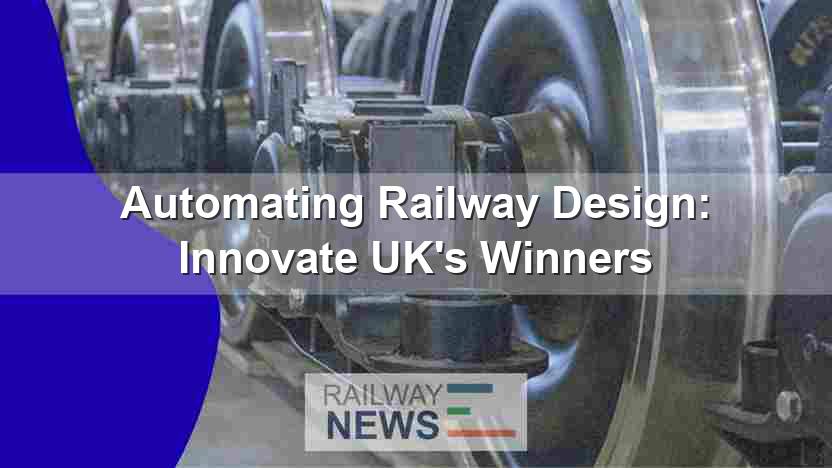
The railway industry is undergoing a period of significant transformation, driven by the need for increased capacity, improved efficiency, and enhanced safety. A key element of this transformation is the adoption of automation technologies, offering the potential to revolutionize the design and construction of railway infrastructure. This article explores the results of a collaborative research and development competition spearheaded by Network Rail (NR) and Innovate UK, focusing on the four winning companies and their innovative approaches to automated rail design. The competition, launched in November, aimed to solicit solutions that could automate the design processes for track layout, overhead line electrification (OLE), traction power supply systems, and signaling systems. This initiative underscores a critical shift towards leveraging technological advancements to enhance the speed, accuracy, and cost-effectiveness of railway infrastructure projects. The successful applicants demonstrate the potential for impactful innovation within the rail sector, and their projects highlight the significant advancements achievable through the application of automated design principles. The £300,000 grant awarded to the four winning companies will be instrumental in developing tools capable of significantly changing the landscape of railway infrastructure planning and implementation.
Automating Track Layout Design
Efficient and accurate track layout design is paramount for optimal railway performance. Traditional methods are often time-consuming and prone to errors. The winning projects aim to overcome these limitations by developing advanced algorithms and software capable of automatically generating track layouts based on predefined parameters, such as terrain constraints, capacity requirements, and safety regulations. These automated systems can significantly reduce design time, minimize human error, and optimize track geometry for enhanced train operations. Additionally, incorporating real-time data and simulations allows for improved predictions of future infrastructure needs and service changes.
Streamlining Overhead Line Electrification (OLE) Design
The design of OLE systems is a complex undertaking involving intricate calculations and precise positioning of components. Automation offers a pathway to streamline this process, ensuring greater accuracy and consistency. The winning projects in this area leverage advanced modeling techniques and simulation tools to optimize OLE design, considering factors such as train speed, current requirements, and environmental conditions. This automation can significantly reduce engineering time, improve system reliability, and enhance safety. The use of Building Information Modeling (BIM) and similar approaches should be highlighted to further improve project management.
Improving Traction Power Supply System Design
The efficient and reliable supply of electricity to trains is crucial for maintaining operational efficiency. The automated design of traction power supply systems requires sophisticated software capable of handling complex calculations and simulations. The winning projects focused on developing tools that optimize power distribution, minimizing energy loss and ensuring sufficient capacity to meet the demands of train operations. These automated systems allow for more precise prediction of energy needs, leading to more efficient system design and reduced operational costs. A key consideration is the integration of renewable energy sources into the traction power supply systems.
Revolutionizing Signaling System Design
Signaling systems are critical for ensuring the safe and efficient movement of trains. The design of these systems is complex and requires meticulous attention to detail. The winning projects focus on using automated design tools to optimize signaling system configurations, considering factors such as track layout, train schedules, and safety protocols. This approach results in more efficient and reliable signaling systems, enhancing operational safety and improving overall network performance. Integration with other railway systems, such as train control management systems (TCMS), is critical to overall effectiveness.
Conclusion
The Innovate UK competition, in collaboration with Network Rail, has successfully identified four companies—Costain, Graffica, PEAN Technologies, and Plume Rail—with innovative solutions for automating various aspects of railway design. Their projects demonstrate the transformative potential of automation in streamlining design processes, improving accuracy, and enhancing efficiency across track layout, overhead line electrification, traction power supply systems, and signaling systems. The £300,000 grant will enable these companies to develop and refine their automated design tools, ultimately leading to significant advancements in railway infrastructure planning and construction. The successful integration of these technologies promises to reduce design timelines, minimize errors, optimize resource allocation, and enhance the overall safety and reliability of railway networks. This initiative represents a significant step towards a more modernized and efficient railway industry, paving the way for future innovations in the field. The long-term impact of these projects will be felt across the rail sector, influencing future infrastructure projects and setting new standards for efficiency and safety. The success of this competition highlights the importance of fostering collaboration between industry and government to drive innovation and address the challenges facing the railway industry. Future endeavors should continue to support research and development in automated railway design, furthering the adoption of these crucial technologies.

Railway infrastructure, rolling stock and transport technologies specialist focused on global rail industry developments, high-speed rail systems, signaling technologies and freight transportation. Covering railway investments, public transport modernization, rail operations and international mobility projects across Europe, Asia and North America.
RELATED POSTS
September 6, 2026 5:19 am
Hitachi delivered Taiwan's first N700ST high-speed train from Japan in...
September 6, 2026 6:17 am
Hungary ordered a national ban on most freight trains from...
September 6, 2026 1:17 am
Hitachi Toshiba Supreme Consortium confirmed the first of 12 N700ST...

September 5, 2026 4:19 pm
CPK launched formal tender talks with four consortia to design...

September 6, 2026 4:12 am
Alstom delivered the first of 100 new G Class trams...
September 7, 2026 8:16 am
Midea, Gree and TCL shipped air conditioners via China Railway...