
Australia’s Rail Resilience: Adapting to Climate and Weather
Australia’s rail network faces climate change challenges. We’re building a national **rail resilience** framework for a stronger, more adaptable future.
Building a Resilient Rail Network in Australia: Adapting to Climate Change and Extreme Weather
Australia’s rail network, a vital artery for the nation’s economy and communities, faces increasing challenges from the effects of climate change and extreme weather events. The growing unpredictability and intensity of these events, including floods, cyclones, and heatwaves, is exposing vulnerabilities within the existing infrastructure. This article explores the urgent need for a national resilience framework within the Australian rail industry, focusing on the development of proactive strategies and practical solutions. We will examine the current state of resilience efforts, the impacts of recent weather events, and the potential for building a more robust and adaptable rail network that can withstand the pressures of a changing climate. Furthermore, the article will discuss the importance of a coordinated industry approach, the benefits of proactive investment, and the crucial role of resilient rail in safeguarding Australia’s economic and social well-being.
The Imperative of Rail Resilience
The Australian rail network is facing increasing pressures from climate change and extreme weather events. The unpredictability, frequency, and intensity of these events are projected to rise in the coming years, making the rail network’s vulnerability a growing concern. Currently, there is a lack of a national resilience framework for the rail industry in Australia, leading to ad-hoc approaches by individual organizations. This creates inefficiencies and potential overlap in risk assessments and preparedness efforts. While generic disaster risk reduction frameworks exist at national and state levels, they lack the industry-specific focus required for effective resilience planning within the rail sector. To address this, the Australian Railway Association (ARA) (ARA) Sustainability Committee is working with members through its Resilience Working Group to develop an industry-first Resilience Framework. This framework aims to provide practical focus areas and key considerations for building resilience in the Australasian rail context. The development of a standardized framework will provide organizations with a valuable tool to guide strategic thinking and align resilience efforts across the industry. Furthermore, the framework will offer metrics for measuring and monitoring resilience progress, enabling organizations to report on successful initiatives and identify areas where further attention is required.
Impact of Extreme Weather Events on the Rail Network
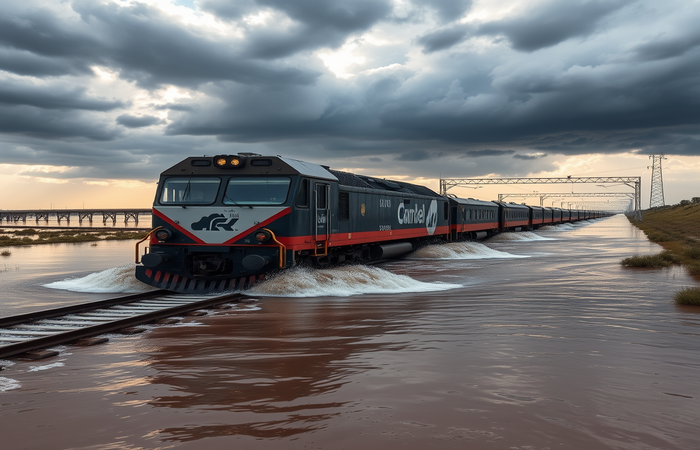
Recent events have underscored the critical importance of resilient rail infrastructure. Major flooding events in recent years have caused significant disruptions, highlighting the vulnerabilities of the existing rail network. For example, the flooding in January 2022 impacted over 300 kilometers of track between Crystal Brook, South Australia, and Kalgoorlie, Western Australia, leading to a 24-day outage on the east-west line. This outage resulted in significant economic costs, estimated at $320 million, and caused supply chain disruptions, leading to shortages in supermarkets and impacting various businesses. The same rail corridor experienced another three-week outage in early 2024 due to flooding, further straining the supply of essential goods and adding to cost-of-living pressures. Additionally, flooding in New South Wales and abnormally high rainfall in Queensland necessitated extensive repairs and temporary suspensions of both passenger and freight lines. These events underscore the significant economic and social consequences of rail disruptions, emphasizing the urgent need for proactive measures to enhance the resilience of the rail network.
Measuring and Implementing Resilience Strategies
Measuring resilience can be challenging. However, recent events offer valuable insights into what a resilient approach looks like. Consider the example of Ex-Tropical Cyclone Alfred. The ample warning allowed rail operators to prepare their networks with essential repair materials and relocate rolling stock to safe locations. Early and clear communication with passengers and freight users ensured community members and employees were kept safe. This preparedness minimized the impact of the cyclone, with operations restored on most parts of the affected network within days. This highlights the importance of proactive measures, including early warning systems, strategic stockpiling of resources, and effective communication, in building resilience. Infrastructure upgrades, such as installing larger culverts to divert floodwater and improving monitoring and detection systems, are crucial. However, true resilience goes beyond physical modifications. It requires a holistic approach that considers all aspects of a business, including people, culture, governance, and asset management.
Building a Resilient Future: Investment and Collaboration
The Australian Government has committed over $1 billion in investment to enhance rail network resilience, recognizing the long-term benefits of proactive measures. Infrastructure upgrades, such as installing larger culverts and upgrading track to withstand extreme temperatures, are critical for mitigating the impacts of extreme weather. However, building resilience requires more than just physical modifications. It necessitates a holistic approach that considers all aspects of a business. The rail network is essential for connecting people, transporting goods, and supporting essential services. The impact of disasters on the rail industry extends beyond transport disruption, impacting supply chains, food security, and community recovery. The ARA’s Resilience Framework will support a coordinated industry-wide approach, enabling organizations to share best practices, reduce research burdens, and align efforts.
Conclusion
In conclusion, building a resilient rail network is no longer just an operational necessity; it is a strategic imperative for Australia. The increasing frequency and intensity of extreme weather events, driven by climate change, demand a proactive and coordinated response from the rail industry. The absence of a national resilience framework has highlighted the need for a standardized approach to enhance preparedness and minimize disruptions. The ongoing development of the ARA Resilience Framework represents a crucial step in this direction. This framework will provide organizations with the tools and guidance needed to assess risks, implement effective mitigation strategies, and measure progress towards greater resilience. Recent events, such as the floods in South Australia and New South Wales, have underscored the economic and social costs of rail disruptions, emphasizing the urgent need for investment and collaboration. Proactive measures, including infrastructure upgrades, early warning systems, and effective communication, are essential components of a resilient rail network. Moreover, the holistic approach demonstrated during Ex-Tropical Cyclone Alfred, which considers people, culture, and asset management, provides a model for building comprehensive resilience. By investing in resilience, the rail industry can not only reduce the impact of extreme weather events but also contribute to the overall resilience of Australia’s economy and communities. Resilient rail is ultimately resilient transport, forming a cornerstone of Australia’s future.
RELATED POSTS

July 12, 2022 3:55 am
The ongoing conflict in Ukraine has had devastating consequences, significantly...
February 17, 2025 8:17 pm
The Deployment of CRRC Rolling Stock on Montréal’s Urban Rail...
July 1, 2017 11:58 pm
Here's a voiceover-friendly excerpt tailored for railway professionals:**"Modern railway signalling...
July 23, 2017 1:06 am
Here are a few options for a short, compelling voiceover...

July 16, 2025 9:33 pm
Washington opens grant funding for railway grade crossing safety improvements....

November 15, 2009 11:19 am
Malaysia will award a $2.3bn (7.5bn ringgit) contract to China...