
Australia: New Rail Standards Reform to Boost Efficiency & Safety
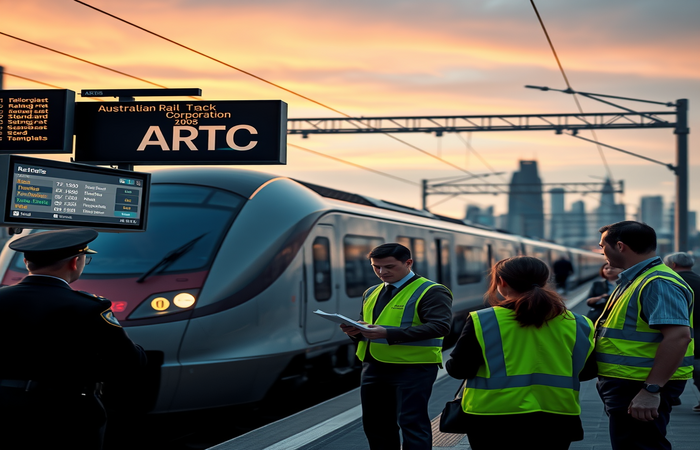
Australia’s rail industry is transforming with new mandatory standards. These focus on interoperability, digital train control, and driver interface, boosting safety and efficiency for a modern rail network.
<html>
<head>
<title>Australia Embarks on Ambitious Rail Standards Reform</title>
</head>
<body>
<h1>Australia Embarks on Ambitious Rail Standards Reform</h1>
<p>
The Australian rail industry is on the cusp of a significant transformation, driven by the introduction of its first set of mandatory rail standards. This initiative, spearheaded by the National Transport Commission (NTC) and supported by the Rail Industry Safety and Standards Board (RISSB), marks a crucial step towards achieving national consistency and enhancing the efficiency and safety of the nation’s rail networks. This article delves into the intricacies of this reform, exploring its goals, challenges, and the pivotal role of RISSB in shaping the future of Australian rail. The information is based on recent statements by Dr. Gillian Miles, the newly appointed Chair of RISSB.
</p>
<h2>The Foundation: A Three-Tiered Standards Framework</h2>
<p>
At the heart of the reform lies the National Rail Standards Framework, developed under the NTC’s National Rail Action Plan. This framework employs a three-tiered approach: mandatory standards, harmonised best practices, and localised or bespoke standards. Mandatory standards, which are relatively few in number, are specifically targeted at interoperability and are designed to provide certainty for the rail industry, thus encouraging investment. The harmonised standards represent a level of recommended best practice, while the bespoke standards cater to specific local needs. This tiered structure allows for a balance between national consistency and the flexibility required to address the unique characteristics of different rail networks across Australia.
</p>
<p>
The key objective is to improve interoperability, productivity, and safety across the rail system. The move to mandatory standards is crucial to overcoming inefficiencies stemming from the current fragmentation. Presently, varying gauges, technologies, and driver training requirements across different jurisdictions result in increased costs and safety risks. The framework aims to streamline operations, particularly for freight transport, where drivers often have to navigate multiple sets of rules and regulations across their journeys.
</p>
<h2>Key Areas of Focus: Digital Train Control, Driver Interface, and Rolling Stock</h2>
<p>
The initial wave of mandatory standards will focus on high-impact areas, including digital train control technologies, the driver interface (cabin environment), and rolling stock approval processes. Streamlining rolling stock approval processes is particularly important. The current inconsistencies make bringing new rolling stock onto the network a time-consuming and expensive process.
</p>
<p>
The recent amendments to the Rail Safety National Law (RSNL) serve as an early enabler of these changes, requiring operators and infrastructure managers to consider network-wide interoperability impacts in their safety management systems. This is a significant step towards creating a more integrated and efficient rail network.
</p>
<h2>Challenges and Solutions: Costs, Coordination, and Governance</h2>
<p>
Driving the uptake of standards, whether mandatory or voluntary, presents challenges, particularly concerning costs and coordination among various stakeholders. The multitude of players and viewpoints within the rail industry can complicate the process. The shift from a mindset that prioritizes individual costs to a focus on system-wide uplift is critical.
</p>
<p>
To address these challenges, a more effective shared governance model is needed. This model would encourage consistent adoption and best practices, offering a “lock-in” mechanism that is stronger than voluntary adoption but not as heavy-handed as mandatory standards. The success of national roads harmonization in Australia serves as an example of a successful approach to standardisation.
</p>
<h2>RISSB’s Strategic Role and the Path Forward</h2>
<p>
RISSB (Rail Industry Safety and Standards Board) is poised to play a central role in the evolution of the rail system. RISSB will focus on prioritizing and coordinating standards development. They will also work with the NTC to bring government and industry together to develop standards and supporting materials. Supporting industry with implementation and adoption is an important task too.
</p>
<p>
RISSB is also committed to supporting smaller operators who may lack the resources of larger players. This can involve providing practical assistance. The organization itself must evolve. The aim is to create a more strategic focus on solving the rail industry’s most significant challenges. The rail sector has experienced considerable investment. The success of this reform is crucial for meeting climate goals and freight productivity targets, which necessitate shifting freight from roads to rail. It will require a shift in mindset.
</p>
<h2>Conclusion</h2>
<p>
The implementation of mandatory rail standards in Australia represents a pivotal moment for the nation’s rail industry. The initiative aims to address long-standing inefficiencies and safety concerns by fostering national consistency. The three-tiered framework, encompassing mandatory, harmonised, and localised standards, provides a flexible yet structured approach to achieving these goals. The initial focus on key areas such as digital train control, the driver interface, and rolling stock approval processes highlights a strategic commitment to modernizing critical aspects of the rail network.
</p>
<p>
Significant challenges remain, particularly in coordinating the diverse stakeholders within the industry and managing the associated costs. To overcome these hurdles, a collaborative governance model is necessary. This model would create the right conditions for consistent adoption and best practices. The experiences from the harmonisation of national roads in Australia offer valuable insights.
</p>
<p>
RISSB’s role will be expanded. RISSB will play a pivotal role in this transformation by prioritizing and coordinating standards development and supporting industry implementation. The success of these reforms is critical to achieving the transport industry’s wider environmental and productivity targets. The Australian rail industry is at a crossroads. A commitment to these standards will pave the way for a more efficient, safer, and sustainable future for rail transport across the country.
</p>
<p>
<strong>Country:</strong> Australia
</p>
<p>
<strong>Date:</strong> The date of the news is not available.
</p>
<h3>Companies Summary</h3>
<ul>
<li><strong>National Transport Commission (NTC):</strong> The NTC is a key government agency responsible for developing and implementing national transport reforms, including rail standards. The NTC is also responsible for overseeing the National Rail Action Plan.
</li>
<li><strong>Rail Industry Safety and Standards Board (RISSB):</strong> RISSB is a membership-based organization that develops and promotes rail safety and standards in Australia. Its role is expanding to support the implementation of the new mandatory standards.
</li>
<li><strong>Australasian Railway Association (ARA):</strong> The ARA is the peak body for the rail industry in Australia and New Zealand. It often collaborates with government agencies.
</li>
<li><strong>Office of the National Rail Industry Coordination (ONRIC):</strong> ONRIC is another agency involved in coordinating and promoting the rail industry.
</li>
</ul>
</body>
</html>
RELATED POSTS

October 20, 2025 7:54 pm
MTA begins environmental review for the Interborough Express, a new...

March 28, 2018 4:59 am
Network Rail's Felixstowe branch line upgrade: A £60.4 million...
March 31, 2021 8:19 am
This article delves into the significant contract awarded to Alstom...
October 29, 2025 5:54 pm
EWR Co. launches market engagement for its Programme Support Works...
February 6, 2018 4:57 am
Modernize your freight rail operations with strategic investment in infrastructure,...
October 23, 2020 1:23 pm
This article examines the significant development of the Baghdad Elevated...