
Auckland’s CRL: Shaping NZ’s Rail Future, Rail Infrastructure
Auckland’s City Rail Link (CRL) inaugurated its first passenger journey, a $5.5B project marking New Zealand’s first underground railway. Testing and commissioning phases are underway, ensuring safe operation.
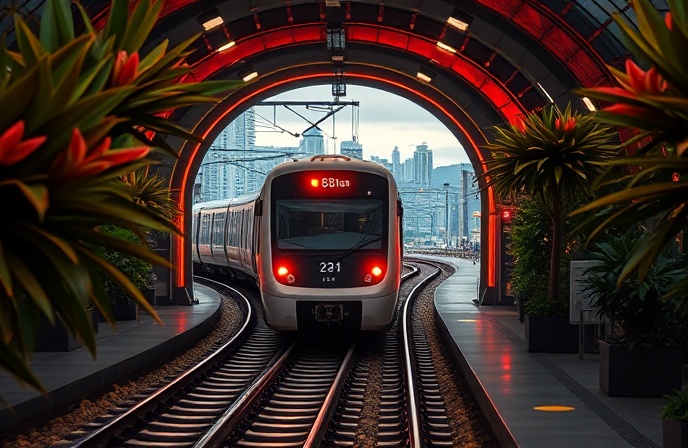
Auckland’s City Rail Link: A Glimpse into the Future of New Zealand Rail
Auckland, New Zealand – A momentous occasion unfolded today as the first official passenger journey traversed the tunnels of Auckland’s City Rail Link (CRL), marking a significant step toward the project’s completion. New Zealand’s Prime Minister Christopher Luxon, Auckland Mayor Wayne Brown, government ministers, and key project stakeholders experienced the new underground rail infrastructure firsthand. The train journey originated at Maungawhau Station, progressing through the new Karanga-a-Hape and Te Waihorotiu stations, culminating at Waitematā (Britomart). This $5.5 billion project, jointly funded by the New Zealand government and Auckland Council, represents the country’s inaugural underground railway. This article will delve into the key milestones, challenges, and future implications of this transformative infrastructure project.
A First Look: The Inaugural Journey and Testing Phase
The recent inaugural journey, conducted under stringent safety protocols, was part of the project’s extensive train testing phase, a critical stage for ensuring the CRL’s operational readiness. The purpose was to showcase progress and offer a preview of the enhanced public transportation experience awaiting Aucklanders. According to City Rail Link’s Chief Executive Patrick Brockie, “We’re delighted to have been able to show off the progress we are making and offer a preview of the benefits thousands of Aucklanders will enjoy when CRL opens next year.” Since the first test run in February, over 1600 individual test train journeys have been completed within the tunnels. With the major construction now complete, the focus is on commissioning and testing all tunnel and station systems.
Operational Complexities: Commissioning and System Integration
The current phase of the CRL project focuses on commissioning and integrating the complex systems required for safe and reliable operation. This involves comprehensive testing of signaling, power supply, ventilation, and communication systems. Brockie emphasized the challenges inherent in this stage, citing lessons learned from similar projects worldwide, stating, “We know from lessons learned overseas, this is our most challenging and complex phase and getting this right for Aucklanders is our utmost priority.” The intricate nature of integrating diverse railway systems necessitates rigorous testing and meticulous attention to detail to ensure optimal performance and passenger safety.
Supporting Infrastructure: KiwiRail’s Network Upgrades
KiwiRail, the national railway operator, plays a crucial role in supporting the CRL by upgrading the existing metro network to accommodate the increased service frequency and capacity the new link will provide. KiwiRail Chief Executive Peter Reidy highlighted the accelerated pace of these upgrades, stating, “In Auckland we are carrying out work which would normally take a decade but is being delivered in three to four years.” These upgrades include electrification projects (e.g., Pukekohe to Papakura), track enhancements (e.g., Third Main Line), and infrastructure development (e.g., Wiri to Quay Park, Western Power Feed) to support the projected increase in passenger volume. Further projects underway involve the construction of three new stations in southern Auckland.
Challenges and Opportunities: Delivering a World-Class Railway
The successful completion of the CRL presents a significant opportunity to transform Auckland’s public transportation network. However, realizing this vision involves overcoming several challenges. Rigorous testing, system integration, and adherence to stringent safety standards are paramount. Furthermore, close collaboration between the CRL project team, KiwiRail, and other stakeholders is essential to ensure seamless integration with the existing network. Managing stakeholder expectations, mitigating potential risks, and addressing unforeseen issues are also critical. The CRL promises improved connectivity, reduced travel times, and enhanced accessibility for Aucklanders, setting a new benchmark for railway infrastructure in New Zealand.
Conclusion
The City Rail Link is on the cusp of a major transformation for Auckland’s transportation network. The recent inaugural journey through the tunnels signals the project’s transition towards operational readiness. The meticulous testing and commissioning phase is crucial to ensure the safe and reliable operation of the new underground railway. KiwiRail’s parallel efforts to upgrade the existing metro network are pivotal in supporting the increased capacity and service frequency the CRL will bring. The project presents exciting opportunities to improve passenger experience, reduce congestion, and promote sustainable transportation options. However, the successful completion of the CRL requires careful management of technical, logistical, and stakeholder-related challenges. This project sets a precedent for future infrastructure developments across New Zealand, demonstrating a commitment to modernizing public transport and connecting communities.
RELATED POSTS

December 18, 2022 3:26 pm
Introduction This article delves into the significant expansion of the...

August 25, 2013 8:37 am
Slovenian Railways has selected IBM’s SmartCloud solution to centralise its...

November 11, 2025 1:54 pm
BNSF Railway honors 99 shippers with the Product Stewardship Award,...
October 30, 2025 4:54 am
MTA completes Grand Central-42nd Street Station improvements on time and...
June 26, 2018 10:33 pm
Upgrade your fleet with ETCS Level 2 Baseline 3 like...

July 23, 2012 11:15 am
The Nigerian government has awarded China Civil Engineering Construction Corporation...