
Auckland CRL Expansion: Rail Infrastructure Insights
Auckland’s City Rail Link is expanding! Increased passenger projections necessitate platform extensions and design changes to handle 54,000 peak-hour passengers.
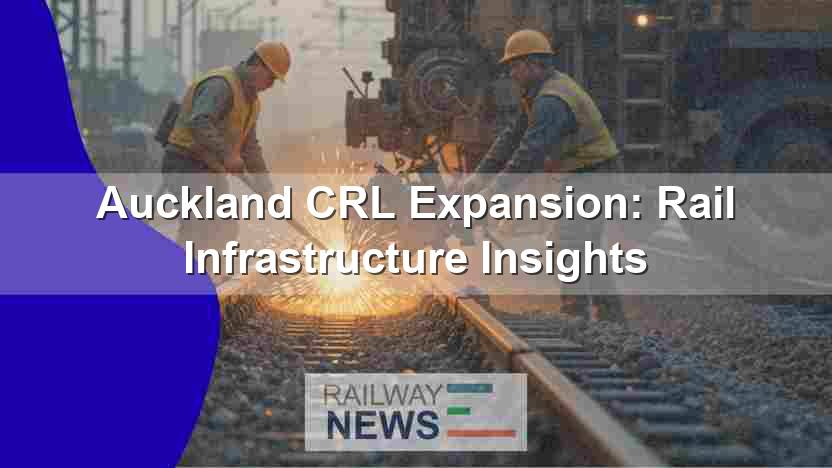
The Auckland City Rail Link (CRL), a significant undertaking in New Zealand’s infrastructure development, is undergoing a scope expansion to address burgeoning passenger projections. Initially designed as a 3.45km twin-tunnel underground rail link connecting Britomart Station to Mt Eden Station, traversing Auckland’s central business district with stops at Albert Street and Karangahape Road, the project’s capacity is being reassessed. This reassessment stems from a substantial upward revision of predicted peak-hour passenger numbers, necessitating significant design modifications to accommodate this increased ridership. This article will delve into the reasons behind the scope expansion, focusing on the impact of increased passenger forecasts, the necessary modifications to station design and platform lengths, and the broader implications for the project’s timeline and budget. We will also consider the long-term implications for the Auckland transport network and the potential for future expansion. The need for robust and adaptable infrastructure in rapidly growing urban areas is paramount, and the CRL serves as a crucial case study in this regard. The adjustments to the CRL demonstrate the importance of proactive planning and adaptation in major infrastructure projects to meet evolving demands.
Increased Passenger Forecasts and Capacity Requirements
The original CRL design anticipated a peak-hour passenger capacity of 36,000 passengers per hour. However, updated projections now estimate this figure to be significantly higher, at approximately 54,000 passengers per hour. This substantial increase necessitates a reassessment of the existing infrastructure plans. The jump in predicted ridership underscores the rapid growth of Auckland’s population and the increasing reliance on public transportation. The original design, based on shorter six-carriage trains, is now insufficient to manage this elevated demand. This highlights the challenges of long-term planning in the face of rapidly evolving urban dynamics and the need for adaptable designs capable of scaling up to meet future demands.
Modifications to Station Design and Platform Lengths
To accommodate the revised passenger forecasts, significant modifications to the CRL stations are required. The most impactful change involves increasing platform lengths to accommodate longer, nine-carriage trains. This necessitates adjustments to station layouts, potentially affecting existing architectural plans and impacting construction timelines. Specifically, the Karangahape Road station will also require the addition of a second entrance at Beresford Square to manage the increased passenger flow effectively and minimize congestion. These design changes are crucial for optimizing passenger throughput and ensuring a smooth and efficient passenger experience within the expanded network.
Financial and Time Implications of the Expansion
The scope expansion of the CRL will undoubtedly have significant financial and temporal ramifications. While the initial estimated cost was approximately NZ$3.4 billion, the increased scope will inevitably lead to cost overruns. Additionally, the design modifications and the need for additional construction work will likely extend the project timeline, potentially delaying the completion date beyond the initially projected 2024. Careful financial management and efficient project execution are paramount to mitigate the potential negative impacts of these changes. This necessitates thorough cost-benefit analyses to evaluate the long-term economic viability of the expanded project against its added costs. Transparent communication regarding these changes to the public and stakeholders is crucial to maintain trust and support for the project.
Long-Term Implications and Future Expansion
The expansion of the CRL is not simply a reactive measure; it also represents a proactive step towards securing Auckland’s long-term transport future. The increased capacity will significantly enhance the city’s public transport network, reducing reliance on private vehicles and mitigating traffic congestion. The adaptable design principles adopted in the expansion will also inform future railway projects, ensuring that future infrastructure investments are more resilient to fluctuating demand. The successful completion of the expanded CRL will act as a blueprint for future urban rail development in rapidly growing cities globally, demonstrating the importance of flexibility and scalability in large-scale transport infrastructure projects.
Conclusions
The Auckland City Rail Link’s (CRL) scope expansion is a crucial adaptation to accommodate unexpectedly high projected passenger numbers. The initial design, based on a 36,000 passenger per hour capacity, has been revised to handle 54,000 passengers per hour, leading to significant modifications. This includes extending platforms to accommodate nine-carriage trains instead of six and adding a second entrance to the Karangahape Road station. This expansion necessitates re-evaluation of costs and project timelines, potentially leading to budget overruns and delays beyond the originally planned 2024 completion date. However, the long-term benefits of a more robust and scalable rail system are significant, providing a much-needed upgrade to Auckland’s transport infrastructure. The expanded CRL will alleviate congestion, enhance connectivity, and stimulate economic growth. This project serves as a vital case study for future large-scale infrastructure developments, emphasizing the importance of incorporating flexibility and adaptability into initial designs to accommodate future growth and evolving urban needs. The proactive response to increased passenger projections demonstrates a commitment to future-proofing Auckland’s public transport system and enhancing its overall urban resilience. The experience gained from managing this expansion will be invaluable in informing future transport planning and projects both in Auckland and internationally, providing a critical framework for designing adaptable and scalable infrastructure solutions. The success of the expanded CRL will depend on effective financial management, transparent communication with stakeholders, and efficient project execution to ensure minimal disruption and maximize the benefits of this vital public infrastructure investment.

Railway infrastructure, rolling stock and transport technologies specialist focused on global rail industry developments, high-speed rail systems, signaling technologies and freight transportation. Covering railway investments, public transport modernization, rail operations and international mobility projects across Europe, Asia and North America.
RELATED POSTS

September 6, 2026 5:19 am
Hitachi delivered Taiwan's first N700ST high-speed train from Japan in...

September 5, 2026 4:19 pm
CPK launched formal tender talks with four consortia to design...

September 5, 2026 7:14 pm
HS2 Ltd signed renegotiated civils contracts with EKFB and Align...

September 6, 2026 4:12 am
Alstom delivered the first of 100 new G Class trams...

September 6, 2026 1:17 am
Hitachi Toshiba Supreme Consortium confirmed the first of 12 N700ST...
September 6, 2026 6:17 am
Hungary ordered a national ban on most freight trains from...