
Alstom’s Taipei Metro Line 7: Rail Innovations
Alstom’s integrated metro system for Taipei Metro Line 7: A €378 million turnkey solution showcasing Metropolis trains, Urbalis CBTC signaling, and seamless collaboration. Discover how!
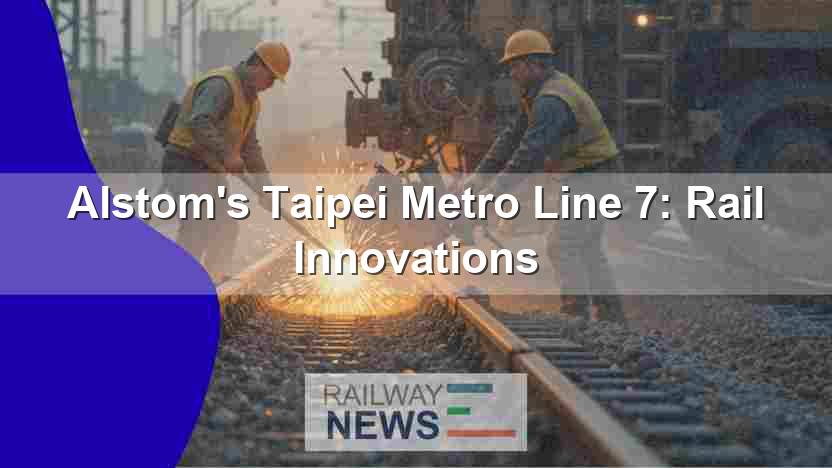
This article examines Alstom’s significant contract to deliver an integrated metro system for phase one of Taipei Metro Line 7. The €378 million project showcases Alstom’s expertise in providing detailed, turnkey solutions for urban rail transit, highlighting their technological capabilities and strategic partnerships. We will delve into the specifics of Alstom’s contribution, the collaborative aspects with CTCI (China Technical Consultants Inc.), the scope of the project, and the broader implications for Taipei’s expanding public transportation network. Additionally, we will analyze Alstom’s established presence in the Taiwanese market and consider the wider context of their international involvement in similar large-scale projects. The analysis will demonstrate the complexities involved in delivering a fully integrated metro system and the importance of collaboration between international and local partners. The significance of this project for both Alstom and Taipei’s urban development will be central to the discussion.
Alstom’s Scope of Supply
Alstom’s €220 million contribution to the Taipei Metro Line 7 project is substantial and multifaceted. The company’s role extends beyond simply supplying rolling stock. They are providing 19 Metropolis trains, a crucial element of the system’s passenger capacity and operational efficiency. Additionally, Alstom is responsible for delivering the Urbalis CBTC (Communication-Based Train Control) driverless signalling system, a critical component for safe and automated train operation. This system ensures precise train spacing, speed control, and overall operational reliability. Their contribution also includes the Supervisory Control and Data Acquisition (SCADA) system, which monitors and manages the entire metro system’s performance in real-time, enabling proactive maintenance and efficient resource allocation. Finally, Alstom is supplying the platform screen doors (PSD), enhancing passenger safety and improving energy efficiency within the stations.
CTCI’s Complementary Role and Collaborative Approach
The success of this project hinges on the effective collaboration between Alstom and CTCI. While Alstom focuses on the core train systems and signaling technology, CTCI undertakes critical infrastructure development. Their responsibilities encompass track work, a foundational element of the railway infrastructure, power supply ensuring reliable energy delivery to the trains and stations, depot equipment enabling the maintenance and storage of trains, telecommunication systems facilitating communication across the system, and ticketing systems crucial for passenger access and revenue management. This division of labor highlights the complex nature of constructing a fully functional metro line, demonstrating the need for specialized expertise and coordinated efforts. The collaboration exemplifies a successful model for integrating international expertise with local knowledge and infrastructure development capabilities.
Project Significance for Taipei’s Public Transportation
The Taipei Metro Line 7 extension is a significant expansion of the city’s public transportation infrastructure. The 9.5km line with nine stations will connect Taipei City with the Zhonghe and Tucheng districts of New Taipei City. This extension is expected to alleviate traffic congestion, improve accessibility to vital areas, and enhance the overall quality of life for residents. The implementation of Alstom’s modern, integrated system will contribute to a reliable, efficient, and sustainable transportation solution. The choice of driverless technology further reflects Taipei’s commitment to implementing advanced and environmentally conscious urban transit solutions.
Alstom’s Regional Presence and International Experience
Alstom’s long-standing presence in Taiwan (over 37 years) provides them with a significant advantage in executing this project. Their existing relationships with local contractors and regulatory bodies enhance the project’s efficiency and reduce potential complexities. Moreover, Alstom’s substantial experience in delivering integrated metro systems globally, with projects in Montreal, Singapore, Hanoi, and Riyadh among others, demonstrates their proven capacity to manage large-scale, complex infrastructure projects. This combination of local market familiarity and international expertise positions Alstom as a key player in the development of Taiwan’s urban transportation network.
Conclusions
Alstom’s contract to supply the integrated metro system for Taipei Metro Line 7 represents a significant milestone for both the company and the city. The €378 million project underscores Alstom’s leading position in the global rail industry, showcasing their ability to deliver complete, technologically advanced solutions. The collaboration with CTCI effectively integrates international expertise with local infrastructure development capabilities, highlighting the benefits of strategic partnerships. The project’s scope, encompassing Metropolis trains, Urbalis CBTC signaling, SCADA, and PSDs, demonstrates a commitment to creating a safe, efficient, and sustainable urban transit solution. The project’s success will significantly improve Taipei’s public transportation network, alleviating congestion and enhancing connectivity within the metropolitan area. Additionally, it solidifies Alstom’s established presence in Taiwan, demonstrating their commitment to the region’s infrastructure development. The successful delivery of this project will serve as a compelling case study for future large-scale integrated metro projects globally, demonstrating the value of strategic partnerships and the importance of combining international technological expertise with local market understanding. It serves as a model for successful public-private partnerships in urban infrastructure development, leveraging both global expertise and local knowledge for optimal outcomes. The integrated nature of the project, addressing all aspects from rolling stock to signaling and infrastructure, represents a significant step forward for Taipei’s urban transit system and sets a benchmark for future railway projects in the region and beyond.

Railway infrastructure, rolling stock and transport technologies specialist focused on global rail industry developments, high-speed rail systems, signaling technologies and freight transportation. Covering railway investments, public transport modernization, rail operations and international mobility projects across Europe, Asia and North America.
RELATED POSTS

October 4, 2026 5:14 pm
Alstom secured a CA$4.7 billion order from VIA Rail Canada...

October 1, 2026 12:13 am
Illinois approved $1.5 billion annually for the Northern Illinois Transit...

October 8, 2026 1:15 pm
Alstom secured a €1bn contract to build 13 automated trains,...
October 1, 2026 3:12 am
Greenbrier confirmed Brian Comstock as new president and CEO effective...

October 4, 2026 11:08 pm
Sound Transit confirmed the September 30 opening of Seattle Pinehurst...

October 5, 2026 6:12 pm
AECOM and Jacobs secured a contract in September 2026 to...