
Alstom’s Prima T8: 500 Locomotives & India’s Rail Revolution
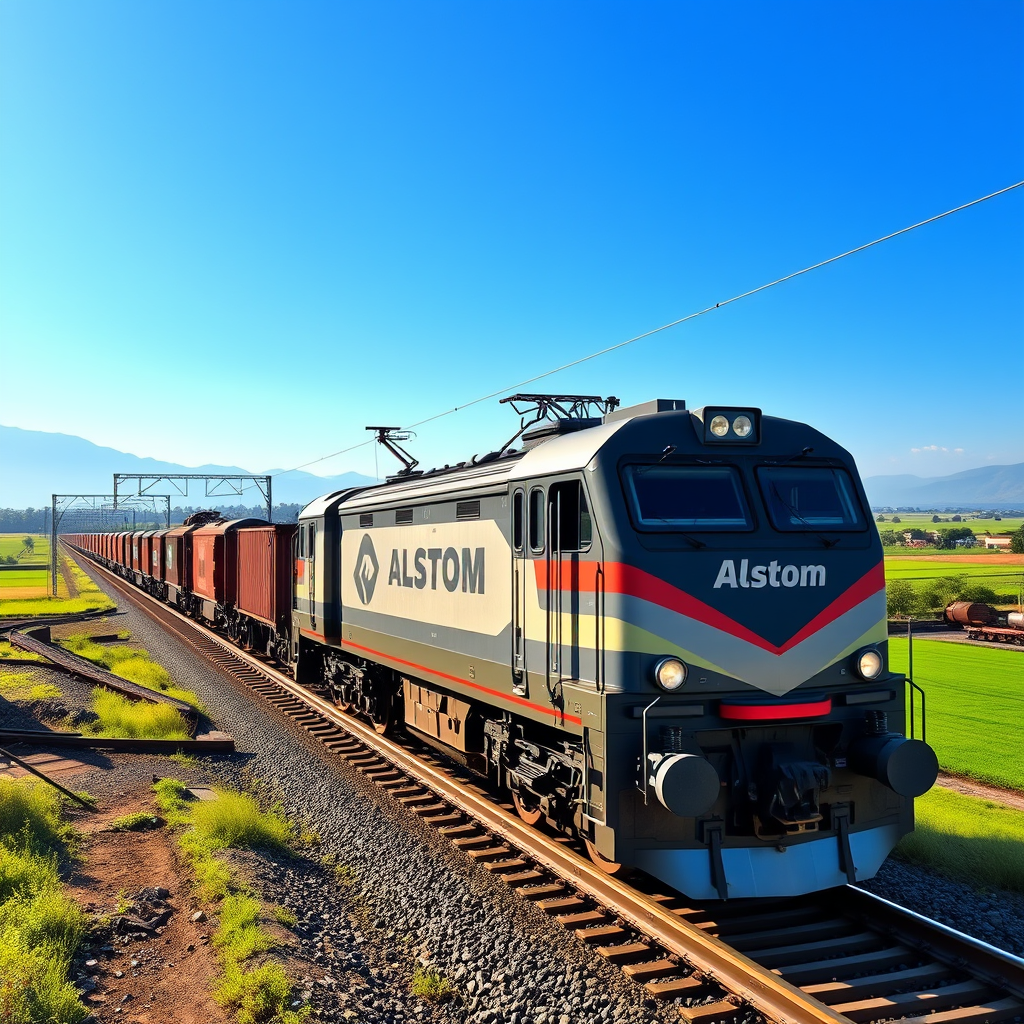
This article explores the significant contribution of Alstom’s Prima T8 electric locomotives to the modernization of Indian Railways’ freight operations. The delivery of the 500th locomotive, a milestone achievement, highlights the success of a large-scale joint venture between Alstom and Indian Railways, showcasing a substantial foreign direct investment (FDI) and a robust commitment to the “Make in India” initiative. We will delve into the technological advancements embodied in these locomotives, the impact on India’s freight transportation efficiency, the strategic importance of the project in terms of both economic growth and technological capability enhancement, and finally, assess the broader implications for future railway infrastructure development in India and beyond. The focus will be on analyzing the multifaceted successes and challenges associated with this ambitious undertaking, providing a comprehensive overview of its significance within the global railway industry.
The Prima T8: Technological Advancement in Freight Haulage
The Prima T8 WAG12B (Wide Axle Gauge 12,000 horsepower) electric locomotive represents a significant leap forward in Indian freight transportation. Its 12,000hp capacity, coupled with Insulated Gate Bipolar Transistors (IGBT)-based propulsion technology, allows it to haul approximately 6,000 tonnes of freight at speeds up to 120 km/h. The IGBT technology, a crucial element, contributes significantly to energy efficiency through regenerative braking, reducing operational costs and minimizing environmental impact. The double-section design further optimizes power distribution and hauling capacity, improving overall operational efficiency. This technological sophistication positions India among a select group of nations capable of producing high-horsepower locomotives domestically.
“Make in India” and Economic Growth: A Case Study
The Madhepura manufacturing facility, a joint venture between Alstom and Indian Railways, exemplifies the success of the “Make in India” initiative. With a production capacity of 120 locomotives annually and a localization rate exceeding 85%, the project demonstrates the potential for significant domestic job creation and technological skill development. This high level of localization not only reduces reliance on foreign suppliers but also fosters the growth of a robust domestic supply chain within the railway sector. The €3.5 billion ($3.7 billion) investment represents one of the largest FDIs in the Indian rail sector, underscoring the confidence in India’s growing market and its potential for future growth within the railway industry.
Operational Efficiency and Infrastructure Modernization
The deployment of 500 Prima T8 locomotives has already resulted in the transportation of crucial commodities – coal, cement, food grains, fertilizers, petrochemicals, minerals, and postal parcels – covering over 120 million kilometers across India. This clearly demonstrates the locomotives’ significant contribution to the reliable and efficient movement of goods across the country. Furthermore, Alstom’s establishment of two ultramodern maintenance depots in Saharanpur and Nagpur, equipped with predictive technologies, ensures high availability and reduced maintenance costs, maximizing the return on investment and minimizing operational downtime. This proactive approach to maintenance aligns with global best practices in railway management.
Sustainability and Future Prospects
The electric nature of the Prima T8 locomotives contributes to environmental sustainability by reducing reliance on fossil fuels and lowering carbon emissions. Regenerative braking further enhances this aspect, reclaiming energy that would otherwise be lost as heat. This aligns with global efforts towards decarbonizing the transportation sector. The success of this project in India provides a compelling model for other countries looking to modernize their railway networks with efficient, sustainable, and technologically advanced freight locomotives. The experience gained through this joint venture can be leveraged for future collaborations and knowledge sharing, promoting global best practices in railway technology and infrastructure development.
Conclusion
The delivery of the 500th Prima T8 electric locomotive marks a significant milestone in the modernization of Indian Railways’ freight operations. This achievement showcases the successful implementation of the “Make in India” initiative, attracting substantial foreign direct investment and fostering the development of domestic technological capabilities. The technological advancements incorporated into the Prima T8, including IGBT-based propulsion and regenerative braking, enhance operational efficiency, reduce costs, and contribute to environmental sustainability. The project’s success has demonstrated the potential for significant economic growth and the creation of a robust domestic supply chain within the railway sector. The establishment of state-of-the-art maintenance facilities further emphasizes a commitment to maximizing the operational lifespan and minimizing downtime of these crucial assets. Looking forward, this model of public-private partnership and technological collaboration can serve as a blueprint for other countries aiming to upgrade their railway infrastructure and enhance their freight transportation capabilities. The experience gained in India through this endeavor represents a significant contribution to global best practices in railway technology and sustainable development. The long-term implications extend beyond immediate economic benefits, contributing to a more efficient, sustainable, and technologically advanced global railway landscape.
RELATED POSTS

May 10, 2025 8:30 am
This article explores the recent contract awarded to Stadler,...
June 27, 2025 3:33 pm
Kananook Yard revamp boosts Frankston Line service, prepping for...
October 28, 2025 3:54 am
West Midlands Railway unveils its £70 million Tyseley Depot redevelopment,...

October 1, 2023 3:36 pm
This article delves into the significant €5 billion contract between...
November 8, 2019 9:30 pm
The modernization of railway systems is a crucial undertaking for...
VIA Rail avoids strike, reaching 3-year deal with Unifor, securing...