
Alstom’s Indian Rail Rev: Madhepura EMU Advances
Alstom’s all-electric locomotives: A game-changer for Indian Railways, boosting efficiency and the “Make in India” initiative. Discover how!
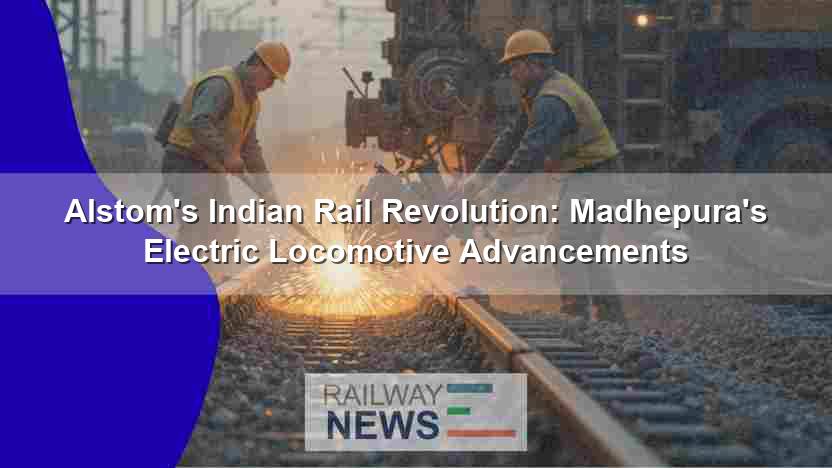
This article examines the significant achievement of Alstom in completing its first all-electric locomotive at its Madhepura, Bihar facility in India. This project represents a crucial step in the modernization of India’s railway infrastructure, aligning with the government’s ambitious electrification goals. The completion of this locomotive, part of a larger €3.5 billion contract, signifies not only technological advancement but also a powerful demonstration of the “Make in India” initiative, boosting local manufacturing and job creation. We will delve into the technical specifications of the locomotive, the economic implications of this project for India, and the broader context of its contribution to sustainable and efficient rail transport. Additionally, the article will explore the strategic partnerships involved and the future prospects of similar initiatives in India’s expanding railway sector. The success of this endeavor underscores the potential for foreign direct investment (FDI) to play a vital role in upgrading India’s transportation network and fostering economic growth.
The Madhepura Facility and the “Make in India” Initiative
Alstom’s manufacturing facility in Madhepura, Bihar, a joint venture with Indian Railways (74% Alstom, 26% Indian Railways), stands as a testament to the success of the “Make in India” initiative. The construction and operation of this facility have created thousands of direct and indirect jobs, significantly contributing to the local economy. More importantly, it fosters the development of a robust local supply chain, with 90% of the locomotive components sourced domestically. This localization strategy not only reduces reliance on imports but also stimulates growth within India’s manufacturing sector, promoting technological expertise and self-reliance in the rail industry. The successful implementation of this project serves as a model for future collaborations between international companies and the Indian government, showcasing the potential for large-scale infrastructure development with significant domestic participation.
Technical Specifications and Operational Efficiency
The completed locomotive, a member of Alstom’s Prima family, boasts impressive specifications. With a power output of 12,000hp (horsepower), it can haul loads of up to 6,000t (tonnes) at a speed of 120km/h (kilometers per hour). The adoption of Insulated Gate Bipolar Transistor (IGBT)-based propulsion technology ensures high efficiency and reduced energy consumption. This technology contributes to lower operating costs for Indian Railways, a critical factor in the overall economic viability of the project. Compliance with Indian freight transport standards demonstrates Alstom’s commitment to meeting the specific needs and regulations of the Indian railway system, ensuring seamless integration and optimal performance within the existing infrastructure.
Economic and Environmental Impact
The project’s economic impact extends beyond job creation. The reduced operating costs associated with the efficient all-electric locomotives directly contribute to the financial health of Indian Railways. Additionally, the shift towards electric traction significantly reduces greenhouse gas emissions compared to traditional diesel locomotives, aligning with India’s broader sustainability goals. The project contributes to the government’s aim of 100% rail electrification, paving the way for a cleaner, more environmentally friendly transportation sector. This transition not only benefits the environment but also improves air quality in densely populated areas along railway lines.
Further Alstom Projects and Future Prospects
The success of the Madhepura project has paved the way for further collaboration between Alstom and India’s railway network. Alstom has secured additional contracts worth €75 million, including power supply contracts for the Mumbai and Jaipur Metro Rail projects, as well as a new train sets contract for Chennai Metro Rail. These projects demonstrate continuing confidence in Alstom’s capabilities and underline the expanding opportunities within India’s rapidly growing transportation sector. This sustained engagement highlights the long-term commitment of international players to investing in India’s infrastructure development, fostering innovation, and promoting sustainable growth.
Conclusions
The completion of Alstom’s first all-electric locomotive in Madhepura, Bihar marks a significant milestone in the modernization of India’s railway infrastructure. This project exemplifies the success of the “Make in India” initiative, generating numerous jobs and fostering a robust local supply chain. The locomotive’s advanced technical specifications, including its high power output and energy-efficient IGBT-based propulsion system, contribute to improved operational efficiency and reduced costs for Indian Railways. Moreover, the transition to electric traction significantly reduces greenhouse gas emissions, aligning with India’s commitment to environmental sustainability. The project’s success has further spurred additional investment by Alstom, demonstrating the significant potential for continued collaboration between international companies and the Indian government in upgrading India’s transportation network. The broader impact extends beyond the immediate economic gains, underscoring the importance of public-private partnerships in driving technological advancements, promoting sustainable development, and contributing to the overall progress of India’s railway system and its economic growth. The Madhepura facility and the resulting locomotives are not merely products of manufacturing, but rather symbols of collaborative progress and a model for future large-scale infrastructure development in India and beyond.

Railway infrastructure, rolling stock and transport technologies specialist focused on global rail industry developments, high-speed rail systems, signaling technologies and freight transportation. Covering railway investments, public transport modernization, rail operations and international mobility projects across Europe, Asia and North America.
RELATED POSTS

September 6, 2026 5:19 am
Hitachi delivered Taiwan's first N700ST high-speed train from Japan in...

September 5, 2026 4:19 pm
CPK launched formal tender talks with four consortia to design...

September 6, 2026 4:12 am
Alstom delivered the first of 100 new G Class trams...

September 5, 2026 7:14 pm
HS2 Ltd signed renegotiated civils contracts with EKFB and Align...

September 6, 2026 1:17 am
Hitachi Toshiba Supreme Consortium confirmed the first of 12 N700ST...

September 6, 2026 6:17 am
Hungary ordered a national ban on most freight trains from...