
Alstom’s Hydrogen Shunting Locomotive: Germany’s Rail Innovation
Alstom’s hydrogen-powered shunting locomotive, a key decarbonization project, completes its first run. Industrial testing follows.
Introduction
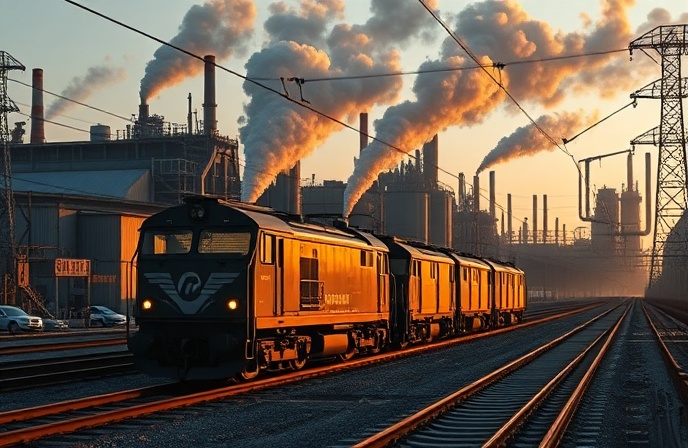
Alstom has completed the first hydrogen-powered shunting locomotive run at its Salzgitter site in Germany, a project supported by EUR 1.5 million in funding from the city of Salzgitter. This initiative, developed in partnership with VPS Verkehrsbetriebe Peine-Salzgitter, WTZ Roßlau gGmbH, TU Braunschweig, and the Fraunhofer Institute for Surface Engineering and Thin Films, aims to decarbonize shunting operations and assess the potential of hydrogen in rail transport.
Project Overview
The modernization project involved converting a diesel shunting locomotive to run on hydrogen combustion. Following the conversion, the locomotive will undergo industrial testing at Salzgitter Group’s steel production facilities until October 2025. The trial results will inform the potential for broader use of the technology, after which the locomotive will be restored to its original condition. The project is scheduled for completion in autumn 2025.
Environmental and Operational Impact
Alstom estimates that replacing diesel engines with hydrogen could yield significant environmental benefits. A single converted locomotive can potentially save up to 150 tonnes of CO2 annually, or as much as 3,000 tonnes over a service life of 15 to 20 years. Germany currently operates approximately 1,000 diesel shunting locomotives, with an additional 4,000 in service across Europe.
Partnership and Funding
The project is supported by the city of Salzgitter, which contributed EUR 1.5 million from Lower Saxony’s EUR 50 million structural aid package. This initiative aligns with Salzgitter’s broader decarbonization strategy and complements the SALCOS programme, which focuses on transitioning steelmaking to hydrogen-based direct reduction. VPS, a logistics subsidiary of Salzgitter AG, operates 42 shunting locomotives within the steel production network.
Technological Advancements
TU Braunschweig focused on the exhaust gas turbocharging design, addressing the challenge posed by high excess air. The project aims to transfer hydrogen technology from the test phase to practical application. The use of hydrogen allows for improved efficiency and reduced emissions.
Last June 2025, we published an article about Renfe’s new cutting-edge Aranjuez maintenance hub, boosting Cercanías efficiency. Click here to read – Future of Rail: Renfe’s Railway Technology Hub, Aranjuez: Essential Guide
Conclusion
Alstom’s hydrogen-powered shunting locomotive project, with industrial testing scheduled until October 2025, is designed to assess the feasibility of hydrogen in rail transport and contribute to decarbonization efforts. The project is supported by partners and funding from the city of Salzgitter.
Company Summary
Alstom: A company that has successfully completed the world’s first run of a shunting locomotive converted from diesel to hydrogen power at its Salzgitter site in Germany.
VPS Verkehrsbetriebe Peine-Salzgitter: A partner in the modernization project.
WTZ Roßlau gGmbH: A partner in the modernization project.
Salzgitter Group: The location where the locomotive will undergo industrial testing at its steel production facilities.
Technology
Hydrogen: A fuel source used in the converted shunting locomotive, offering potential for emission reduction in rail transport.
RELATED POSTS
April 1, 2026 2:14 pm
Saudi Arabia Railways launched a 1,700 km freight rail corridor...
April 1, 2026 8:40 pm
BNSF Railway expands Galesburg, Illinois, yard capacity, with second hump...
April 1, 2026 12:10 pm
Alstom secured a €410 million contract from CFR SA to...
April 1, 2026 5:39 pm
The U.S. Surface Transportation Board proposed a 1.5% annual US...
April 1, 2026 6:21 pm
Federal Transit Administration awarded $20.6 billion in formula-based apportionments to...
April 1, 2026 8:45 am
Renfe Alquiler finalized a 15-year lease for ex-DB coaches with...