
Alstom Pauses Hydrogen Train Development After French Funding Cut
Alstom halts hydrogen train development after French funding cuts, jeopardizing EU funding. The *rail sector* faces a pivotal moment for *hydrogen trains* amidst challenges.
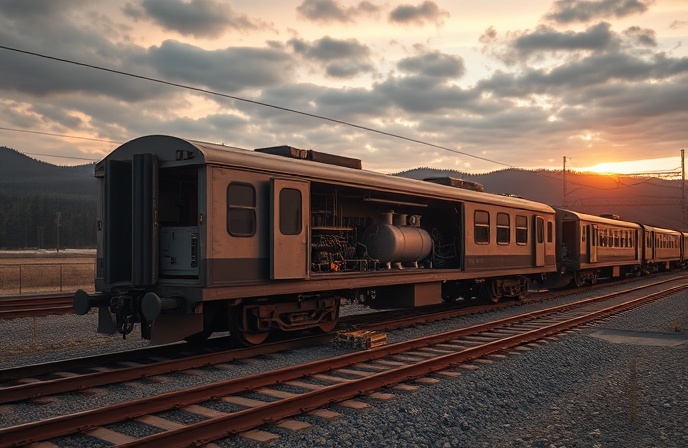
Alstom has halted further development of its hydrogen-powered trains following the French government’s withdrawal of financial support, a decision that also jeopardizes access to crucial EU funding under the Important Projects of Common European Interest (IPCEI) framework. While research activities under the IPCEI program are suspended, Alstom maintains its commitment to ongoing hydrogen projects and existing customer orders across Europe.
| Key Entity | Critical Detail |
|---|---|
| Alstom | Paused hydrogen train development; confirmed suspension. |
| French Government | Withdrew financial support for hydrogen train development. |
| IPCEI Framework | Access to EU funding blocked due to withdrawn national support. |
| Orders | Commitment remains for existing orders in France, Italy, and Germany. |
| CEO Statement | Henri Poupart-Lafarge stated hydrogen technology is “not yet mature.” |
| Project Status | IPCEI-funded prototype fuel-cell system completed; discussions with French state ongoing. |
The decision by Alstom, a leading global rail manufacturer, to pause further development of its hydrogen-powered trains signifies a critical juncture for the nascent technology in the European rail sector. The withdrawal of financial backing by the French government, coupled with the forfeiture of potential EU co-funding through the IPCEI framework, directly impacts Alstom’s research and development pipeline for hydrogen traction. This move, confirmed by CEO Henri Poupart-Lafarge in an interview, suggests a recalibration of strategy, with Poupart-Lafarge admitting that hydrogen technology is “not yet mature” for widespread deployment.
Strategic Impact and Government Relations
The halt in development stems directly from the French government’s withdrawal of financial support, which consequently cuts off access to a substantial bloc of EU funding designated for projects of common European interest. Alstom emphasized that this pause affects IPCEI-funded research specifically, while its broader commitments to hydrogen technology and existing customer orders remain active. The company is reportedly engaged in ongoing dialogue with French authorities to explore solutions for sustaining its hydrogen-related activities and supporting the domestic “made in France” hydrogen sector. This situation highlights the critical dependence of advanced rail technologies on stable, long-term government policy and financial commitment.
Operational Commitments and Customer Orders
Despite the R&D pause, Alstom has reiterated its unwavering commitment to fulfilling and supporting all existing hydrogen train orders. These include 12 Régiolis hydrogen units for various regions in France, as well as the Coradia Stream H, selected for services in Italy under a framework agreement for up to 14 trains with FNM. Research staff involved in the suspended IPCEI hydrogen development have been redeployed to other projects. The company assures its customers in France, Italy, and Germany that contractual obligations for delivery, maintenance, and operational support will be honored without change.
Industry Context and Market Realities
Alstom’s decision arrives amidst a backdrop of mixed operational results and technical challenges for hydrogen trains globally. The pioneering Coradia iLint, launched in Germany in 2022, has experienced significant operational setbacks, including the reversion to diesel in Lower Saxony due to hydrogen delivery issues and the failure of replacement fuel-cell modules, leaving only four of 14 units in service. Similarly, RMV in Germany withdrew its fleet of 18 iLints due to recurring technical problems with fuel-cell systems, and Siemens Mobility has encountered challenges with its Mireo Plus H units. While manufacturers like Stadler are making international strides with their hydrogen offerings, the sector’s reliance on substantial public funding, as exemplified by the EUR 5 billion in EU research funding since 2022, and the mandatory national co-financing under IPCEI rules, underscores the inherent financial risks and the need for clear, consistent policy frameworks. The growing competition from battery-electric and hybrid solutions further complicates the market landscape for hydrogen traction.
Last June 2025, we published an article about Renfe’s Aranjuez maintenance hub. Click here to read – Future of Rail: Renfe’s Railway Technology Hub, Aranjuez: Essential Guide

Railway infrastructure, rolling stock and transport technologies specialist focused on global rail industry developments, high-speed rail systems, signaling technologies and freight transportation. Covering railway investments, public transport modernization, rail operations and international mobility projects across Europe, Asia and North America.
RELATED POSTS

October 1, 2026 7:09 am
United States regulators confirmed a September 30 deadline for the...

October 1, 2026 12:13 am
Illinois approved $1.5 billion annually for the Northern Illinois Transit...

October 1, 2026 6:10 am
Amtrak approved a System Expansion Committee on July 30 to...

October 4, 2026 5:14 pm
Alstom secured a CA$4.7 billion order from VIA Rail Canada...
October 1, 2026 3:12 am
Greenbrier confirmed Brian Comstock as new president and CEO effective...
October 1, 2026 4:10 am
DART launched two public ridership dashboards in March 2026 to...