
Alstom Hydrogen Locomotive: German Rail Decarbonization Project
Alstom’s hydrogen locomotive completes test run at Salzgitter steel plant, aiming for decarbonized railway operations.
“`html
Introduction
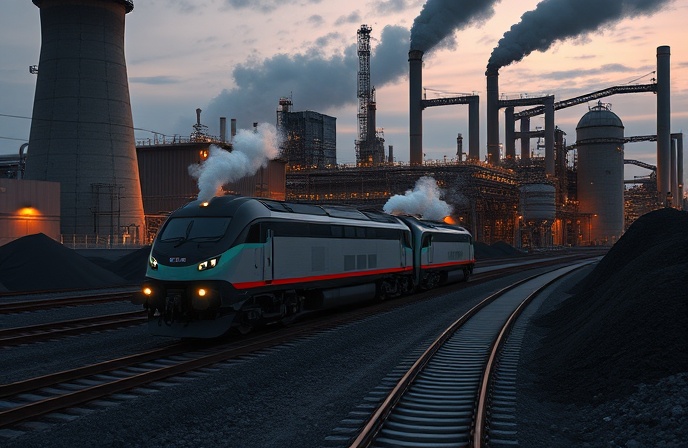
Alstom’s hydrogen-powered locomotive completed a test run at Salzgitter Group’s steel production facilities, which began in September and is scheduled to continue until October. The project, supported by a €1.5 million contribution from the city of Salzgitter, aims to decarbonize shunting operations.
Last June 2025, we published an article about Renfe’s cutting-edge Aranjuez maintenance hub, boosting Cercanías efficiency. Click here to read – Future of Rail: Renfe’s Railway Technology Hub, Aranjuez: Essential Guide
Hydrogen Locomotive Testing
The test run of Alstom’s hydrogen-powered locomotive is part of a collaboration with VPS Verkehrsbetriebe Peine-Salzgitter, WTZ Roßlau, TU Braunschweig, and Fraunhofer Institute for Surface Engineering and Thin Films. The city of Salzgitter is contributing €1.5 million ($1.7 million) to the project from a €50 million structural aid package provided by the state of Lower Saxony. The project is expected to conclude this autumn, after which the locomotive will be returned to its original state.
Project Goals and Impact
The initiative aims to decarbonize shunting operations by using hydrogen for direct, CO2-free combustion in locomotive engines. Partners expect this practical application to provide insights into the technology’s viability for regular use. VPS operates 42 locomotives for transporting materials like ore and coal within its production network. A hydrogen-powered locomotive could save up to 3,000 tonnes of CO2 over a 15 to 20-year lifespan, equivalent to the emissions of 650 cars or the carbon sequestration of 200,000 trees.
Industry Context
In Germany, about 1,000 diesel shunting locomotives are in use, with around 4,000 across Europe. These locomotives typically have a service life of 50 to 70 years, emitting approximately 150 tonnes of CO2 annually.
Company Strategy
VPS managing director stated that the deployment of the hydrogen-powered locomotive aligns with the ongoing transformation within the Salzgitter Group. The Salzgitter Group will gradually switch pig iron production from the blast furnace route to direct reduction, initially predominantly natural gas-based and later increasingly hydrogen-based, over the coming years. Alstom recently released a report detailing five measures to enhance Sweden’s railway network, emphasizing punctuality, capacity, infrastructure, skills, and innovation.
Conclusion
The hydrogen-powered locomotive test run, supported by multiple partners and funding from the city of Salzgitter, is designed to evaluate the viability of hydrogen for decarbonizing shunting operations. The project, concluding this autumn, is part of broader efforts by Salzgitter Group to transition to hydrogen-based production.
Company Summary
Alstom: Recently released a report detailing five measures to enhance Sweden’s railway network, emphasizing punctuality, capacity, infrastructure, skills, and innovation.
VPS Verkehrsbetriebe Peine-Salzgitter: Operates 42 locomotives for transporting materials like ore and coal within its production network.
Salzgitter Group: The Salzgitter Group will gradually switch pig iron production from the blast furnace route to direct reduction, initially predominantly natural gas-based and later increasingly hydrogen-based, over the coming years.
WTZ Roßlau: A collaborator in the hydrogen-powered locomotive test run project.
TU Braunschweig: A collaborator in the hydrogen-powered locomotive test run project.
Fraunhofer Institute for Surface Engineering and Thin Films: A collaborator in the hydrogen-powered locomotive test run project.
“`
RELATED POSTS
March 5, 2026 7:57 pm
Banedanmark launched battery train operations on Denmark's 67 km Skjern–Holstebro...
March 4, 2026 10:12 am
Amtrak and Siemens deploy 8 Airo trains for the U.S....
March 4, 2026 2:06 pm
Alstom commissioned 76 Flexity LRVs and CBTC signaling for Toronto,...
March 5, 2026 1:38 pm
Wabtec finalized its acquisition of Sweden's Dellner Couplers on February...
March 4, 2026 3:52 pm
Leo Express launches 200 km/h Talgo trains for 2026 service...
March 3, 2026 11:42 am
UK's Network Rail awards Mercury3 Consult the GWML O&M contract...