
Alaska Railroad Derailment: Impact & Future of Rail Operations
Alaska Railroad freight train derailed near Talkeetna, spilling fuel. Swift response and containment underway.
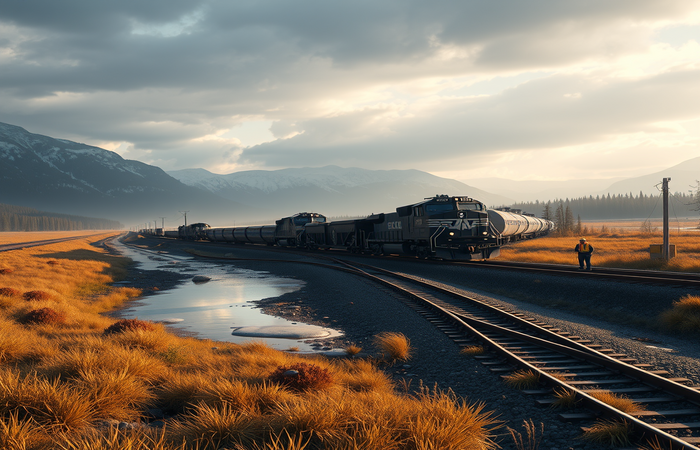
Alaska Railroad Freight Train Derailment Near Talkeetna Causes Fuel Spill
A freight train derailment on the Alaska Railroad Corporation (ARRC) network on June 6th, approximately 22 miles north of Talkeetna, has prompted swift response and environmental containment measures. The incident, which occurred on the Curry loop track, involved the derailment of a train carrying freight and resulted in damage to a diesel fuel tank. Fortunately, the three ARRC employees operating the train were unharmed. This article will delve into the details of the derailment, the ensuing response, the potential implications, and the steps taken to mitigate environmental impact. The primary focus is on the immediate response and the significance of this event for ARRC’s freight operations, including potential impacts on the line’s 470-mile span from Seward to Fairbanks.
Derailment Details and Immediate Response
The derailment took place on the Curry loop track, a line providing access to a quarry critical for supplying ballast, riprap, and gravel to maintain the ARRC’s track infrastructure. The cause of the derailment remains under investigation, with ARRC officials emphasizing that the safety of their personnel and the environment are top priorities. The primary damage was sustained to a locomotive’s 2,600-gallon diesel fuel tank, which suffered a puncture. Immediately following the incident, ARRC staff initiated containment strategies to secure the damaged tank and prevent further leakage. The Alaska Department of Environmental Conservation (ADEC) was promptly notified, underscoring the corporation’s commitment to environmental compliance.
Environmental Containment and Remediation Efforts
Prompt action was taken to contain the spill. ARRC’s rapid response included securing the punctured fuel tank and implementing initial containment measures on the same day as the derailment. Further details on the scope of the spill, the specific containment methods employed, and the estimated timeline for complete remediation are still under review. Such information will be critical in assessing the overall environmental impact. The use of specialized absorbent materials and the deployment of containment booms are likely strategies that were utilized, given standard operating procedures for fuel spills. ARRC’s adherence to these protocols is vital to minimizing any long-term effects on the surrounding ecosystem.
Operational Impact and Line Integrity
While the derailment occurred on a secondary track, not the main line, ARRC officials have stated that operations on the main line are not anticipated to be impacted by the incident. The main line, stretching 470 miles, is a critical artery for freight movement and passenger services. The ARRC’s efficient operations and maintenance practices are, therefore, paramount. The Curry loop track, although not directly affecting the main line, is vital for supplying the necessary material used in track repair and maintenance. The extended downtime on this secondary track could possibly create some operational challenges. However, the current status suggests that there would be no disruptions in the short-term, though further investigation will be required before the loop track can be fully restored.
Investigation and Future Prevention Strategies
A thorough investigation into the cause of the derailment is underway. A detailed assessment of the track conditions, the train’s mechanical systems, and operational procedures will be crucial in determining the root cause. Learning from such events is critical to continuously improving railway safety. This includes reviewing the existing safety protocols and considering whether any modifications or upgrades are necessary to prevent similar incidents. The insights gained will inform future prevention strategies, potentially involving track inspections, advanced signaling systems, or enhanced employee training. The application of predictive maintenance strategies and the use of track-monitoring technologies are key strategies in preventing derailment incidents.
Conclusion
The freight train derailment near Talkeetna serves as a reminder of the challenges inherent in operating a complex railway system. The Alaska Railroad’s swift response, including the immediate containment efforts and notification of environmental agencies, demonstrates a commitment to both environmental responsibility and operational safety. The ongoing investigation into the cause of the derailment is crucial for identifying and addressing any underlying issues that may have contributed to the incident. The impact on the Curry loop track and the subsequent remediation efforts will be closely monitored. Although no disruptions to the main line are anticipated, the incident highlights the importance of preventative maintenance, robust safety protocols, and continuous improvement within the rail industry. The lessons learned from this event will hopefully help fortify ARRC’s operations, ensuring the safe and efficient movement of freight and passengers across its extensive network in the years to come.
Company Summary
The Alaska Railroad Corporation (ARRC) is a vital component of Alaska’s transportation infrastructure, providing freight and passenger rail services across the state. As a state-owned corporation, ARRC plays a critical role in connecting communities, supporting economic activity, and transporting essential goods, including fuel, construction materials, and consumer products. The company’s operations span approximately 470 miles of track, connecting Seward to Fairbanks. ARRC’s commitment to safety, operational efficiency, and environmental stewardship is crucial for the long-term sustainability of its operations and its contribution to Alaska’s economy.

Railway infrastructure, rolling stock and transport technologies specialist focused on global rail industry developments, high-speed rail systems, signaling technologies and freight transportation. Covering railway investments, public transport modernization, rail operations and international mobility projects across Europe, Asia and North America.
RELATED POSTS

October 1, 2026 7:09 am
United States regulators confirmed a September 30 deadline for the...

October 8, 2026 1:15 pm
Alstom secured a €1bn contract to build 13 automated trains,...

October 4, 2026 5:14 pm
Alstom secured a CA$4.7 billion order from VIA Rail Canada...

October 1, 2026 12:13 am
Illinois approved $1.5 billion annually for the Northern Illinois Transit...

October 6, 2026 2:14 am
Union Pacific launched export rail shipments with Ferromex to deliver...

October 1, 2026 6:10 am
Amtrak approved a System Expansion Committee on July 30 to...