
AI-Powered Rail Track Inspection: TrackEi’s Revolution
Introduction
The railway industry is undergoing a significant transformation driven by the need for enhanced safety, efficiency, and operational optimization. Traditional methods of rail track inspection, relying heavily on manual visual inspections and slower-speed trolley-based systems, are proving inadequate in addressing the demands of increasingly high-speed and high-volume rail networks. These traditional methods are time-consuming, labor-intensive, and often fail to detect subtle yet critical defects that could lead to derailments or other catastrophic events. This article explores the advancements in rail track inspection technology, focusing specifically on the innovative TrackEi solution developed by L&T Technology Services (LTTS). TrackEi leverages the power of artificial intelligence (AI), machine vision, and edge computing to deliver a transformative approach to rail safety and maintenance, significantly improving the speed, accuracy, and predictive capabilities of track inspections. We will examine the technological underpinnings of TrackEi, its operational benefits, its integration into existing railway infrastructure, and its overall impact on the future of rail maintenance.
AI-Powered High-Speed Rail Track Inspection
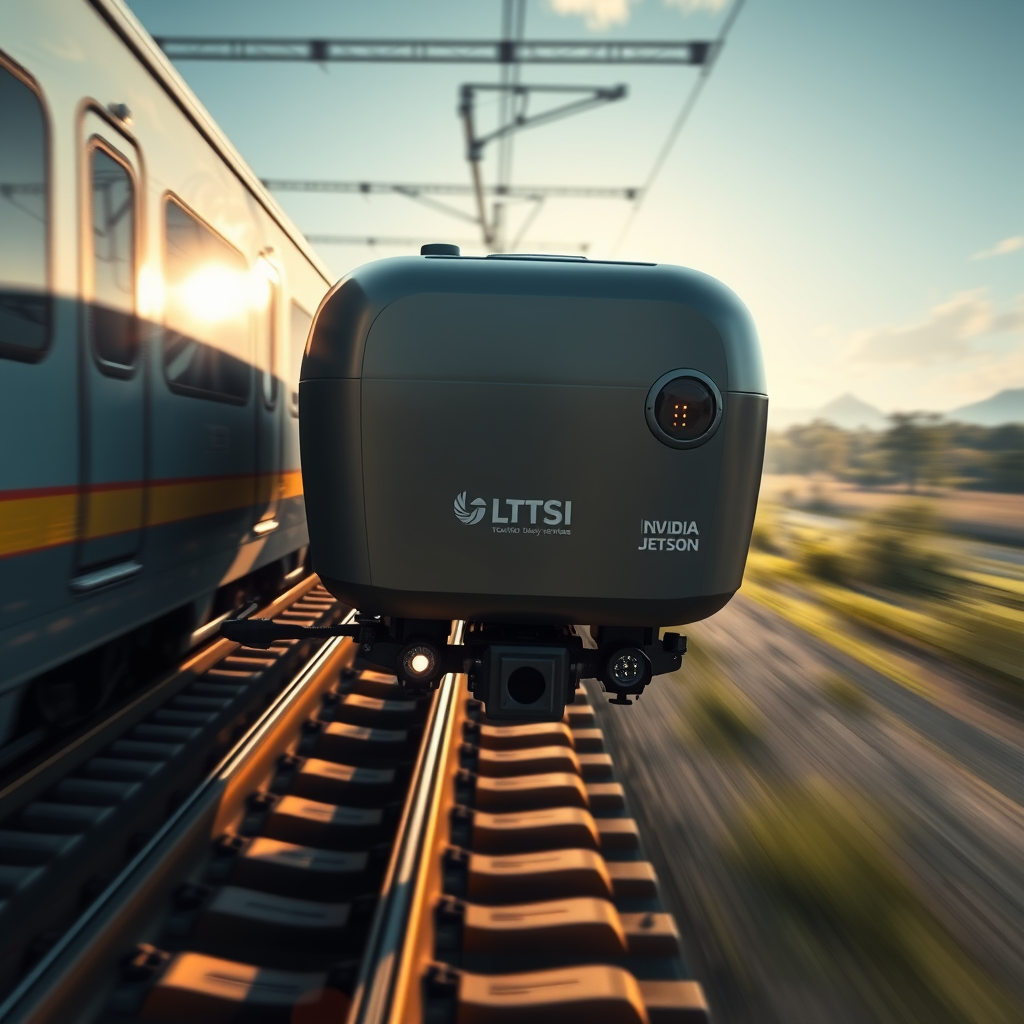
TrackEi represents a significant leap forward in rail track inspection technology. Unlike traditional methods, TrackEi utilizes a high-speed, automated system capable of detecting rail defects while traveling at speeds exceeding 60 miles per hour (mph). This is achieved through the integration of high-resolution cameras and laser profiling technology, which capture detailed images and three-dimensional (3D) data of the track bed. This data is then processed using advanced AI algorithms, specifically deep learning models, to identify a wide range of defects, including broken rails, track misalignments, gauge variations, and other critical issues that could compromise the integrity of the rail line. The system’s ability to operate at high speeds dramatically increases inspection efficiency and coverage.
Edge Computing and the NVIDIA Jetson Platform
A key element of TrackEi’s success is its reliance on edge computing, specifically the NVIDIA Jetson platform. This allows for real-time processing of the vast amounts of image and sensor data generated during high-speed inspections. Processing data at the edge eliminates the need for data transmission back to a central server, reducing latency and enabling immediate identification of defects. The NVIDIA Jetson platform’s powerful processing capabilities allow TrackEi to perform complex machine vision tasks with high accuracy, further enhancing the system’s efficiency and reliability. The system’s continuous learning capabilities allow it to adapt to varying environmental conditions and improve its accuracy over time. This is crucial for maintaining consistent performance across diverse rail networks.
Predictive Maintenance and Operational Efficiency
TrackEi’s capabilities extend beyond simply detecting defects; it enables predictive maintenance. By analyzing the data collected during inspections and employing machine learning algorithms, the system can predict potential future failures based on identified trends and patterns in the detected defects. This allows rail operators to proactively schedule maintenance, minimizing unscheduled downtime, reducing operational disruptions, and maximizing the lifespan of rail assets. The ability to predict potential failures provides a significant economic advantage by reducing costly emergency repairs and improving overall operational efficiency.
Integration and Scalability
TrackEi’s design prioritizes seamless integration into existing railway infrastructure. The system features a scalable edge-based architecture, enabling easy incorporation into current operational workflows and data management systems. This scalability allows TrackEi to be deployed on various types of rail networks, from high-speed lines to regional and freight lines, making it a versatile and widely applicable solution. The system’s modular design and open architecture facilitate future upgrades and enhancements as technology advances.
Conclusions
The development and implementation of TrackEi signifies a paradigm shift in rail track inspection. By combining the power of AI, high-resolution imaging, laser profiling, and edge computing, LTTS has created a solution that addresses the critical challenges faced by the railway industry in maintaining safe and efficient rail operations. TrackEi’s ability to perform high-speed inspections, detect a wide range of defects with high accuracy, and enable predictive maintenance offers significant improvements in safety, operational efficiency, and cost savings. The system’s reliance on the NVIDIA Jetson platform ensures real-time processing and continuous learning, crucial for adapting to changing conditions and improving performance over time. The successful integration of TrackEi into existing railway systems, demonstrated through initial trials with Class-I railroads and testing at MxV Rail, highlights the system’s practicality and potential for widespread adoption. The scalability of the system ensures that it can be deployed across a variety of rail networks, catering to the diverse needs of the global railway industry. Ultimately, TrackEi’s success underscores the transformative potential of AI and advanced technologies in enhancing the safety and efficiency of railway infrastructure, paving the way for a future of smarter, safer, and more reliable rail transportation.
RELATED POSTS

October 24, 2021 11:46 am
Modernizing Portugal’s Railway Signaling Systems: A Case Study of Thales’...
July 8, 2019 12:51 am
This article examines the significant contract extension awarded to UGL,...
October 19, 2019 5:41 am
Revolutionizing the Passenger Experience: The Smart Train Station of the...
August 20, 2018 12:42 pm
Vossloh's acquisition of Austrak boosts its global rail infrastructure presence....
July 7, 2025 7:33 am
GCRE Launches Rail Skills Program to Support Tata Steel Workers...
November 27, 2025 2:42 pm
Network Rail trials the U-Cross system, enhancing **railway** safety at...