
Ahmedabad Metro: A Transit Revolution
Ahmedabad Metro’s Phase-I launch: a game-changer in Indian urban transit! Discover how this 6.5km marvel tackles engineering feats and boosts urban connectivity.
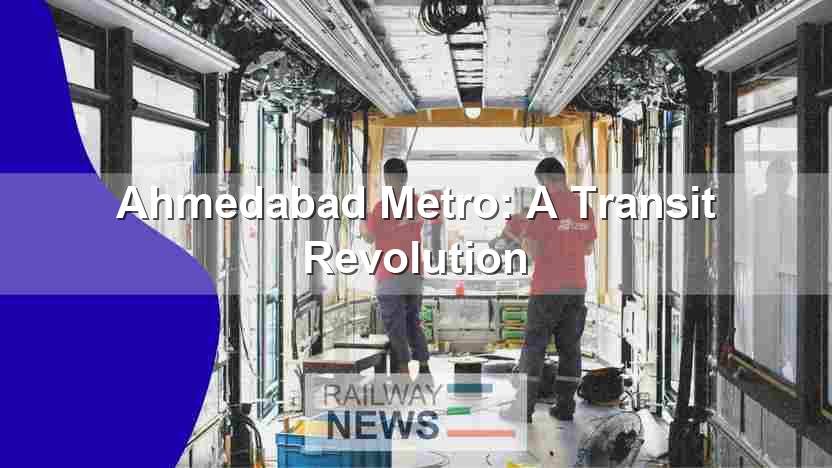
This article examines the significant inauguration of the first 6.5km stretch of Ahmedabad Metro Phase-I (Ahmedabad Metro Rail Project), marking a considerable step forward in the development of India’s urban transportation infrastructure. The opening, spearheaded by Prime Minister Narendra Modi in March 2019, signifies not only the culmination of years of construction and planning but also represents a broader strategy to enhance urban mobility and connectivity within India’s rapidly growing cities. The project’s success is analyzed through the lens of its engineering challenges, economic impact, and implications for future urban planning. We will explore the technical details of the initial phase, considering its design, the technology employed, and the logistical considerations involved in its implementation. Additionally, we will delve into the broader context of India’s expanding metro network and assess the long-term benefits of this significant investment in public transportation.
Construction and Engineering of the Initial Phase
The 6.5km stretch, connecting Vastal station to Apparel Park, represents the initial segment of the larger 40.03km Phase-I project. Construction, commencing in March 2015, involved significant logistical challenges. The project’s design incorporated both elevated and underground sections, requiring expertise in diverse construction techniques. The selection of materials and the implementation of safety standards were crucial aspects, ensuring the long-term durability and reliability of the system. The deployment of modern signaling and control systems was equally critical, guaranteeing efficient and safe train operations. The involvement of Hyundai Rotem, a South Korean firm, for the supply of 32 trainsets highlights the international collaboration integral to the project’s success.
Operational Aspects and Future Expansion
The operational efficiency of the Ahmedabad Metro is dependent on several factors. Effective scheduling, robust maintenance protocols, and integrated ticketing systems are essential for providing a seamless commuter experience. The initial phase is designed to ease traffic congestion in the city, offering a rapid transit alternative. The completion of Phase-I, anticipated within 18 months of the initial opening, will significantly enhance connectivity, linking four corners of Ahmedabad. Phase-I comprises two corridors: the 18.52km North-South Corridor (Motera Stadium to APMC), featuring 15 stations, and the 21.16km East-West Corridor (Vastral Gaam to Thaltej Gaam), encompassing 17 stations, with a 6km underground section. The successful operation of Phase-I will serve as a crucial benchmark for the subsequent phases of expansion.
Economic and Social Impact
The Ahmedabad Metro project has significant economic implications, both directly and indirectly. The creation of thousands of jobs during the construction phase stimulated local economies. The project’s long-term effects include reduced traffic congestion, decreased commuting times, and increased accessibility to employment and educational opportunities. Improved accessibility benefits residents, businesses, and tourists alike. The project’s success has a ripple effect, potentially inspiring similar infrastructure investments in other Indian cities.
Broader Implications for Urban Development in India
The Ahmedabad Metro represents a larger trend of investment in urban mass transit systems across India. The expansion of metro networks in major Indian cities reflects a commitment to sustainable urban development. These projects not only address immediate transportation needs but also contribute to long-term urban planning strategies. The success of the Ahmedabad Metro, and projects like it, will influence future investments in public transportation, promoting environmentally friendly and efficient urban mobility. The expansion of the metro network, from 250km to 650km within five years, showcases a rapid pace of development in India’s public transportation sector, highlighting the government’s dedication to modernization and urban progress.
Conclusions
The opening of the first stretch of Ahmedabad Metro Phase-I marks a significant achievement in India’s urban infrastructure development. The project, a testament to meticulous planning and execution, showcases the successful integration of advanced engineering, international collaboration, and a commitment to sustainable urban growth. The initial 6.5km segment, connecting Vastal and Apparel Park, represents the initial phase of a larger 40.03km network encompassing two corridors and 32 stations, designed to enhance connectivity across Ahmedabad. The operational success of this phase is crucial for the timely completion of Phase-I and the subsequent launch of Phase-II, further expanding the city’s metro network. The economic benefits, in terms of job creation and improved accessibility, coupled with the social advantages of reduced congestion and enhanced mobility, underscore the project’s broader significance. Additionally, the project serves as a model for other developing nations grappling with similar urban challenges, offering a case study in successful urban mass transit implementation. The Ahmedabad Metro’s success story highlights the transformative potential of strategically planned and executed infrastructure projects, contributing significantly to a city’s economic prosperity and overall quality of life. The ongoing expansion of the metro system, indicative of a proactive approach to urban planning, solidifies India’s commitment to providing efficient and sustainable transportation solutions for its rapidly growing urban populations. The project not only addresses immediate transportation needs but also sets a precedent for future urban development across the nation.

Railway infrastructure, rolling stock and transport technologies specialist focused on global rail industry developments, high-speed rail systems, signaling technologies and freight transportation. Covering railway investments, public transport modernization, rail operations and international mobility projects across Europe, Asia and North America.
RELATED POSTS

September 6, 2026 5:19 am
Hitachi delivered Taiwan's first N700ST high-speed train from Japan in...

September 5, 2026 4:19 pm
CPK launched formal tender talks with four consortia to design...

September 5, 2026 7:14 pm
HS2 Ltd signed renegotiated civils contracts with EKFB and Align...

September 6, 2026 4:12 am
Alstom delivered the first of 100 new G Class trams...

September 6, 2026 6:17 am
Hungary ordered a national ban on most freight trains from...

September 6, 2026 1:17 am
Hitachi Toshiba Supreme Consortium confirmed the first of 12 N700ST...