
Afghanistan-Kazakhstan Railway: Infrastructure & Regional Trade
Afghanistan and Kazakhstan agree on a new railway corridor, boosting regional trade. The Towrgondi-Spin Boldak line will connect Central and South Asia, reducing transit times.
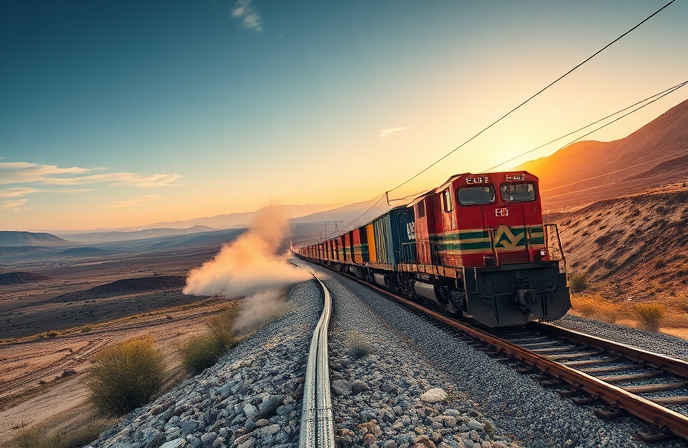
Afghanistan and Kazakhstan Forge Ahead with Strategic Railway Corridor
In a move poised to reshape regional trade dynamics, Afghanistan and Kazakhstan have signed a Memorandum of Understanding (MoU) to construct the Towrgondi–Spin Boldak railway corridor. The agreement, finalized recently, signals a commitment to building a vital new railway line traversing Afghanistan, connecting its northern and southern borders and fostering crucial links between Central and South Asia. The project, spearheaded by Afghanistan’s Ministry of Public Works and Kazakhstan’s Ministry of Transport, in the presence of high-ranking officials, aims to establish a direct railway link, improving regional connectivity and significantly reducing cargo transit times. The railway’s strategic location along the north-south axis, combined with the potential for the development of a transport and logistics hub, suggests a significant investment in infrastructure and offers Kazakhstan a pivotal role as a regional transit hub. The article below will delve into the specifics of this project, exploring its design, operational implications, and the broader impact on trade and geopolitical relations in the region.
Phase One: Laying the Foundation – Towrgondi to Herat
The first phase of the railway project concentrates on the construction of a 113-kilometer rail section, from Towrgondi on the border with Turkmenistan to the city of Herat. This initial segment is pivotal, establishing a crucial connection to the existing rail network in Turkmenistan, thereby unlocking access to broader international trade routes. Moreover, the development plans include a transport and logistics hub in Herat. This hub will serve as a crucial staging area for cargo, facilitating efficient transshipment and customs procedures. The selection of Herat is strategic, as the city is a major commercial center within Afghanistan, promising immediate access to markets and the ability to streamline logistics for the burgeoning freight flow. This approach demonstrates a phased implementation, prioritizing the most critical segment to ensure early benefits and to progressively build out the network.
Extending the Reach: Herat to Spin Boldak and the CASA Corridor
Phase two extends the railway line from Herat south through Kandahar to Spin Boldak, a critical border crossing near Pakistan. This segment, traversing approximately 790 kilometers, will form the backbone of a critical north-south transport link across Afghanistan. This complete corridor, the Towrgondi–Herat–Kandahar–Spin Boldak railway, is a key component of the Central Asia–South Asia (CASA) rail corridor, a broader initiative intended to enhance connectivity. This strategic location and enhanced infrastructure are expected to catalyze trade and strengthen economic integration between Central and South Asia, providing significant benefits to businesses and economies in the region. The MoU outlines the operational and governance principles for the entire line, paving the way for the streamlined implementation of this transnational freight corridor.
Strategic Significance and Kazakhstani Interests
For Kazakhstan, the project is particularly significant. The initiative provides enhanced access to global markets and reduces the dependence on longer northern transit routes. The railway is critical to Kazakhstan’s strategy to establish improved transport and logistics ties with South Asia. This objective includes securing overland access to the Indian Ocean ports. By participating in the project, Kazakhstan can enhance its role as a regional transit hub, offering a faster, more direct southern route for trade. The construction of the railway represents a pivotal step in bolstering Kazakhstan’s geopolitical and economic standing within the region. This project is an important component of the country’s commitment to securing and expanding trade routes.
Digital Infrastructure: A Parallel Advantage
Complementing the railway construction, the project will also deploy a fibre-optic cable alongside the track. This simultaneous installation serves several crucial functions. Primarily, it supports the creation of digital infrastructure along the transport corridor, bolstering communication systems vital for the safe and effective operation of trains. Additionally, this expanded network facilitates the efficient monitoring and management of rail operations. Furthermore, it will connect nearby communities with high-speed internet access, promoting digital inclusion and providing opportunities for educational and commercial advancements. This incorporation of advanced digital infrastructure emphasizes a commitment to the future, creating a model for how railways and digital systems can be successfully combined.
Conclusion
The Afghanistan-Kazakhstan railway MoU heralds a transformative advancement in regional trade and transport infrastructure. The project’s success lies not only in its physical construction but also in its comprehensive approach, integrating digital infrastructure and a phased implementation strategy to maximize benefits. This initiative establishes a key link within the CASA corridor. The railway promises to reduce transit times and costs, fostering economic growth across Central and South Asia. The strategic alignment with Kazakhstan’s transit ambitions further underscores the geopolitical significance of this project, potentially reshaping trade routes and enhancing the region’s connectivity to global markets. Looking ahead, the successful implementation of this project, with the integration of advanced digital technologies, could become a global model for railway development. The continued cooperation between Afghanistan, Kazakhstan, and other regional stakeholders will be critical for the long-term viability and success of the Towrgondi–Spin Boldak railway.
RELATED POSTS

January 2, 2023 4:13 pm
The Indian government’s strategic decision to offload a portion of...
June 6, 2023 2:15 pm
This article explores the significant €2.3 billion (CAD $3.5 billion)...

February 20, 2025 1:42 pm
Introduction This article delves into the critical role of railway...
June 5, 2025 10:01 am
The São Paulo Metro Line 2 Green extension hits a...
September 6, 2025 11:00 pm
Polish rail upgrades boost Baltic Sea port freight capacity, ...
June 7, 2019 11:10 am
Bangkok's Pink and Yellow MRT lines: a $311 million ADB...