
AAR Analysis: Freight Rail Stabilizes US Economy, Buffers Inflation
Freight rail is a key economic stabilizer, says the AAR. Its efficiency and price stability offer crucial advantages, buffering inflation and ensuring predictable costs.
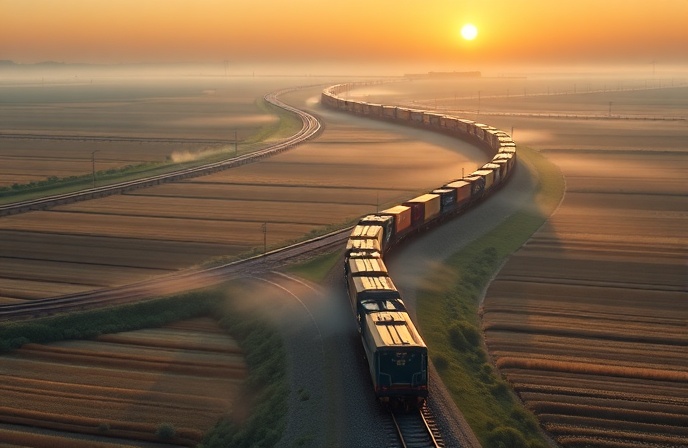
The Association of American Railroads (AAR) has released a detailed analysis demonstrating freight rail’s integral role as an economic stabilizer within the United States. The report highlights how the sector’s inherent efficiency, predictability, and resilience provide a crucial buffer against rising transportation costs and supply chain disruptions, thereby helping to mitigate inflation and economic volatility.
| Key Entity | Critical Detail |
|---|---|
| Association of American Railroads (AAR) | Released analysis on freight rail’s economic stabilizing role. |
| Freight Rail Industry | Acts as a built-in stabilizer, buffering inflation and volatility. |
| U.S. Economy | Benefits from rail’s price stability, leading to macroeconomic advantages and inflation control. |
| Consumers | Benefit from predictable goods movement and costs, even during turbulent times. |
The AAR’s policy and economic teams meticulously examined the multifaceted contributions of freight rail to the American economy. Their findings underscore the sector’s capacity to absorb shocks and maintain operational continuity, a capability that has become increasingly vital in the current global economic climate characterized by persistent inflation and complex supply chain challenges. Rail’s ability to move nearly 40% of long-distance freight by ton-miles positions it as a linchpin in ensuring the steady flow of goods across the nation.
Strategic Impact on Inflation and Volatility
The analysis specifically points to rail’s price stability as a significant macroeconomic benefit, directly contributing to the taming of inflation. In an environment where transportation costs can rapidly escalate, leading to cascading price increases for consumers and businesses alike, the consistent and often more predictable pricing of rail transport offers a distinct advantage. This stability helps businesses manage their logistics costs more effectively, which in turn can translate to more stable pricing for end products, thereby directly benefiting consumers.
Operational Resilience as a Shock Absorber
A representative from the AAR emphasized that freight rail is far more than a mere mode of transportation; it is a fundamental tool for cost control and economic resilience. “This analysis shows those same advantages act as a shock absorber for consumers — keeping goods moving and costs predictable even during turbulent times,” the representative stated. This inherent resilience allows the rail network to continue functioning effectively even when faced with disruptions in other transportation sectors or broader economic downturns, ensuring that essential goods reach their destinations without significant delays or price hikes.
Last June 2025, we published an article about Renfe’s cutting-edge Aranjuez maintenance hub. Click here to read – Future of Rail: Renfe’s Railway Technology Hub, Aranjuez: Essential Guide
Industry Context
For industry leaders and CEOs, this AAR analysis provides a compelling case for the strategic importance of investing in and leveraging freight rail infrastructure. In an era defined by supply chain vulnerability and the constant pressure to control costs, understanding freight rail’s role as an economic stabilizer is critical. It suggests that robust rail networks are not just about moving goods, but about fostering macroeconomic stability, mitigating inflationary pressures, and providing a predictable foundation for business operations and consumer confidence. Companies that prioritize efficient and resilient supply chain strategies will find freight rail to be an indispensable partner.

Railway infrastructure, rolling stock and transport technologies specialist focused on global rail industry developments, high-speed rail systems, signaling technologies and freight transportation. Covering railway investments, public transport modernization, rail operations and international mobility projects across Europe, Asia and North America.
RELATED POSTS

October 1, 2026 7:09 am
United States regulators confirmed a September 30 deadline for the...

October 4, 2026 5:14 pm
Alstom secured a CA$4.7 billion order from VIA Rail Canada...
October 6, 2026 2:14 am
Union Pacific launched export rail shipments with Ferromex to deliver...

October 1, 2026 12:13 am
Illinois approved $1.5 billion annually for the Northern Illinois Transit...

October 1, 2026 6:10 am
Amtrak approved a System Expansion Committee on July 30 to...
October 1, 2026 3:12 am
Greenbrier confirmed Brian Comstock as new president and CEO effective...