
Siemens Mobility Leads AI-Powered Remote Train Control Project for Depots
Siemens Mobility leads AI-powered Remote Train Control project, integrating 5G for enhanced railway depot operations. This initiative aims to improve efficiency and address driver shortages.
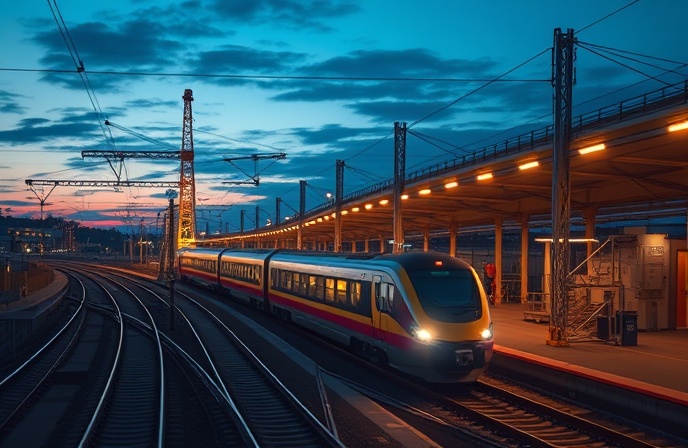
Siemens Mobility-led consortium pioneers AI-powered remote train control for enhanced depot operations. An ICE 4 train will be integrated with 5G technology for remote operation from a central depot station as part of the groundbreaking RemODtrAIn project, aiming for enhanced operational reliability by December 10, 2025.
| Key Entity | Critical Detail |
|---|---|
| Siemens Mobility | RemODtrAIn (Remote operated train with AI based Obstacle Detection) |
| AI-based obstacle detection and 5G mobile networks | Secure and highly available remote-controlled train operations in rail depots |
| Siemens Mobility, Siemens, DB (DB Fernverkehr, DB Systemtechnik, DB RegioNetz Infrastruktur), Mira, Smart Rail Connectivity Campus, Deutsches Zentrum für Luft- und Raumfahrt, Technische Universität Berlin, Technische Universität Chemnitz, Technische Universität München | €17m ($19.7m) from the German Federal Ministry for Economic Affairs and Energy |
| Vehicle testing and validation planned for 2028 | Address train driver shortages and advance automated train functions |
Advancing Rail Automation with RemODtrAIn
A consortium spearheaded by Siemens Mobility is actively developing and testing a secure, AI-powered remote control system designed for train operations within rail depots. The initiative, codenamed “RemODtrAIn” (Remote operated train with AI based Obstacle Detection), seeks to establish a new benchmark for secure and highly available remote-controlled train movements by leveraging modular technologies and the capabilities of 5G mobile networks. This ambitious project aims to revolutionize depot activities, including train availability, stabling, and shunting movements, with vehicle sensors developed to function across all operational modes.
Technological Integration and Operational Goals
A key practical demonstration within the RemODtrAIn project will involve an ICE 4 train being outfitted with advanced 5G technology. This integration will enable its remote operation from a central station situated within the depot grounds. The consortium, a robust collaboration between industry leaders, operators, and academic institutions, is focused on devising technological solutions that guarantee consistent operational reliability, even amidst the variability of public 5G network conditions. This focus on resilience is crucial for ensuring seamless operations in dynamic environments.
Strategic Impact and Future Outlook
The RemODtrAIn project directly addresses the growing challenge of train driver shortages across the industry by accelerating the development and implementation of automated and remote-controlled train functions. Marc Ludwig, Siemens Mobility’s CEO of Rail Infrastructure, emphasized the project’s role in advancing automated rail operations, stating, “Together with strong partners from industry, research, and the railway industry, we are developing solutions that are not only technologically advanced but also precisely tailored to the current requirements of rail operations.” Deutsche Bahn’s Chief Technical Officer, Dr. Jasmin Bigdon, highlighted the project’s pragmatic approach to closing technological gaps in remote-controlled shunting movements and adapting necessary roles, processes, and regulations.
Last June 2025, we published an article about Renfe’s Aranjuez maintenance hub. Click here to read – Future of Rail: Renfe’s Railway Technology Hub, Aranjuez: Essential Guide
Industry Context
The development of AI-based remote train control systems represents a significant leap forward in railway digitalization and operational efficiency. For railway operators and infrastructure managers, projects like RemODtrAIn offer tangible pathways to mitigate operational risks, optimize resource allocation, and improve the overall availability and safety of rail assets, particularly in complex yard environments. The successful implementation of such technologies could redefine the operational landscape, enabling greater flexibility and cost-effectiveness in rail network management.
RELATED POSTS

November 19, 2016 8:41 am
The 1st major works contracts for HS2 worth around £900m...

April 21, 2022 6:16 am
The ongoing conflict in Ukraine has profoundly impacted its railway...

September 30, 2025 11:54 am
Ceit develops **C-DAS technology** to enhance **railway** operations, boosting energy...
July 30, 2025 12:33 pm
Portugal Secures Funding for High-Speed Rail Line, Revolutionizing Travel Between...
September 13, 2025 1:37 am
New railway suicide prevention measures, focusing on physical barriers, staff...
January 21, 2023 10:38 pm
Ballastless Track Implementation in the Surat Metro Rail Project: A...