
EIB & AfDB Fund $275M Mauritania Rail Upgrade for SNIM Iron Ore Exports
EIB and AfDB invest $275 million in Mauritania railway. This vital upgrade boosts iron ore exports, supporting economic development and modernizing the key transport corridor.
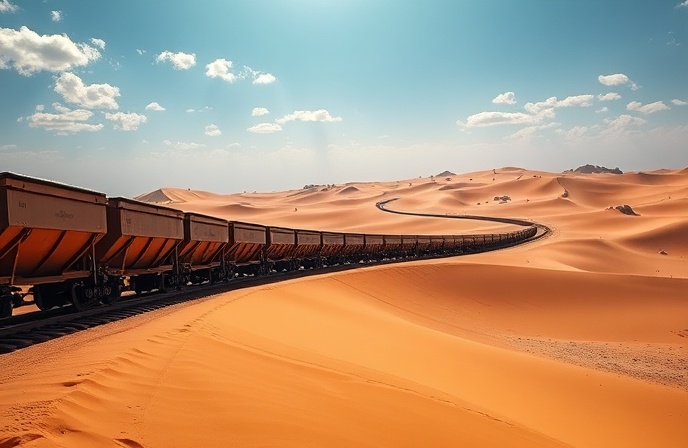
The European Investment Bank (EIB) and the African Development Bank (AfDB) have jointly committed $275 million to upgrade Mauritania’s critical rail infrastructure, a move set to significantly boost iron ore exports and bolster the nation’s economic development. The landmark financing agreement, finalized at the Africa Investment Forum 2025, will directly support Société Nationale Industrielle et Minière (SNIM) in modernizing the key transport corridor connecting the Zouerate mining region to the port of Nouadhibou.
| Key Entity | Critical Detail |
|---|---|
| Financiers | European Investment Bank (EIB) & African Development Bank (AfDB) |
| Recipient | Société Nationale Industrielle et Minière (SNIM) |
| Project Focus | Upgrade of Mauritania’s principal railway corridor (Zouerate-Nouadhibou) |
| Total Financing | $275 million |
| EIB Contribution | $125 million (EU-guaranteed) |
| AfDB Contribution | $150 million |
| Event Date | Africa Investment Forum 2025 |
This substantial investment underscores a strategic partnership aimed at enhancing Mauritania’s export capacity and fostering private sector growth within its vital mining and logistics sectors. The funding, structured as non-sovereign loans, directly targets SNIM, the country’s largest employer and operator of the rail line. The initiative aligns with the European Union’s Global Gateway strategy, designed to strengthen sustainable infrastructure and value chains for critical raw materials.
Strategic Impact and Vision
The upgrade of the Zouerate-Nouadhibou railway is poised to be a transformative project for Mauritania’s economy. By reinforcing SNIM’s transport capabilities, the financing will facilitate increased mineral exports, a cornerstone of the nation’s revenue. EIB Vice-President Ambroise Fayolle highlighted the project’s role in “reinforc[ing] SNIM’s transport corridor, boost[ing] exports, and support[ing] the country’s economic development,” emphasizing it as a prime example of the EU and EIB collaborating with African partners.
SNIM CEO Mohamed Vall Mohamed Telmidy articulated the project’s significance within the company’s broader strategic vision, stating, “The initiative to improve our logistics chain represents an important pillar of our strategic programme. Its development contributes to the realisation of our production objectives.” This sentiment is echoed by AfDB President Sidi Ould Tah, who noted that the financing demonstrates the bank’s “determination to scale up private sector investment in strategic value chains” through corporate, non-sovereign lending.
Operational Enhancements and Future Resilience
The project’s scope includes comprehensive rehabilitation of existing rail infrastructure, the construction of approximately 42 kilometers of new track to service emerging mining locations at El Aouj and Atomai, and the acquisition of modern locomotives, wagons, and essential maintenance equipment. These enhancements are specifically designed to increase the railway’s capacity, reduce fuel consumption, and elevate operational safety and reliability. Stakeholders anticipate that these improvements will not only facilitate higher mineral export volumes and create new employment opportunities but also enhance regional connectivity and bolster transport resilience against climate-related risks.
Last June 2025, we published an article about Renfe’s cutting-edge Aranjuez maintenance hub. Click here to read – Future of Rail: Renfe’s Railway Technology Hub, Aranjuez: Essential Guide
Industry Context
This substantial multilateral financing package for Mauritania’s railway infrastructure is a clear signal of growing international confidence in African commodity-driven economies and the critical role of logistics in unlocking their potential. For global mining corporations and logistics providers, this development signifies a more stable and efficient export route for key minerals, potentially impacting global supply chains and investment decisions. The emphasis on private sector engagement and sustainable development aligns with evolving ESG (Environmental, Social, and Governance) expectations within the global railway and mining industries, making it a case study for similar infrastructure upgrades across the continent.
RELATED POSTS
Union Pacific earned an 80% top Class I railroad intermodal...

March 6, 2026 12:10 pm
Consortium Announces Digital Services Platform for UK Rail Sector A...
March 5, 2026 7:57 pm
Banedanmark launched battery train operations on Denmark's 67 km Skjern–Holstebro...
March 4, 2026 10:12 am
Amtrak and Siemens deploy 8 Airo trains for the U.S....
March 5, 2026 4:23 am
Renfe suspends Spain rail services on Madrid-Andalusia corridor until February...
March 6, 2026 4:07 pm
Digital Subscription Market Analysis Q1 2026 Analytics firm Antenna confirmed...