
Siemens Mobility Secures Chile ETCS L2 Contract, Modernizing Rail Network
Siemens Mobility wins contract to deploy Chile’s first **ETCS L2** system, modernizing rail infrastructure. The project enhances safety and capacity with cutting-edge **railway** technology.
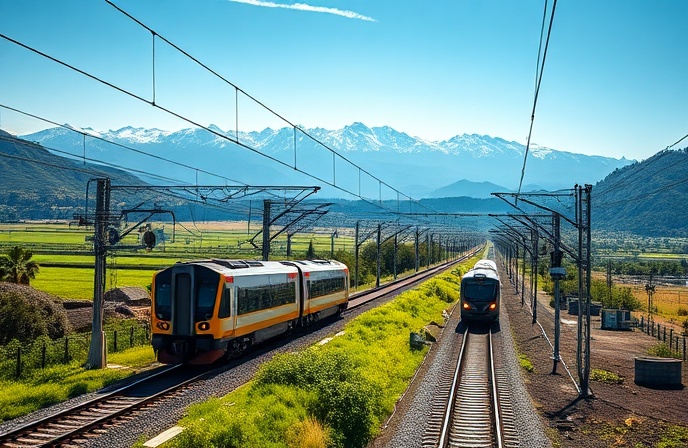
Siemens Mobility has secured a landmark contract with EFE Trenes de Chile to implement the nation’s inaugural European Train Control System Level 2 (ETCS L2). This significant development heralds a new era of digital modernization for rail transport across Chile and Latin America, introducing Siemens Mobility’s cutting-edge Signaling X platform for the first time in the region.
| Key Entity | Critical Detail |
|---|---|
| Contracting Parties | Siemens Mobility & EFE Trenes de Chile |
| Core Technology | European Train Control System Level 2 (ETCS L2) with Signaling X platform |
| Project Scope | 87km infrastructure (Tren Alameda–Melipilla & Tren Santiago–Batuco lines), 32 trains |
| Timeline | 5-year implementation, 10-year maintenance contract |
| Strategic Goal | Digital modernization, enhanced safety & reliability, ETCS L2 standardization |
Main Body:
The transformative project will see the deployment of Siemens Mobility’s next-generation Signaling X platform across 87 kilometers of vital rail infrastructure. This includes the Tren Alameda–Melipilla line, spanning 61 kilometers, and the Tren Santiago–Batuco line, covering 26 kilometers, both currently under construction. Siemens Mobility will undertake the comprehensive lifecycle management of the system, encompassing engineering, supply, installation, and commissioning over a five-year period. This will be followed by a decade-long maintenance agreement providing preventative, corrective, and predictive services, ensuring sustained operational excellence.
Strategic Impact
This contract represents a pivotal moment for rail infrastructure in Chile and the broader Latin American region. The introduction of ETCS L2, a globally recognized standard for railway signaling, is designed to significantly enhance operational safety, increase line capacity, and improve train punctuality. EFE Trenes de Chile’s strategic decision to adopt ETCS L2 as its future standard underscores a commitment to modernizing its network and providing a more efficient and reliable service for the growing demands of the Santiago metropolitan area. This initiative aligns with the company’s broader vision for network expansion and the integration of advanced digital technologies.
Operational Details
The new signaling system will leverage Siemens Mobility’s robust DS3 platform, engineered for Safety Integrity Level 4 (SIL4) applications. The deployment will include state-of-the-art interlockings, wayside equipment, advanced traffic control centers, and onboard systems for a fleet of 32 trains. Communication infrastructure will utilize 4G-LTE, with a clear roadmap for future migration to 5G technology, ensuring the system remains future-proof. Siemens Mobility’s Signaling X platform is a cloud-ready, virtualized solution that consolidates control, interlocking, and safety functions into a centralized data environment. Its design, which utilizes commercial off-the-shelf hardware, significantly simplifies infrastructure requirements and reduces overall system complexity for operators.
Industry Context
Last June 2025, we published an article about Renfe’s Aranjuez maintenance hub. Click here to read – Future of Rail: Renfe’s Railway Technology Hub, Aranjuez: Essential Guide
Siemens Mobility’s extensive experience in Latin America, including prior major electrification, automation, and signaling projects across numerous countries, positions them as a trusted partner for this ambitious undertaking. The establishment of a regional software maintenance Centre of Competence in Chile as part of this contract will further bolster local expertise and support future digital rail deployments throughout Latin America. This development is indicative of a wider trend across the global railway industry towards digital transformation, with ETCS L2 adoption being a critical enabler for enhanced safety, efficiency, and interoperability, crucial for operators seeking to meet increasing passenger and freight demands and achieve their strategic growth objectives.
RELATED POSTS

August 4, 2016 2:11 am
GB Railfreight's first Class 88 locomotive is on the move,...
November 16, 2018 10:26 am
Alstom's Class 390 Pendolino repainting project: €28 million invested...
September 12, 2017 11:04 am
Passengers in Scotland are a step closer to the arrival...
May 6, 2025 3:00 pm
Introduction This article delves into the significant advancements in Irish...

July 11, 2025 3:34 pm
Wabtec and Intermodal Telematics partner to boost European rail freight...

July 31, 2015 7:44 pm
Spainish train manufacturer Vossloh España has received two new orders...