
MTA Opens $11B Rail Car Facility for Subway Fleet Modernization
MTA unveils new rail-car facility, a vital step in its $11 billion investment to modernize subway cars. This upgrade boosts operational efficiency and enhances passenger experience.
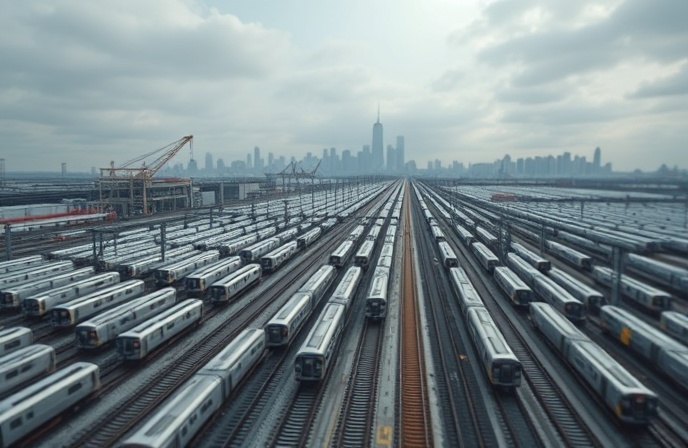
The Metropolitan Transportation Authority (MTA) has inaugurated a new rail-car processing and testing facility near the South Brooklyn Marine Terminal, a critical step in its ambitious $11 billion fleet modernization program. This significant investment, the largest in new rolling stock since the 1980s, will see the introduction of over 1,500 new R211 and R268 subway cars to replace aging R46 and R68 models.
| Key Entity | Critical Detail |
|---|---|
| MTA | Opened new rail-car processing and testing facility |
| Location | Near South Brooklyn Marine Terminal |
| Core Action | Preparation for over 1,500 new R211 and R268 subway cars |
| Budget/Value | $11 billion investment |
| Date/Timeline | This week (facility opening) |
Strategic Impact
The establishment of this advanced facility underscores the MTA’s commitment to enhancing the reliability and capacity of New York City’s subway system. The influx of over 1,500 new R211 and R268 cars represents a significant technological leap, promising improved passenger experience and operational efficiency. This substantial upgrade aims to phase out the older R46 and R68 models, which have served the city for decades, and marks a pivotal moment in the MTA’s long-term infrastructure development strategy.
Operational Capabilities
The new processing and testing facility is designed for maximum logistical flexibility, capable of receiving new subway cars via truck, rail, and even boat, leveraging its proximity to the South Brooklyn Marine Terminal. Once on-site, the cars will be assembled and undergo rigorous testing and commissioning on dedicated internal tracks. This integrated approach ensures that every new unit is thoroughly vetted before its integration into the active subway network, to which the facility is directly connected. Furthermore, the facility’s capabilities extend beyond subway cars, allowing for the processing and testing of locomotives and rolling stock for the MTA’s other passenger rail operations, thereby centralizing fleet management and quality assurance.
Fleet Modernization Drive
This $11 billion investment signifies a renewed focus on capital improvements within the MTA, reflecting a strategic imperative to modernize aging infrastructure and rolling stock. The scale of this procurement and the new testing capabilities highlight a forward-thinking approach to fleet management, anticipating future ridership demands and operational challenges. By investing in state-of-the-art equipment and processes, the MTA is not only ensuring the longevity and efficiency of its services but also setting a benchmark for large-scale public transit fleet renewal initiatives.
Industry Context
For industry stakeholders, the MTA’s substantial investment in new rolling stock and its accompanying infrastructure signifies robust demand and ongoing opportunities within the rail manufacturing and services sector. This move by one of the largest transit agencies in the world signals a trend towards fleet modernization across major urban centers, driven by the need for enhanced sustainability, passenger comfort, and operational resilience. CEOs of manufacturing firms, technology providers, and maintenance service companies should view this as a clear indicator of sustained market growth and a driver for innovation in rolling stock design and lifecycle management.
Last June 2025, we published an article about Renfe’s cutting-edge Aranjuez maintenance hub. Click here to read – Future of Rail: Renfe’s Railway Technology Hub, Aranjuez: Essential Guide
RELATED POSTS

June 30, 2019 1:49 am
This article examines the recent expansion of Bogestra’s (Bochum-Gelsenkirchener Straßenbahnen...
December 21, 2025 10:39 am
PATH rail system gets $2.6B boost from PANYNJ's $45B plan,...
May 28, 2025 10:01 pm
Czech Republic to Kazakhstan: Nurminen Logistics Navigates New Rail Freight...
March 25, 2022 4:18 am
Modernizing Dutch Rail Infrastructure: Thales’ ERTMS Central Safety System Deployment...
January 17, 2019 5:42 pm
Major railway contracts awarded to CAF, Alstom, and Bombardier signal...
July 27, 2016 12:10 am
Contactless ticketing is coming! Singapore's LTA is rolling out a...