
Škoda Delivers First EMU to Bulgaria Under €538M Contract
Škoda Group delivers its first **electric trains** to Bulgaria under a EUR 538 million contract. These **EMUs** will modernize the rail fleet with advanced features.
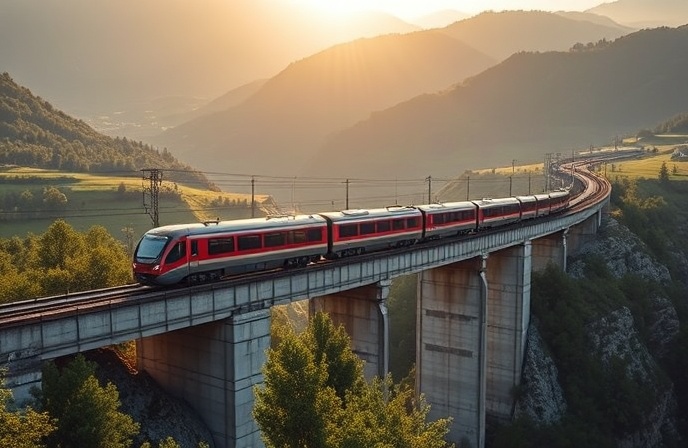
Škoda Group has successfully manufactured the first of 25 new electric multiple units (EMUs) for Bulgaria, marking a significant milestone in modernizing the country’s rail fleet. The substantial EUR 538 million contract, signed in September 2024, not only encompasses the delivery of these state-of-the-art RegioPanter trains but also includes a comprehensive 15-year servicing agreement.
| Key Entity | Critical Detail |
|---|---|
| Manufacturer | Škoda Group |
| Recipient Country | Bulgaria |
| Train Type | RegioPanter Electric Multiple Unit (EMU) |
| Contract Value | EUR 538 million |
| Contract Signing Date | September 2024 |
| Units Ordered | 25 |
| Servicing Period | 15 years |
| First Unit Completion Time | 14 months post-contract signing |
The newly manufactured EMUs are based on Škoda Group’s highly successful RegioPanter platform, a design that has a proven track record of reliable operation across various European rail networks, including extensive use in Czechia and Slovakia, and on broad-gauge lines in Latvia and Estonia. The rapid production of the first unit, completed within just 14 months of the contract’s signing, underscores Škoda Group’s manufacturing efficiency and commitment to project timelines.
Strategic Impact
This initiative represents a pivotal moment for Bulgarian rail transport, promising a significant rejuvenation of the national rolling stock. The introduction of these modern, interoperable EMUs will replace aging vehicles, ensuring compliance with the latest European technical specifications for interoperability and safety standards. Beyond technological advancement, the RegioPanter units are engineered for enhanced operational efficiency, anticipating considerable savings in operating costs through advanced technologies and reduced energy consumption. This will not only elevate passenger comfort but also contribute to making regional rail services more competitive, environmentally sustainable, and attractive to a broader passenger base.
Operational Details
Each of the new four-car electric units is designed to accommodate over 300 passengers and operate at a maximum speed of 160 km/h, drawing power from a 25 kV AC 50 Hz system. Škoda Group is integrating a comprehensive suite of modern safety and passenger amenities, including a second-level ETCS security system, internal and external security cameras, efficient air conditioning, Wi-Fi connectivity, ergonomic seating, and dedicated multifunctional spaces for passengers with reduced mobility, families with prams, and cyclists. The trains feature a partially low-floor design to facilitate seamless boarding and alighting. To ensure optimal performance and reliability, Škoda Group will manage the comprehensive servicing of these trains for 15 years from a newly established, leased depot in Bulgaria, guaranteeing smooth operations across the Bulgarian railway network.
Technical Specifications
- Train Type: Electric Multiple Unit (EMU)
- Platform: RegioPanter
- Configuration: Four-car units
- Passenger Capacity: Over 300 seats
- Maximum Operating Speed: 160 km/h
- Power Supply: 25 kV AC 50 Hz
- Safety Systems: Level 2 ETCS, internal/external camera systems
- Passenger Amenities: Air conditioning, Wi-Fi, ergonomic seats, multifunctional spaces
- Accessibility Features: Partially low-floor design
Last June 2025, we published an article about Renfe’s cutting-edge Aranjuez maintenance hub. Click here to read – Future of Rail: Renfe’s Railway Technology Hub, Aranjuez: Essential Guide
Industry Context
The Škoda Group’s substantial contract with Bulgaria highlights a growing trend in the European railway sector: a strategic investment in fleet modernization to meet stringent environmental regulations, enhance passenger experience, and optimize operational economics. For railway operators and manufacturers alike, such large-scale procurements signal robust market demand for advanced, sustainable, and reliable rolling stock. CEOs in the industry should view this development as a testament to the long-term viability of rail as a primary mode of transport and the critical role of technological innovation in achieving these goals. The focus on comprehensive lifecycle servicing also underscores a shift towards integrated solutions that guarantee performance and reduce TCO (Total Cost of Ownership) for operators.
RELATED POSTS
October 7, 2025 6:54 pm
The new Rail Carbon Accounting Framework (RCAF) standardizes GHG calculations...

July 30, 2016 11:31 am
Edinburgh Trams is expanding! Stadler will supply 43 new trams,...
July 13, 2018 3:25 pm
Major rail players like Alstom, Stadler, and Hyundai Rotem are...
February 27, 2025 4:02 pm
This article examines the recently awarded 40-month maintenance contract for...
ARA launches research to boost Australian rail sector growth and...
CLIP Terminals invests €22.3M in a new intermodal terminal in...