
ERA & EU Rail: 4th Package Impact – Safety, Interoperability & ERTMS
Expert no comment.
Introduction
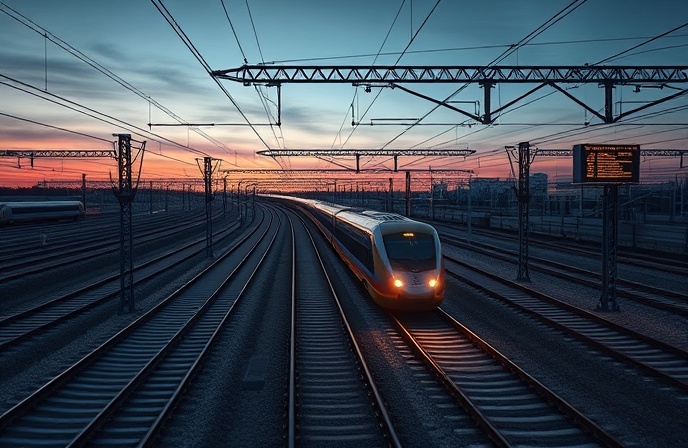
The European Commission has released its evaluation of the European Union Agency for Railways (ERA), highlighting the agency’s vital role in enhancing rail safety, interoperability, and the creation of a harmonised Single European Rail Area (SERA). The evaluation, adopted on 7 November, acknowledges ERA’s continued relevance but also points out resource limitations affecting its ability to fully implement its responsibilities under the 4th Railway Package.
Main Content
Key Findings and Challenges
The evaluation indicates that ERA’s expanded mandate under the 4th Railway Package, which aims to create a more efficient and safe railway system across Europe, has not been matched by an equivalent increase in resources. This imbalance strains ERA’s capacity to manage operational workloads while maintaining its strategic policy role. The evaluation identifies a need to streamline ERA’s core processes, particularly those concerning vehicle authorisation and safety certification.
Vehicle Authorisation and Safety Certification
The report suggests further optimization of the One-Stop Shop (OSS) digital platform to achieve the cost savings and efficiency gains originally envisaged under the 4th Railway Package. Procedures for vehicle authorization and safety certification are essential for ensuring both safety and interoperability, yet the procedures can be complex and time-consuming, creating administrative challenges for applicants.
ERTMS Deployment and Digitalisation
The evaluation also assessed ERA’s role in supporting the deployment of the European Rail Traffic Management System (ERTMS). The report finds that ERTMS rollout remains slower than expected, citing the complexity of coordination among Member States and the technical challenges of large-scale implementation. Strengthening ERA’s capacity to support harmonised deployment will be essential to achieving a truly seamless European rail network.
Stakeholder Support and Regulatory Framework
Stakeholders consulted during the evaluation expressed broad support for ERA’s contribution to developing common safety and technical standards, simplifying redundant national rules, and improving the overall coherence of EU railway regulation. They agreed that national-level actions cannot substitute for the benefits of EU-level coordination. The evaluation concludes that ERA’s work has improved effectiveness and efficiency across the sector, strengthening interoperability and harmonized operations within the Single European Rail Area.
Last June 2025, we published an article about Renfe’s cutting-edge Aranjuez maintenance hub. Click here to read – Future of Rail: Renfe’s Railway Technology Hub, Aranjuez: Essential Guide
Conclusion
The European Commission announced in its “Connecting Europe through High-Speed Rail” communication that it will propose a revised ERA Regulation by 2026. This revision will aim to enhance safety oversight, digitalization, and cost-efficiency. The evaluation, conducted under Article 82(1) of Regulation (EU) 2016/796, reaffirms ERA’s strategic role in supporting safe, interoperable, and modern rail operations across Europe, while calling for stronger resources and streamlined processes.
Company Summary
European Union Agency for Railways (ERA): The ERA is responsible for improving rail safety, interoperability, and the creation of a harmonised Single European Rail Area (SERA). It is responsible for issuing EU-wide vehicle authorisations and single safety certificates, in addition to its long-standing policy and regulatory functions.
Technology
European Rail Traffic Management System (ERTMS): A cornerstone of the EU’s rail digitalisation and cross-border interoperability agenda.
RELATED POSTS

July 15, 2022 9:25 pm
This article explores the recent contract awarded to CRRC Puzhen...

December 2, 2023 8:16 pm
EN 15839 defines the testing requirements for the acceptance of...
April 9, 2020 4:53 am
The Impact of the COVID-19 Pandemic on Railway Station Management:...

October 15, 2025 5:54 pm
STB affirms Mendocino Railway's common carrier status. This ruling clarifies...
August 5, 2020 10:37 am
The Expansion of Škoda Transportation’s Pilsen Facility: A Strategic Investment...
May 28, 2025 8:01 pm
Lincolnshire Level Crossing Upgrades: Enhancing Safety and Reliability on the...