
Advancements in Railway Safety Technology: A Global Outlook
Railway safety technology advancements revolutionize operations, boosting efficiency and reducing risks. New signaling and predictive maintenance systems are key.
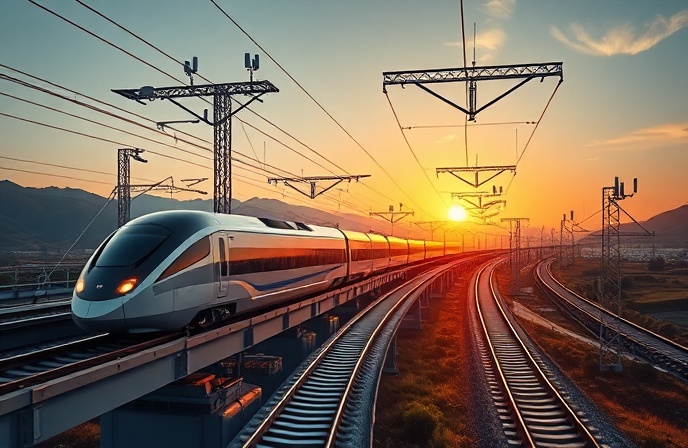
Revolutionizing Railway Operations: The Advancements in Railway Safety Technology
In an era where efficiency and safety are paramount, the railway industry is undergoing a significant transformation. This evolution is driven by cutting-edge innovations in railway safety technology, reshaping how trains are monitored, controlled, and maintained. From advanced signaling systems to predictive maintenance programs, the adoption of new technologies is not merely an upgrade, but a fundamental shift. This article delves into the crucial advancements impacting railway operations, examining the “what,” “why,” “when,” “where,” “who,” and “how” of this technology revolution. The focus is on the transformative power of these advancements to improve safety, reduce operational costs, and enhance overall railway performance. The thesis of this article is that strategic implementation of new technologies represents a pivotal step toward a safer, more efficient, and sustainable future for the global railway network.
Enhanced Signaling Systems: The Core of Modern Railway Safety
Modern railway systems rely heavily on advanced signaling technologies to ensure the safe and efficient movement of trains. These systems are the backbone of railway safety technology, continually evolving to reduce human error and optimize track capacity. The implementation of European Train Control System (ETCS) Level 2 and Level 3, for example, replaces traditional trackside signals with in-cab signaling, which increases safety and reduces the risk of signal-passed-at-danger (SPAD) incidents. This technology also allows for more efficient train spacing, leading to increased track capacity. Furthermore, the integration of Automatic Train Protection (ATP) systems, which automatically enforce speed limits and prevent collisions, plays a critical role in improving railway safety. The seamless integration of these sophisticated systems is achieved through robust communication networks and redundant safety mechanisms, representing a considerable investment in the future of rail travel.
The Rise of Predictive Maintenance: Minimizing Downtime and Maximizing Safety
Predictive maintenance is transforming the way railway operators manage their assets. By leveraging sensors, data analytics, and artificial intelligence (AI), operators can now proactively identify potential equipment failures before they occur. This approach to railway safety technology helps in minimizing costly downtime, preventing accidents, and extending the lifespan of railway infrastructure. Sensors embedded in tracks, trains, and other assets collect vast amounts of data related to performance, wear, and tear. This data is then analyzed using advanced algorithms to predict when and where maintenance is needed. This proactive approach significantly enhances safety by preventing unexpected breakdowns, which could lead to derailments or other serious incidents. It also allows maintenance crews to schedule repairs more efficiently, reducing disruption and improving overall operational performance.
AI-Powered Inspection and Monitoring: A New Era of Rail Safety
Artificial intelligence (AI) and machine learning (ML) are rapidly changing the landscape of railway inspection and monitoring. AI-powered systems can analyze vast amounts of data from various sources, including trackside cameras, ultrasonic testing devices, and onboard sensors, to identify anomalies and potential safety risks. This data analysis can detect subtle defects in rails, wheels, and other critical components that might be missed by traditional inspection methods. Using sophisticated algorithms, these systems can detect issues like cracks, corrosion, and excessive wear, allowing for timely intervention. This technology not only enhances the effectiveness of inspections but also increases the efficiency of the process, reducing the time and resources needed for these crucial tasks. In essence, AI is providing a new level of precision and speed in ensuring the integrity of the railway infrastructure, firmly reinforcing railway safety technology.
Conclusion
The ongoing advancements in railway safety technology are reshaping the railway industry, ushering in an era of unprecedented safety, efficiency, and reliability. From advanced signaling systems and predictive maintenance programs to AI-powered inspection and monitoring, the integration of these technologies is transforming all aspects of railway operations. The industry must continue to embrace innovation, investing in these critical technologies to maintain and improve safety. The potential impact on railway operations is substantial. Operators can expect reduced operational costs, increased track capacity, and a significant decrease in accidents and incidents. Looking ahead, the integration of digital twins, further advancements in automation, and the use of advanced materials for infrastructure will be essential. The future of railways lies in the continuous pursuit of innovation, and the commitment to leveraging technology in the name of safety and performance.
RELATED POSTS

October 17, 2025 9:54 am
Siemens Mobility modernizes São Paulo's commuter lines with **ATO** over...

September 5, 2019 1:26 pm
The Ongoing Dispute Over Train Guarding on South Western Railway...

September 12, 2025 3:37 pm
Alstom Polska wins PKP Intercity's double-decker EMU contract, valued at...
March 21, 2020 8:38 pm
This article delves into the significant railway infrastructure upgrade project...
November 29, 2021 10:03 am
This article explores the strategic acquisition of Evac, a leading...

September 7, 2025 7:15 pm
Nokia unveils 5G radio solution, boosting digital railway operations and...